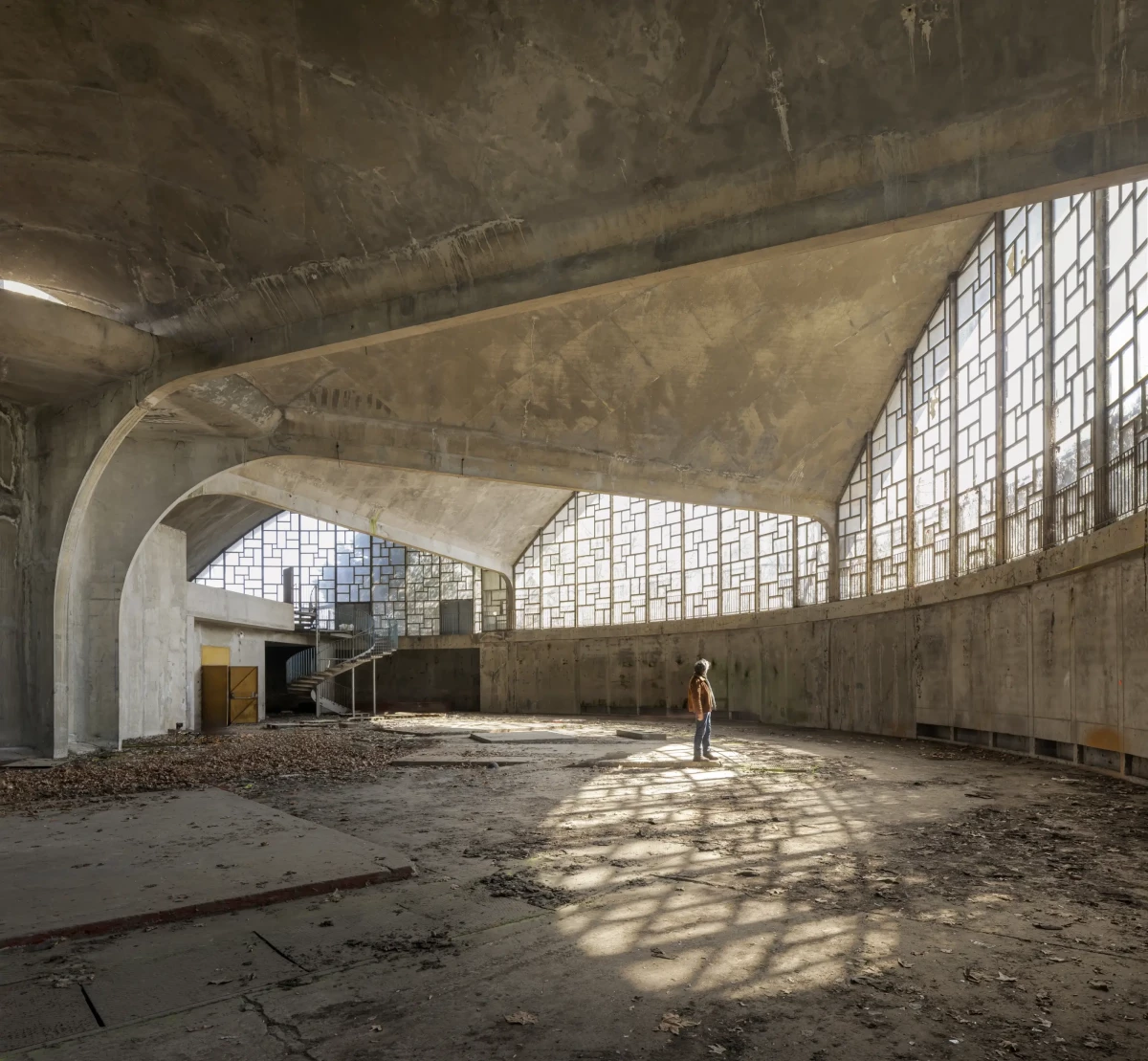
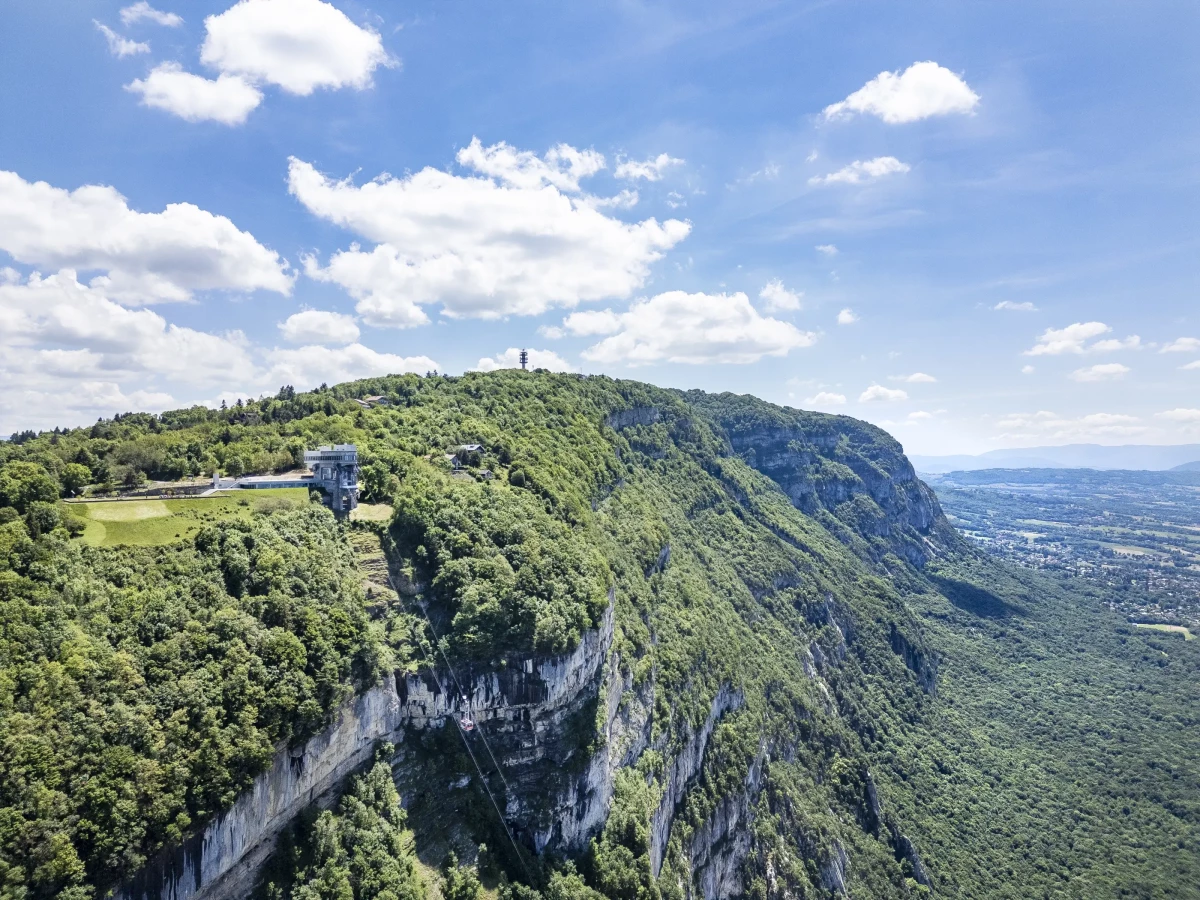
Concerning “mountain–water landscapes, there are those we pass through; those we look at from afar; those we wander in; and those we inhabit. Crossing a place is as different from strolling through it as gazing from a distance is from living in it. Landscapes in which we enjoy walking or settling become an environment in the full sense of the word—an ambient, insistent medium in which we feel at home. (…) What makes a landscape is not limited to perception; it becomes a space of exchange, an intensifying place.” This sensitive understanding resonates with the rehabilitation project for the Salève, which centres on revealing an exceptional landscape. Working through subtraction, it frees up views and extends interiors outward, removing obstacles to create open or more intimate perspectives: long views over Lake Geneva, plunging views into the treetops, and renewed sights towards the Alpine chain.*
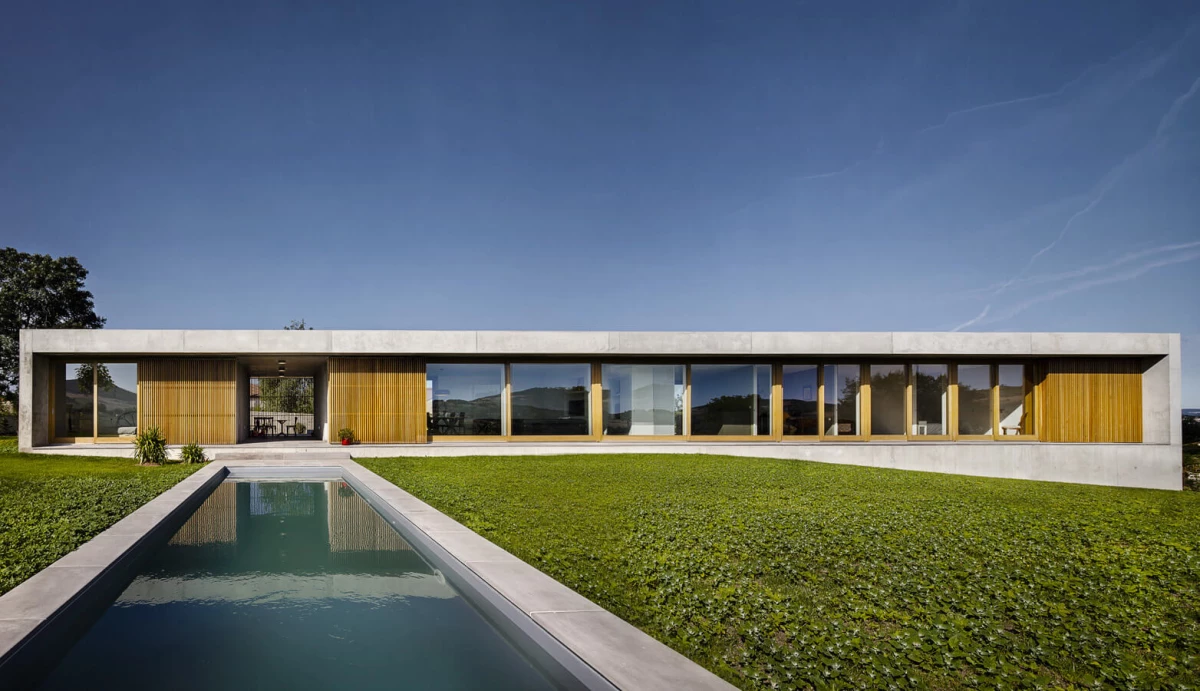
The House D project in Vic-le-Comte follows a similar logic: positioned between a structuring wall and the wider landscape, it establishes a direct relationship with the horizons of the Puys d’Auvergne. From the private garden arranged between the wall and the house, views open towards these vast horizons; the line of sight widens and the meadows act as an extension of the garden, simple grassland flowing outward. The house is thus arranged between two worlds: a sheltered inner courtyard, offering coolness in summer, and an openness to the broader landscape. Inside and outside flow together into a single continuum. This way of living echoes Sébastien Marot’s reflections: “to become indigenous in the modern world—meaning to become indigenous to the places we inhabit, within a coherent community itself rooted, embedded in the ecological realities of its surrounding landscape.”**
Our approach is global and systemic, weaving together built form, open space, flows, and uses. The challenge is to give outdoor spaces coherence, functional depth, and a structuring bioclimatic role. Preserving and enhancing these spaces is therefore not only a matter of landscape design: it is a condition for long-term habitability, climate resilience, and renewed sociability. We view exterior landscapes as a rare and precious resource. They offer crucial pockets of coolness in a warming climate and form a landscape heritage in their own right, calling for renewed care and value.
This is why we give particular attention to this landscape heritage—planting, permeable and fertile soils—which constitutes a vegetal patrimony of great richness. Programming uses and designing architecture must adjust to the scale of the site to limit the spread of built form and safeguard existing environments. Shared outdoor spaces then become a key lever: places of encounter and social connection, they allow seasonal shifts in use—open in summer, sheltering in winter—and support new forms of convivial life. This approach is evident, for example, in the rehabilitation of the Tarterêts boiler house for the “Quartier de Demain” competitive dialogue. Although the consultation initially concerned a single building, our thinking extended to its relationship with the surrounding public and landscape space: since the neighbourhood forms a continuum in which interior and exterior complement one another, acting positively on the territory requires treating them together.
* François Julien, Vivre de paysage, entre les montagnes et les eaux, Paris, Gallimard, 2022
** Sébastien Marot, Prendre la clé des champs, Marseille, Éd. Wildproject, 2024
Concerning “mountain–water landscapes, there are those we pass through; those we look at from afar; those we wander in; and those we inhabit. Crossing a place is as different from strolling through it as gazing from a distance is from living in it. Landscapes in which we enjoy walking or settling become an environment in the full sense of the word—an ambient, insistent medium in which we feel at home. (…) What makes a landscape is not limited to perception; it becomes a space of exchange, an intensifying place.” This sensitive understanding resonates with the rehabilitation project for the Salève, which centres on revealing an exceptional landscape. Working through subtraction, it frees up views and extends interiors outward, removing obstacles to create open or more intimate perspectives: long views over Lake Geneva, plunging views into the treetops, and renewed sights towards the Alpine chain.*
The House D project in Vic-le-Comte follows a similar logic: positioned between a structuring wall and the wider landscape, it establishes a direct relationship with the horizons of the Puys d’Auvergne. From the private garden arranged between the wall and the house, views open towards these vast horizons; the line of sight widens and the meadows act as an extension of the garden, simple grassland flowing outward. The house is thus arranged between two worlds: a sheltered inner courtyard, offering coolness in summer, and an openness to the broader landscape. Inside and outside flow together into a single continuum. This way of living echoes Sébastien Marot’s reflections: “to become indigenous in the modern world—meaning to become indigenous to the places we inhabit, within a coherent community itself rooted, embedded in the ecological realities of its surrounding landscape.”**
Our approach is global and systemic, weaving together built form, open space, flows, and uses. The challenge is to give outdoor spaces coherence, functional depth, and a structuring bioclimatic role. Preserving and enhancing these spaces is therefore not only a matter of landscape design: it is a condition for long-term habitability, climate resilience, and renewed sociability. We view exterior landscapes as a rare and precious resource. They offer crucial pockets of coolness in a warming climate and form a landscape heritage in their own right, calling for renewed care and value.
This is why we give particular attention to this landscape heritage—planting, permeable and fertile soils—which constitutes a vegetal patrimony of great richness. Programming uses and designing architecture must adjust to the scale of the site to limit the spread of built form and safeguard existing environments. Shared outdoor spaces then become a key lever: places of encounter and social connection, they allow seasonal shifts in use—open in summer, sheltering in winter—and support new forms of convivial life. This approach is evident, for example, in the rehabilitation of the Tarterêts boiler house for the “Quartier de Demain” competitive dialogue. Although the consultation initially concerned a single building, our thinking extended to its relationship with the surrounding public and landscape space: since the neighbourhood forms a continuum in which interior and exterior complement one another, acting positively on the territory requires treating them together.
* François Julien, Vivre de paysage, entre les montagnes et les eaux, Paris, Gallimard, 2022
** Sébastien Marot, Prendre la clé des champs, Marseille, Éd. Wildproject, 2024