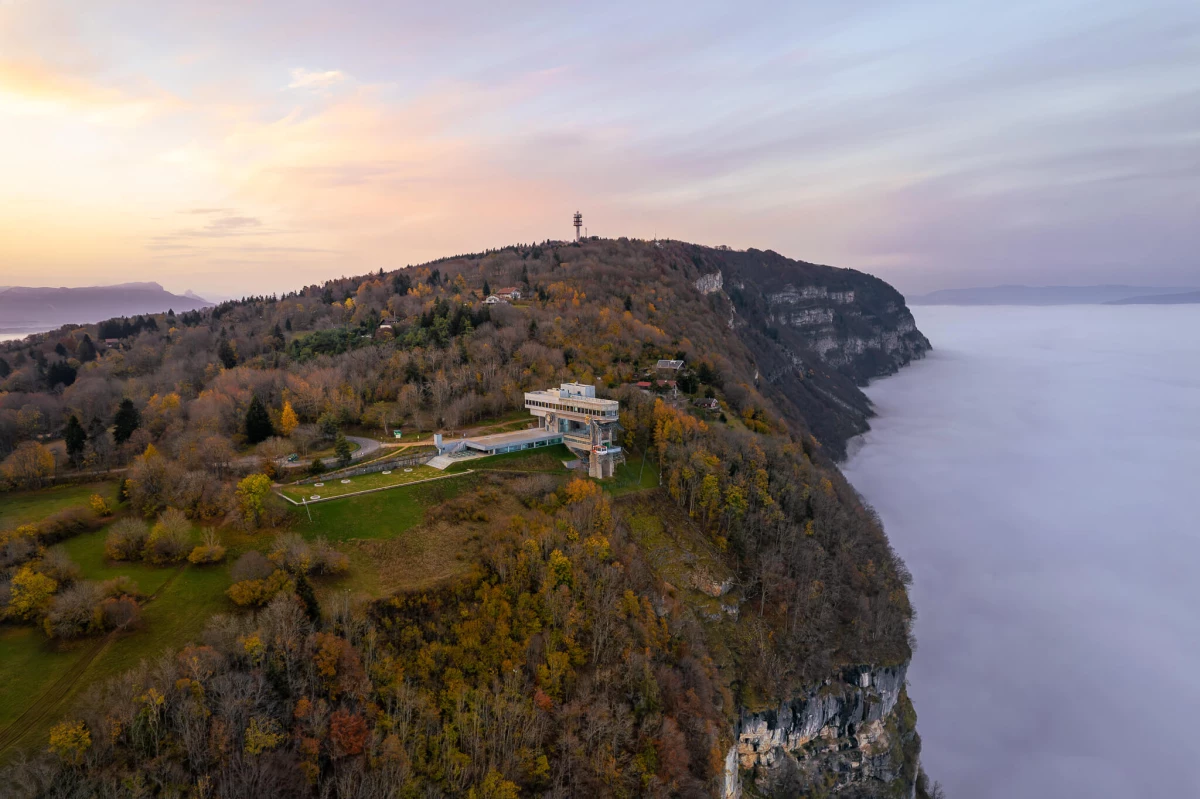
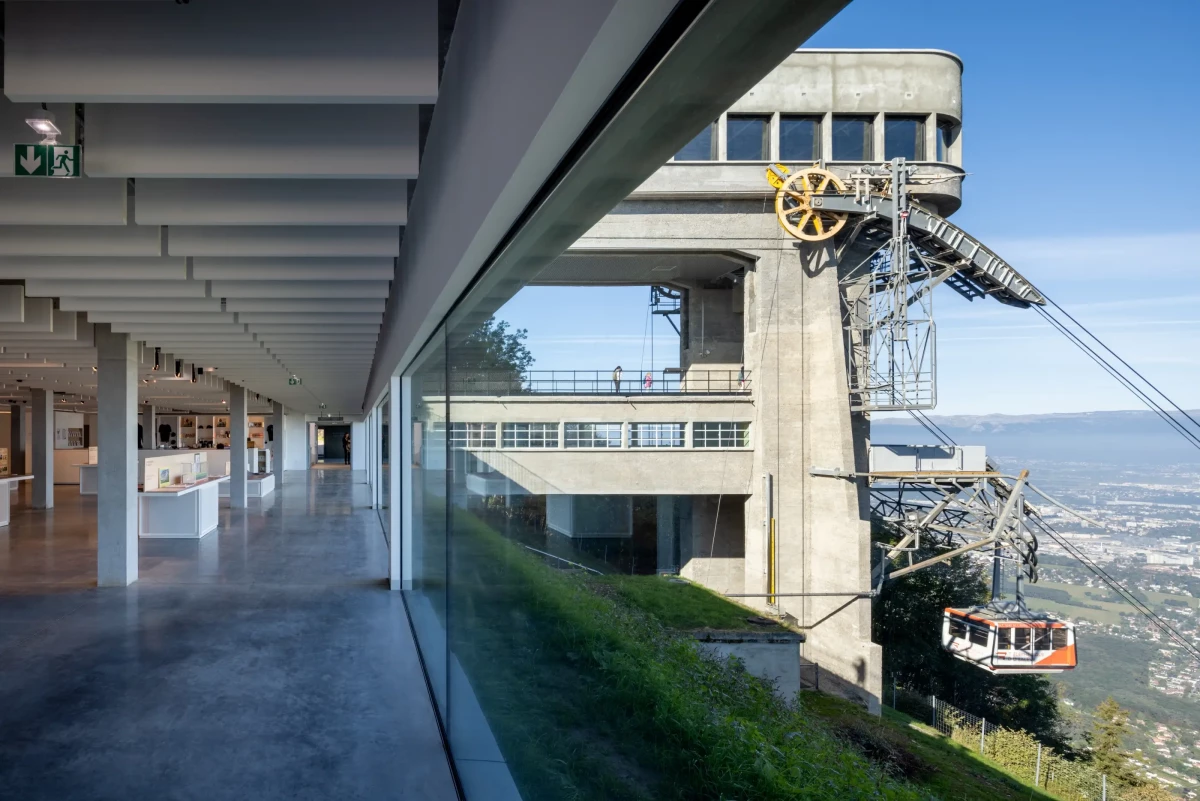
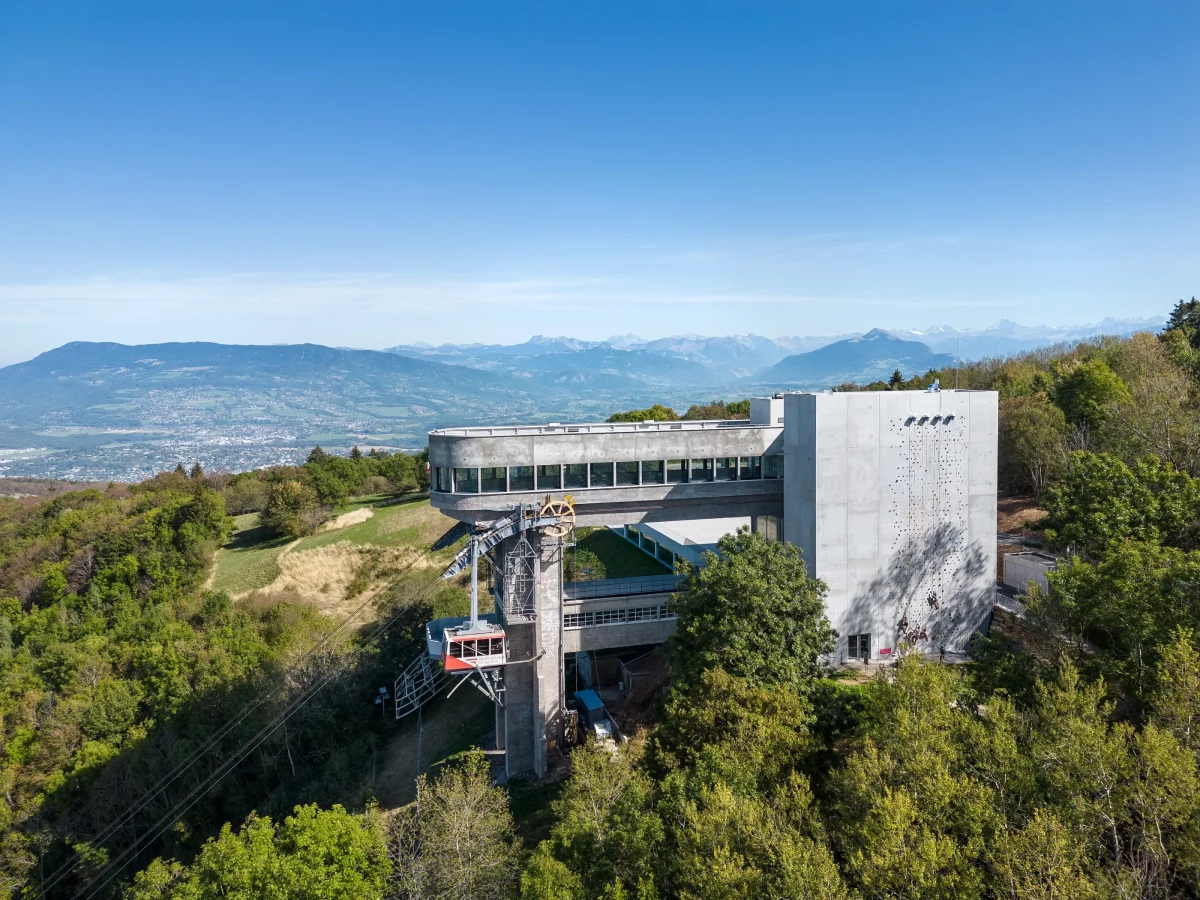
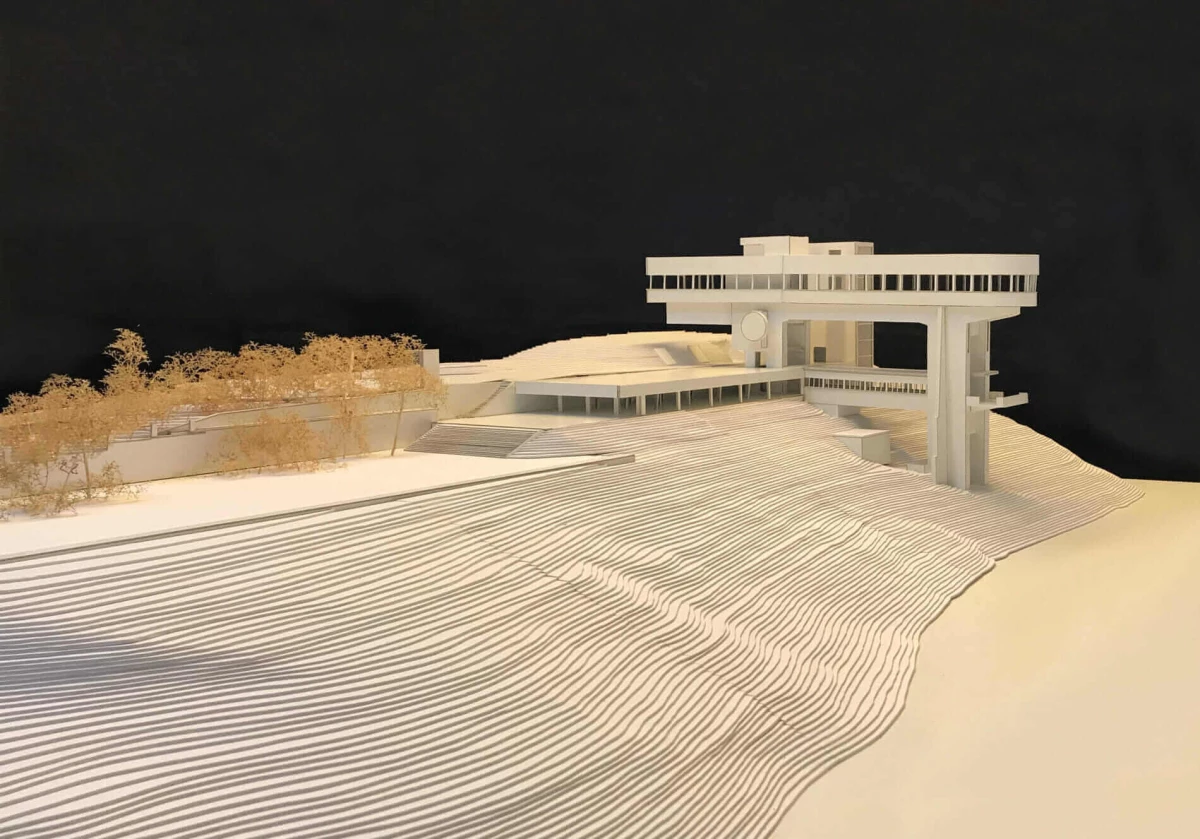
The Salève Cable Car, an iconic work by Swiss architect Maurice Braillard (1879–1965), is a unique structure perched above the void, with nearly 2,000 m² of built surface completed in 1932. While the arrival platform, upper terrace, and panoramic hall were constructed, the hotel and access to the restaurant hall remained unfinished, leaving the building frozen in an image of a suspended nave that has endured through time. The aim of this rehabilitation is to restore the Cable Car’s role in providing sustainable access to the mountain, while offering tools to explore and understand the local fauna, flora, and heritage, and adapting the site for contemporary activities such as hiking, paragliding, and climbing.
The project addresses environmental and energy concerns to promote mountain tourism that respects the natural surroundings. Reactivating the infrastructure provides an alternative to car access and helps preserve the environment. Material choices, the integration of photovoltaic panels, wood-fired boilers, and rainwater management systems all contribute to reducing the site’s impact. The Cable Car’s technical systems are connected to the city’s network, protecting the catchment area of the Eaux Belles spring, which supplies Annemasse. These measures aim to balance functionality, environmental respect, and comfort for both visitors and staff.
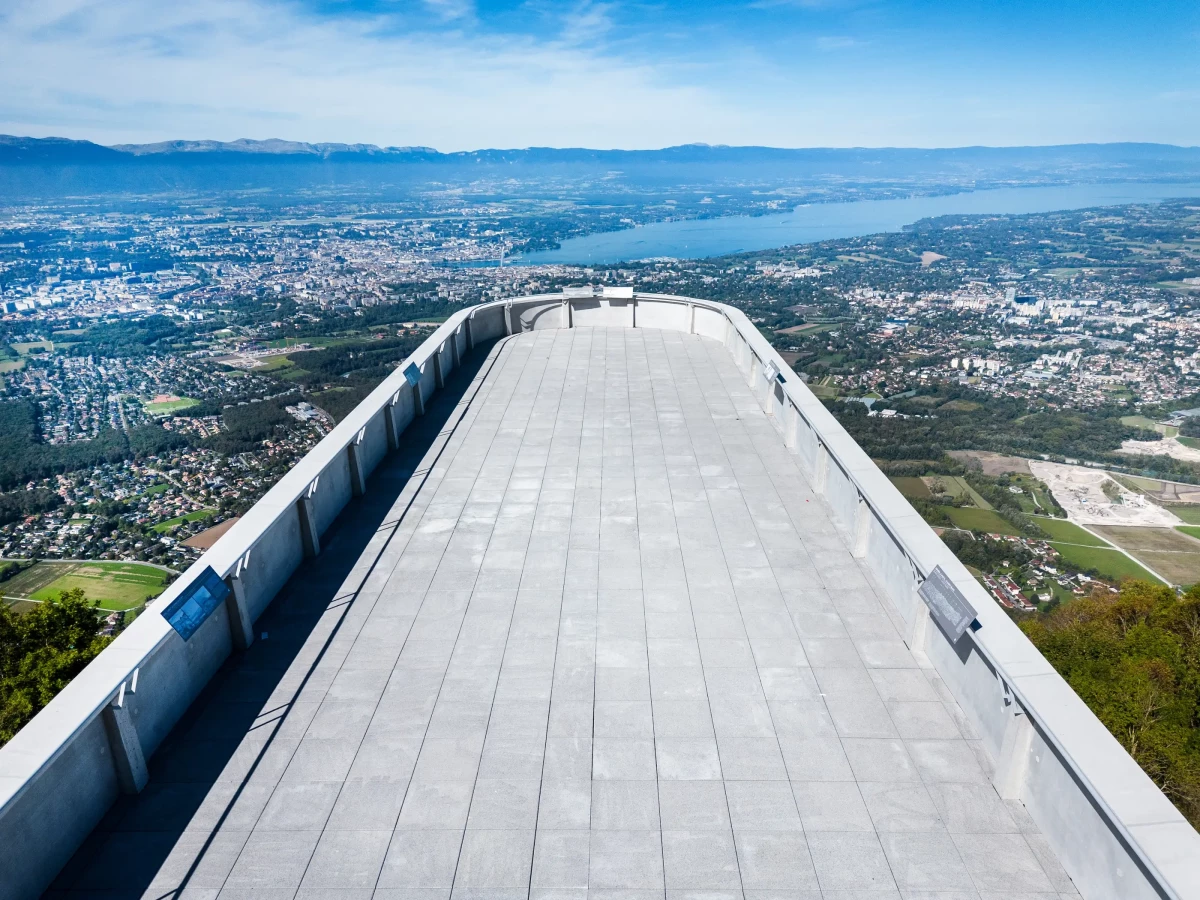
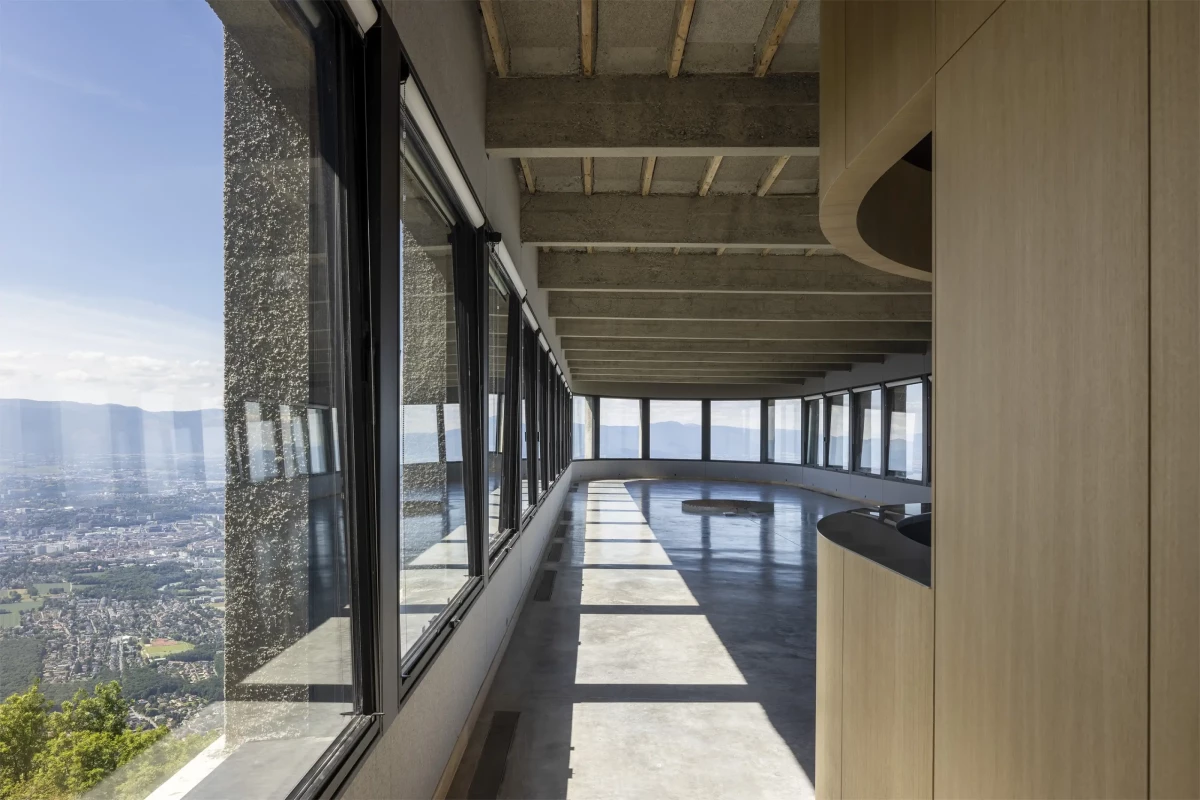
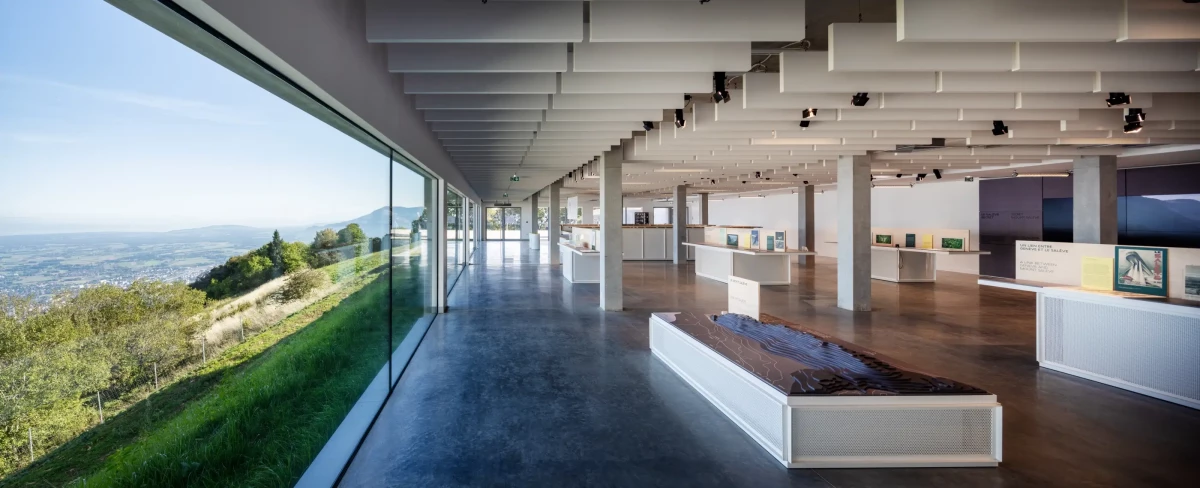
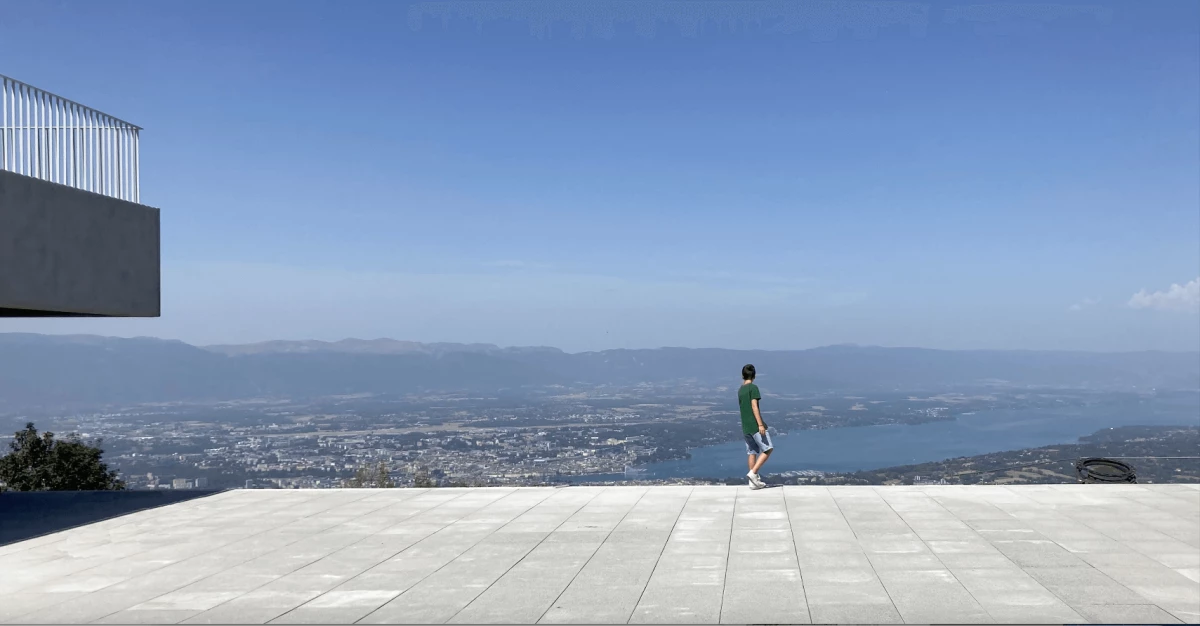
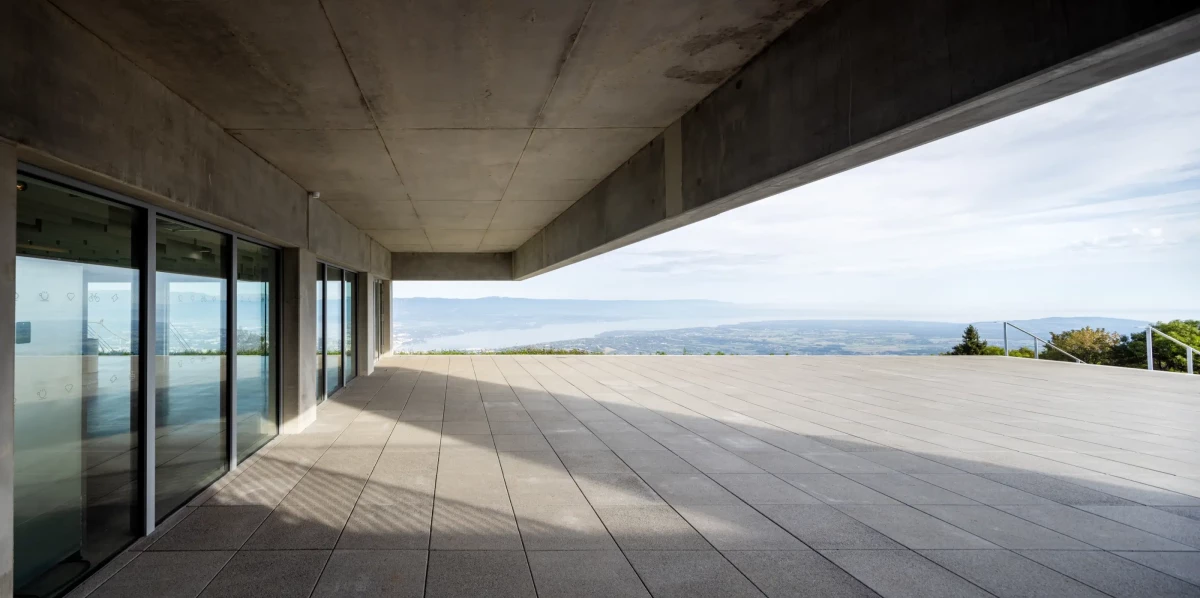
The rehabilitation itself includes the fitting of a restaurant in the panoramic hall, the creation of an extension for a seminar room, the installation of a stair tower, modification of the cabin arrival platform, and the creation of publicly accessible terraces, as well as the restoration of the raw concrete façades and reorganization of the exterior spaces. The terraces, reflecting the topography, accommodate a variety of uses: a paragliding runway, playground, esplanade, and hiking departure point. The lower station is also upgraded to improve visitor reception and working conditions for staff. This cross-border project highlights Braillard’s architecture and its surrounding environment and is accompanied by a photographic report by Pierre Vallet and a mini-series retracing the building’s history up to its rehabilitation.
The Salève Cable Car, an iconic work by Swiss architect Maurice Braillard (1879–1965), is a unique structure perched above the void, with nearly 2,000 m² of built surface completed in 1932. While the arrival platform, upper terrace, and panoramic hall were constructed, the hotel and access to the restaurant hall remained unfinished, leaving the building frozen in an image of a suspended nave that has endured through time. The aim of this rehabilitation is to restore the Cable Car’s role in providing sustainable access to the mountain, while offering tools to explore and understand the local fauna, flora, and heritage, and adapting the site for contemporary activities such as hiking, paragliding, and climbing.
The project addresses environmental and energy concerns to promote mountain tourism that respects the natural surroundings. Reactivating the infrastructure provides an alternative to car access and helps preserve the environment. Material choices, the integration of photovoltaic panels, wood-fired boilers, and rainwater management systems all contribute to reducing the site’s impact. The Cable Car’s technical systems are connected to the city’s network, protecting the catchment area of the Eaux Belles spring, which supplies Annemasse. These measures aim to balance functionality, environmental respect, and comfort for both visitors and staff.
The rehabilitation itself includes the fitting of a restaurant in the panoramic hall, the creation of an extension for a seminar room, the installation of a stair tower, modification of the cabin arrival platform, and the creation of publicly accessible terraces, as well as the restoration of the raw concrete façades and reorganization of the exterior spaces. The terraces, reflecting the topography, accommodate a variety of uses: a paragliding runway, playground, esplanade, and hiking departure point. The lower station is also upgraded to improve visitor reception and working conditions for staff. This cross-border project highlights Braillard’s architecture and its surrounding environment and is accompanied by a photographic report by Pierre Vallet and a mini-series retracing the building’s history up to its rehabilitation.
D’A 10+1 2024
Natura 2000 Zone
Integration of photovoltaic panels, rainwater management, installation of wood-fired boilers, and a double-flow mechanical ventilation system
Pascal Olivier, landscaper
Designers Unit, scenographer
Louis Choulet , fluids
Batiserf, structure
BMF, economist
Studio Dap, acoustician
Batiss, fire safety