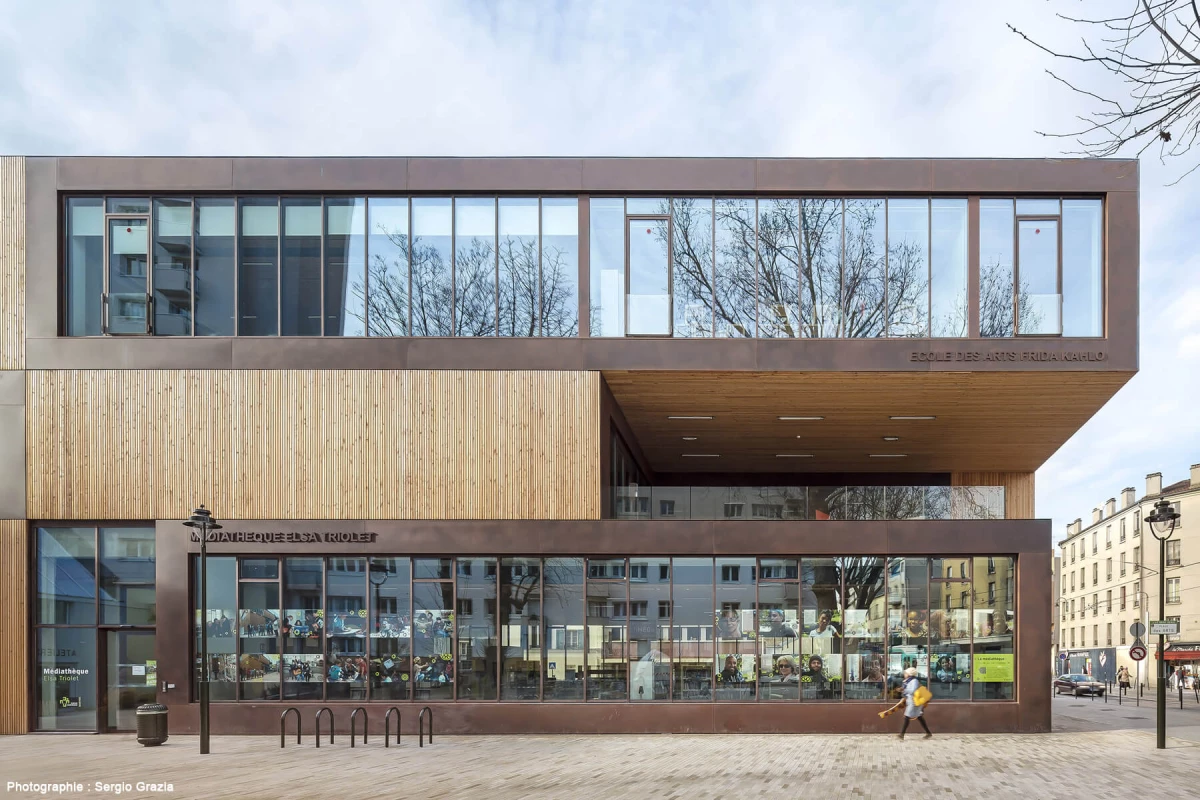
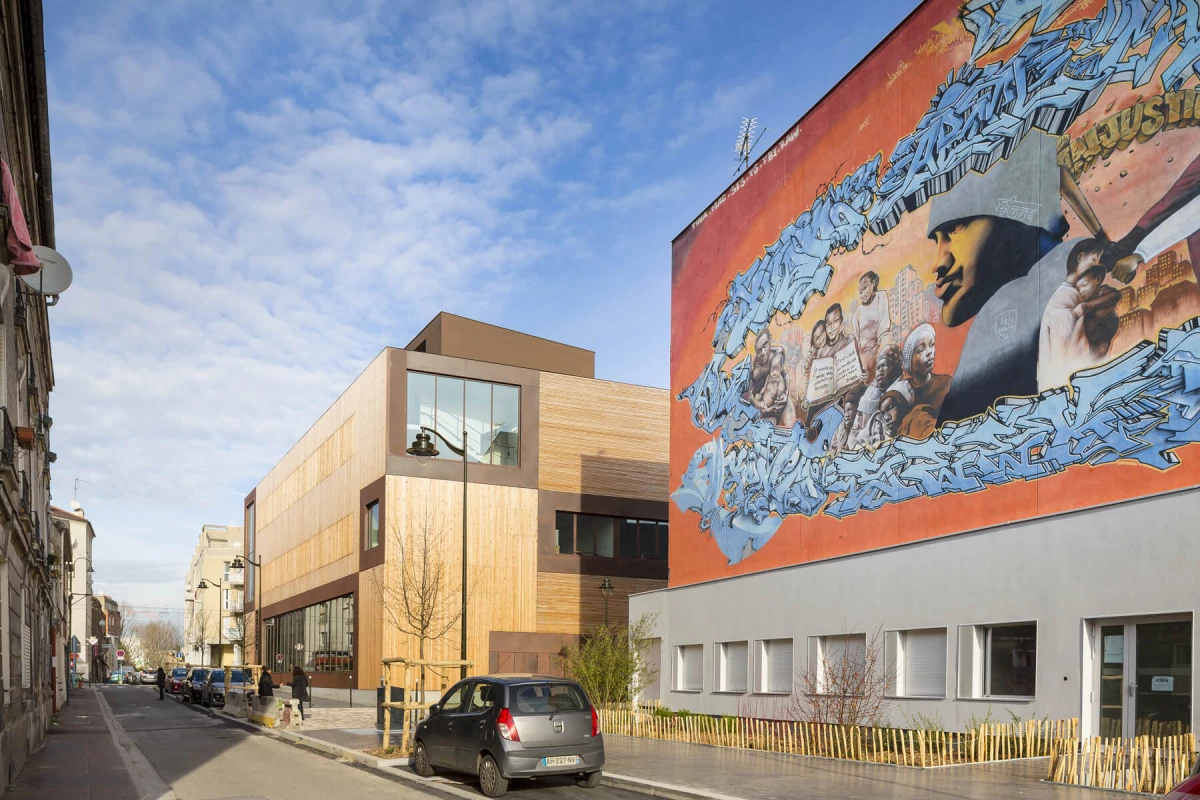
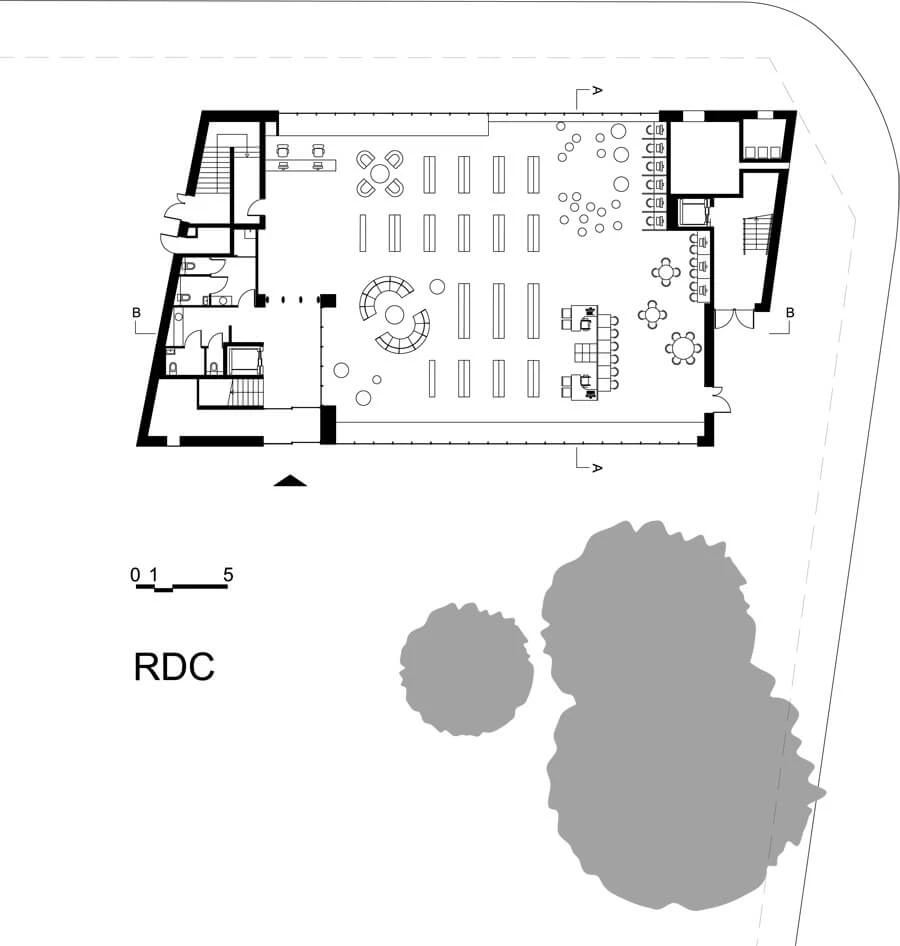
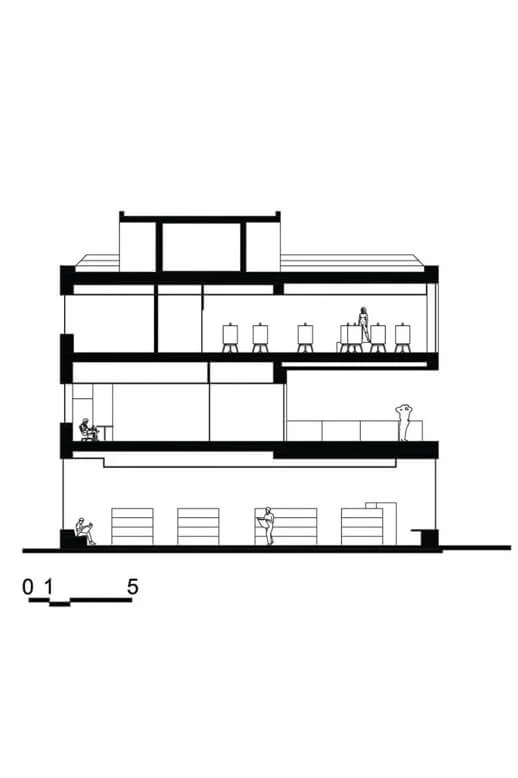
Located on the central square of L’Île-Saint-Denis, the building, designed in collaboration with Fassio-Viaud, brings together two previously separate cultural facilities: the Elsa-Triolet media library, part of the Plaine Commune network, and the Frida-Kahlo arts centre, dedicated to music, dance, and visual arts. In a heterogeneous urban context of old houses and large housing blocks, the project contributes to the restructuring of the town centre and the arrival of the tramway. The constrained site and impossibility of a basement led to a three-storey vertical organisation, accommodating the specific needs of two autonomous facilities within a single complex.
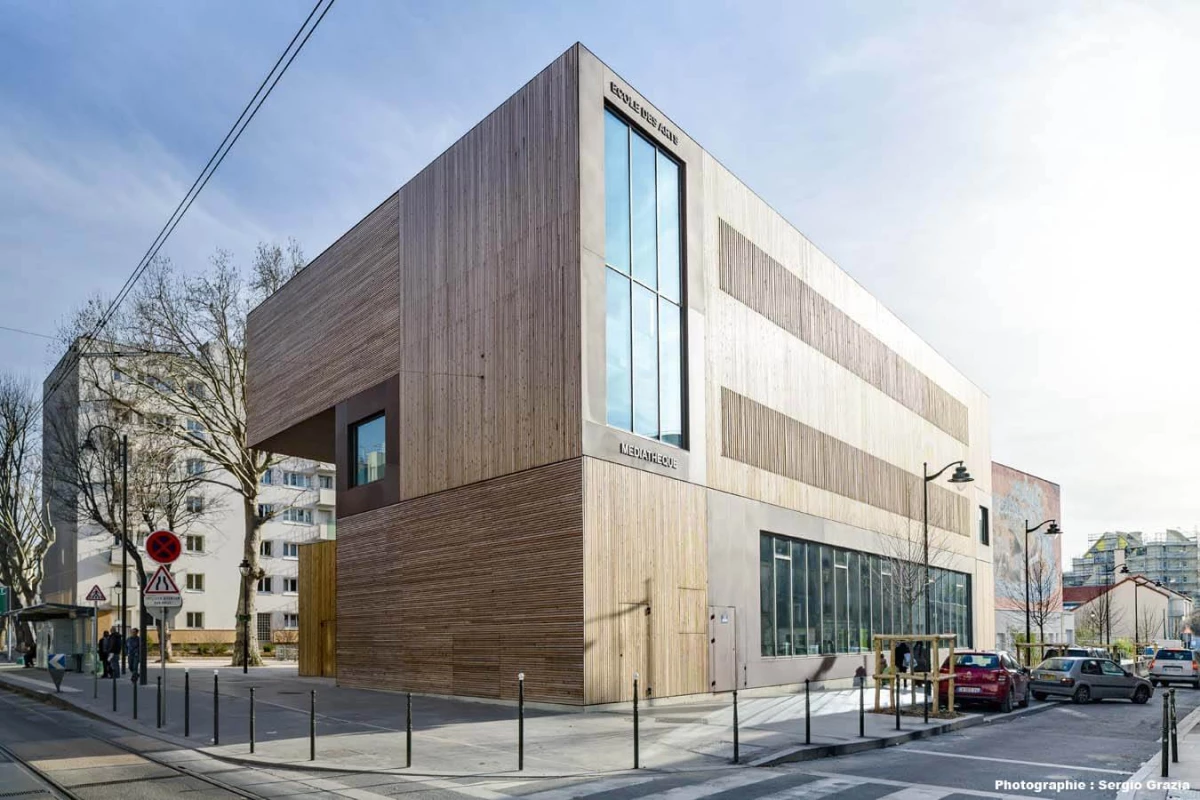
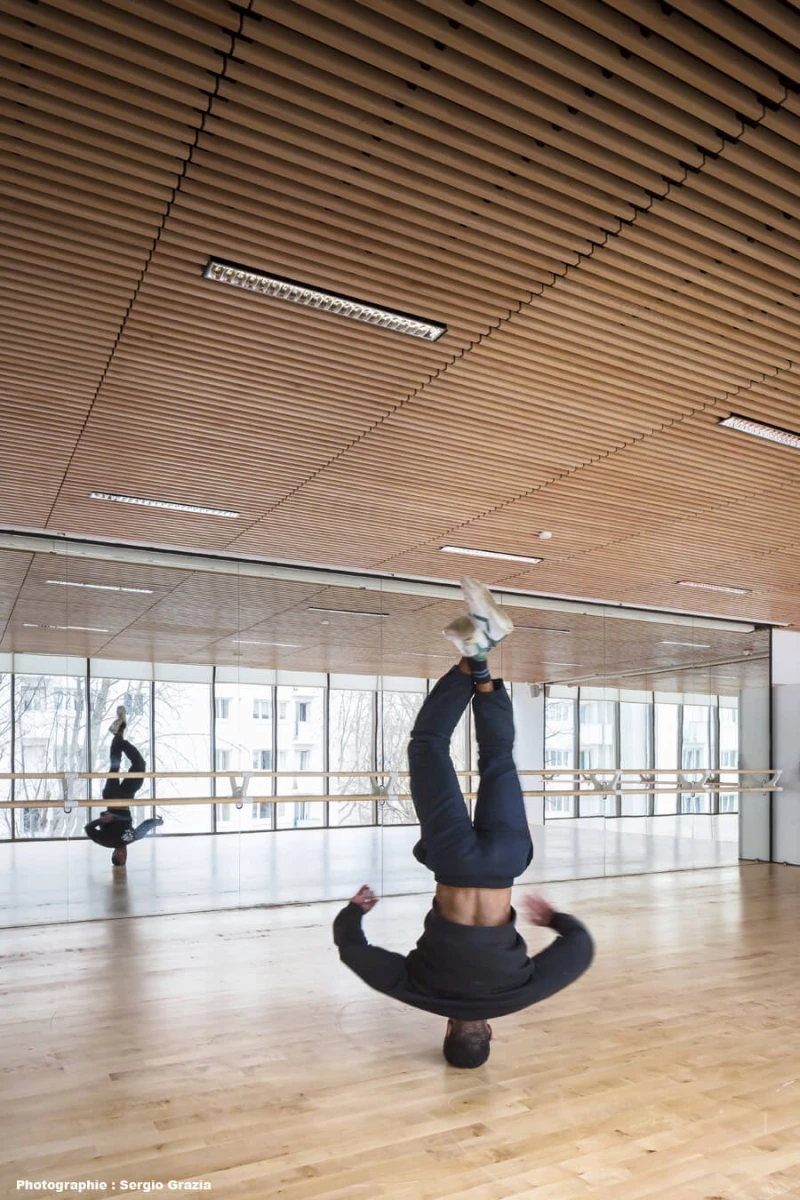
From the square, the building appears as a staggered stack of largely open wooden volumes, arranged like a “puzzle box” that reveals uses without fully exposing them. The ground floor, open and flexible, houses the media library, designed as a bright, publicly accessible space. The arts school occupies the two upper levels: the first floor contains the reception, administration, and a shared activity room opening onto a large terrace for flexible use; the second floor hosts the practice rooms, where acoustic and privacy needs justify a higher location.
The materiality reinforces this organisation: larch façades alternate with large windows framed in lacquered steel, creating a rhythm that softens the diverse context while showcasing interior life. Inside, wood continues in panels that unify circulation and provide a coherent reading of the building. The design reconciles distinct programmatic identities within a single envelope, welcoming different users without rigidly separating functions.
Located on the central square of L’Île-Saint-Denis, the building, designed in collaboration with Fassio-Viaud, brings together two previously separate cultural facilities: the Elsa-Triolet media library, part of the Plaine Commune network, and the Frida-Kahlo arts centre, dedicated to music, dance, and visual arts. In a heterogeneous urban context of old houses and large housing blocks, the project contributes to the restructuring of the town centre and the arrival of the tramway. The constrained site and impossibility of a basement led to a three-storey vertical organisation, accommodating the specific needs of two autonomous facilities within a single complex.
From the square, the building appears as a staggered stack of largely open wooden volumes, arranged like a “puzzle box” that reveals uses without fully exposing them. The ground floor, open and flexible, houses the media library, designed as a bright, publicly accessible space. The arts school occupies the two upper levels: the first floor contains the reception, administration, and a shared activity room opening onto a large terrace for flexible use; the second floor hosts the practice rooms, where acoustic and privacy needs justify a higher location.
The materiality reinforces this organisation: larch façades alternate with large windows framed in lacquered steel, creating a rhythm that softens the diverse context while showcasing interior life. Inside, wood continues in panels that unify circulation and provide a coherent reading of the building. The design reconciles distinct programmatic identities within a single envelope, welcoming different users without rigidly separating functions.
Fassio-Viaud, associate architect
Batiserf, structure
BMF, economist
Louis Choulet, fluids + HQE
Studio DAP, acoustician
Batiss, fire safety