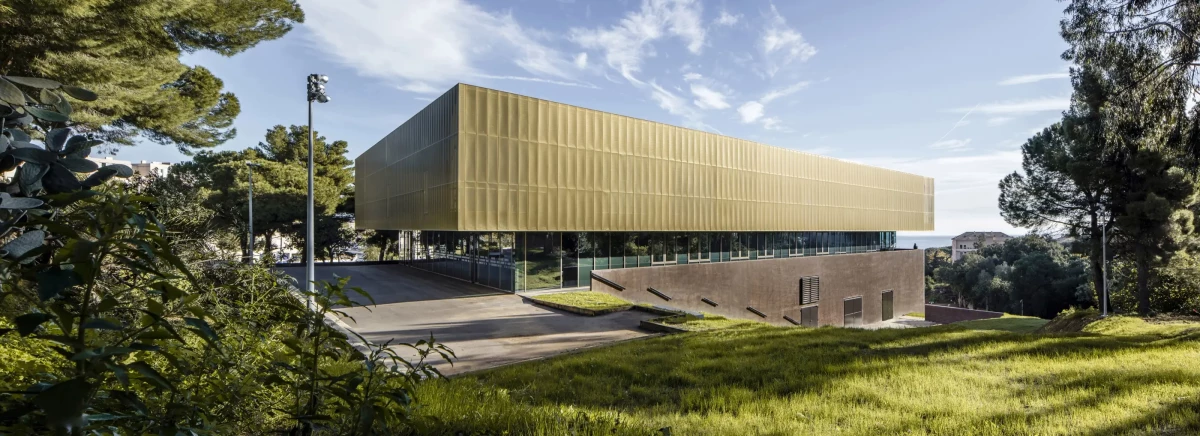
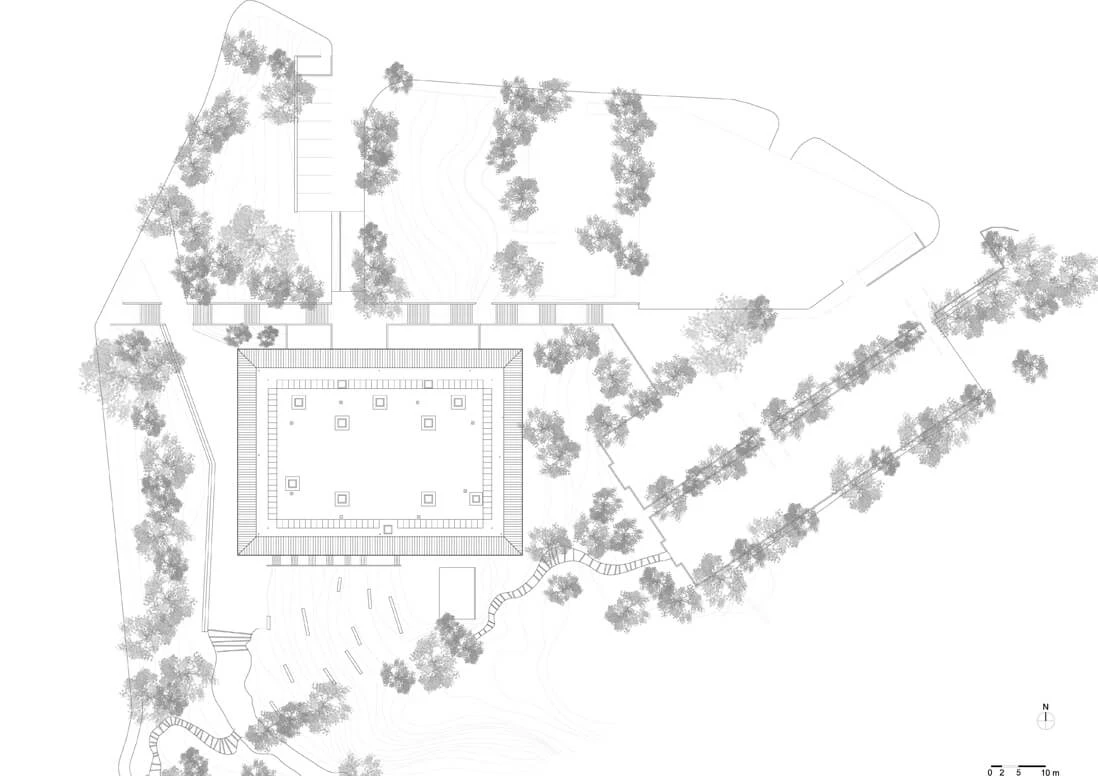
The Bastia Cultural Centre is part of the ANRU programme for the renovation of the southern districts, mostly composed of large housing estates built in the 1960s. Designed as an open facility for all, it aims to bring residents together and foster social and cultural interactions beyond the neighbourhood. The site is treated as an accessible park: fences have been removed, existing pines and eucalyptus preserved and reinforced, and pathways and seating areas arranged so that the shade and coolness of the trees are integrated into daily use, offering resting or meeting points throughout the walkways.
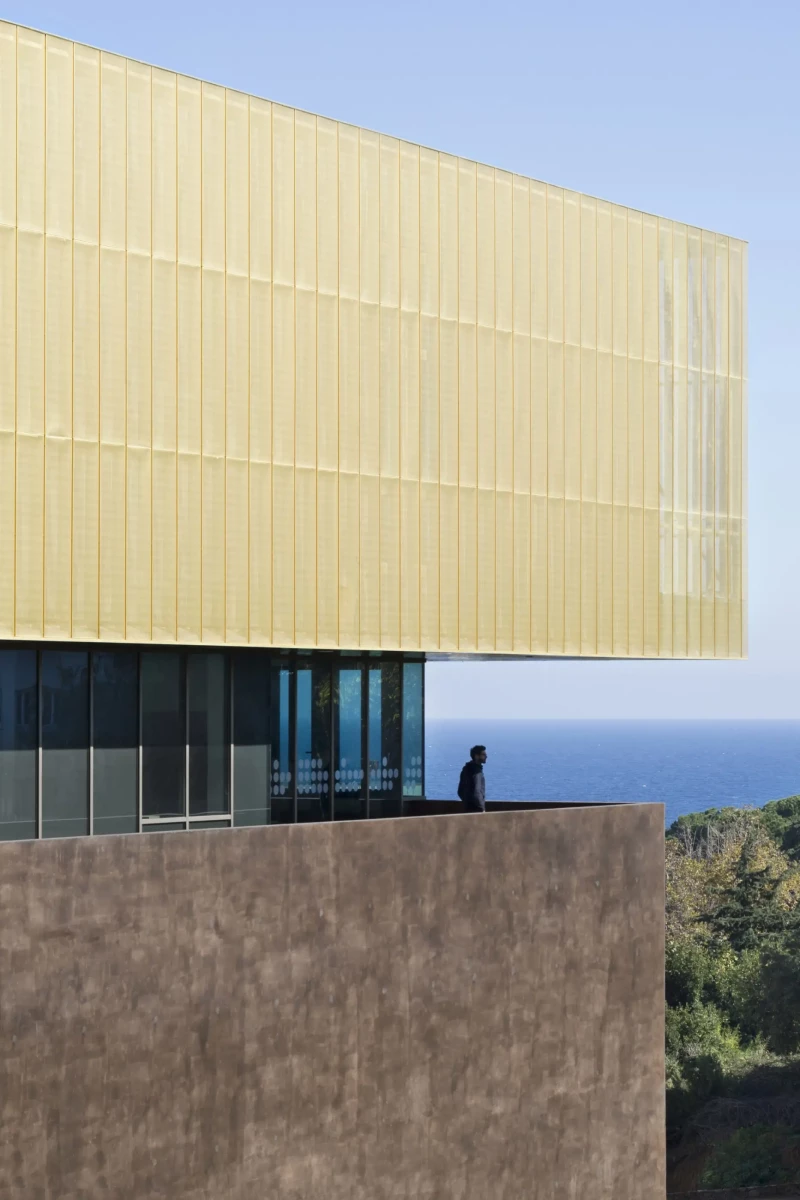
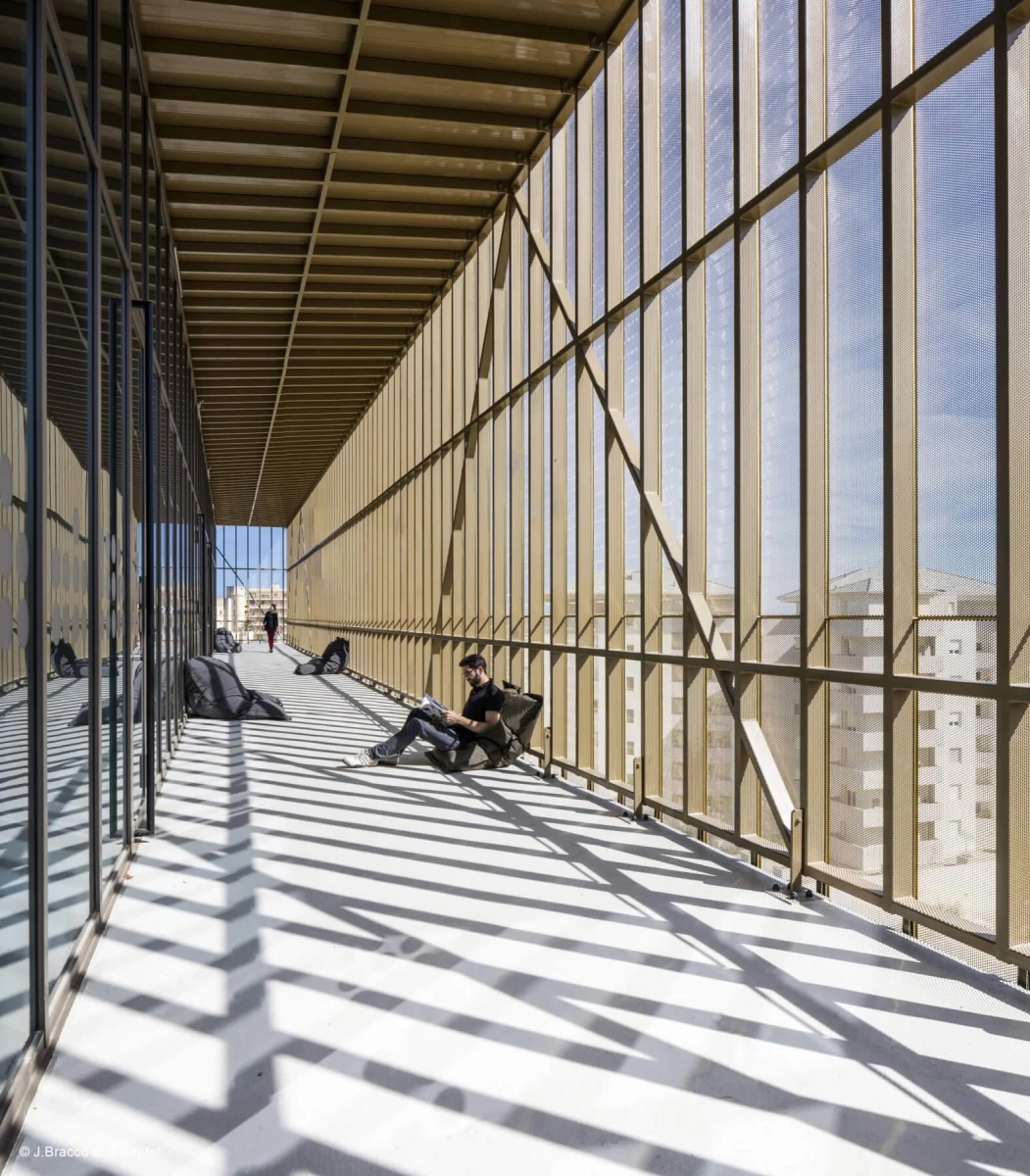
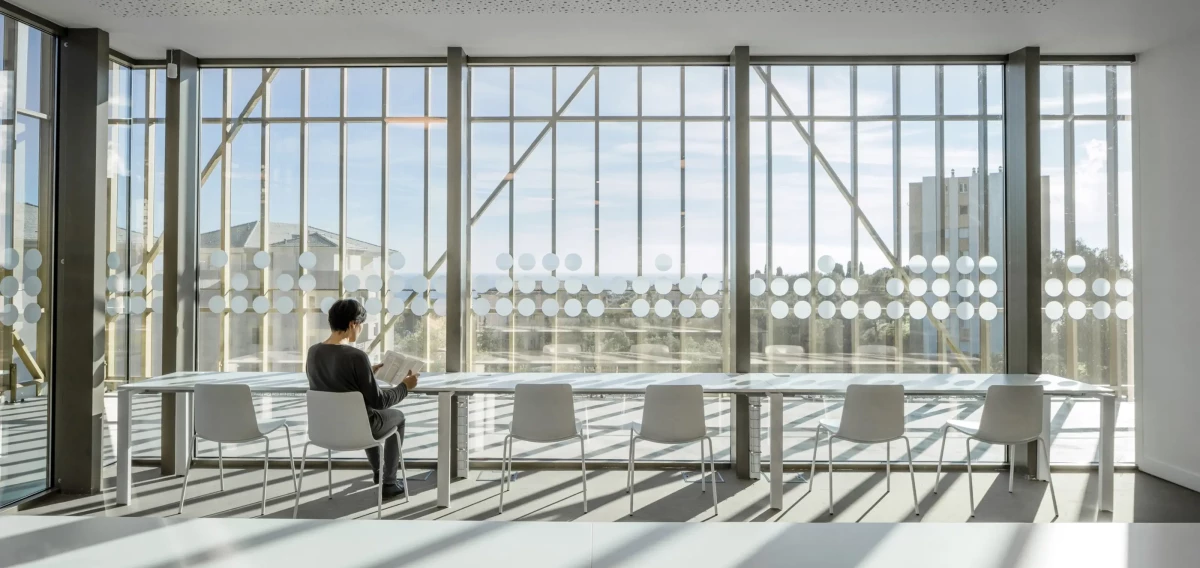
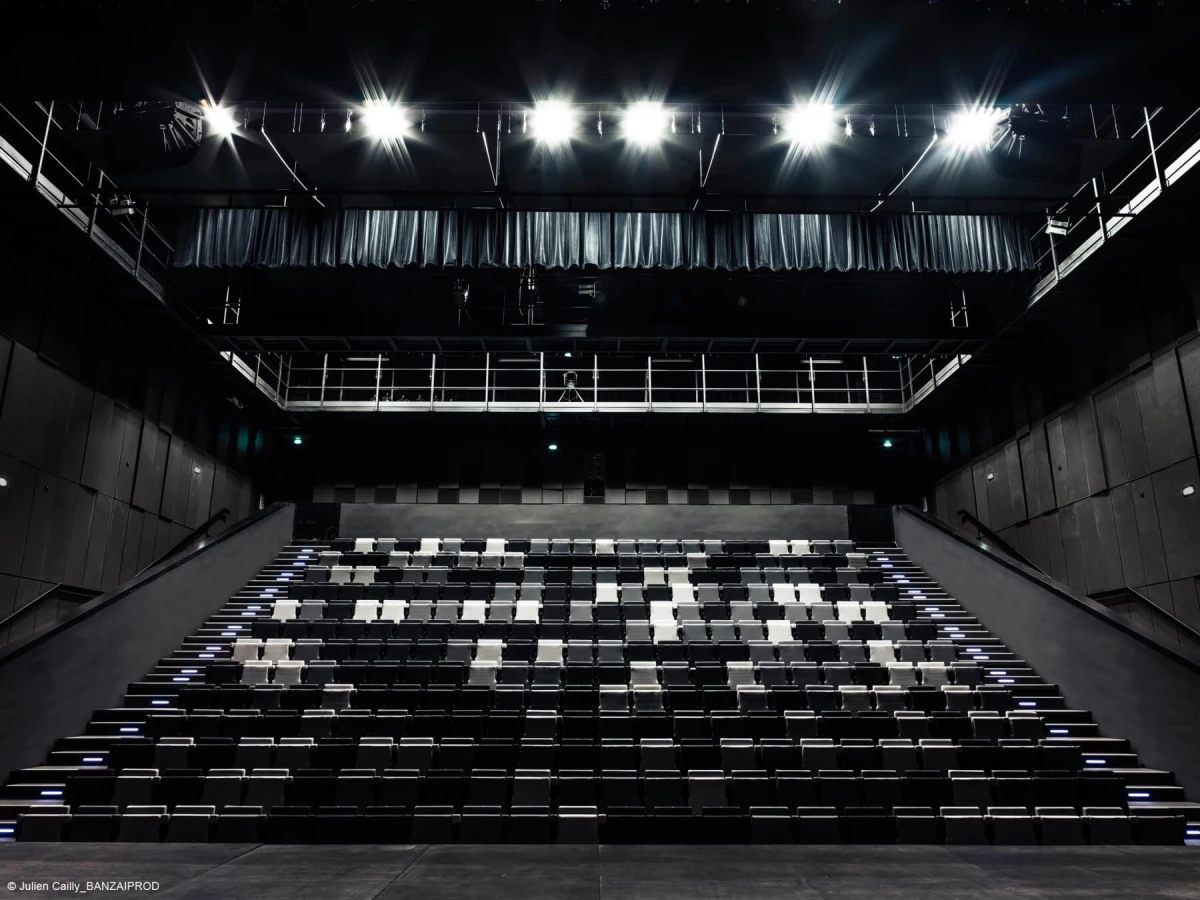
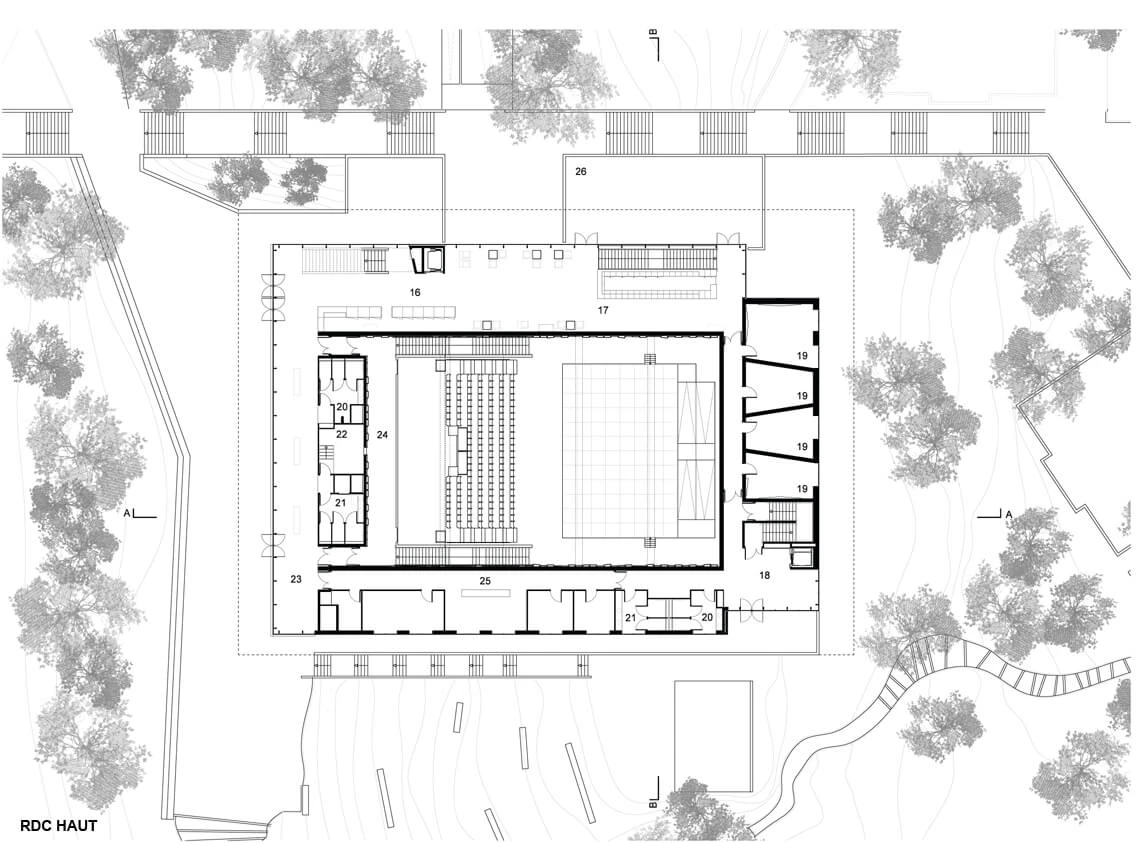
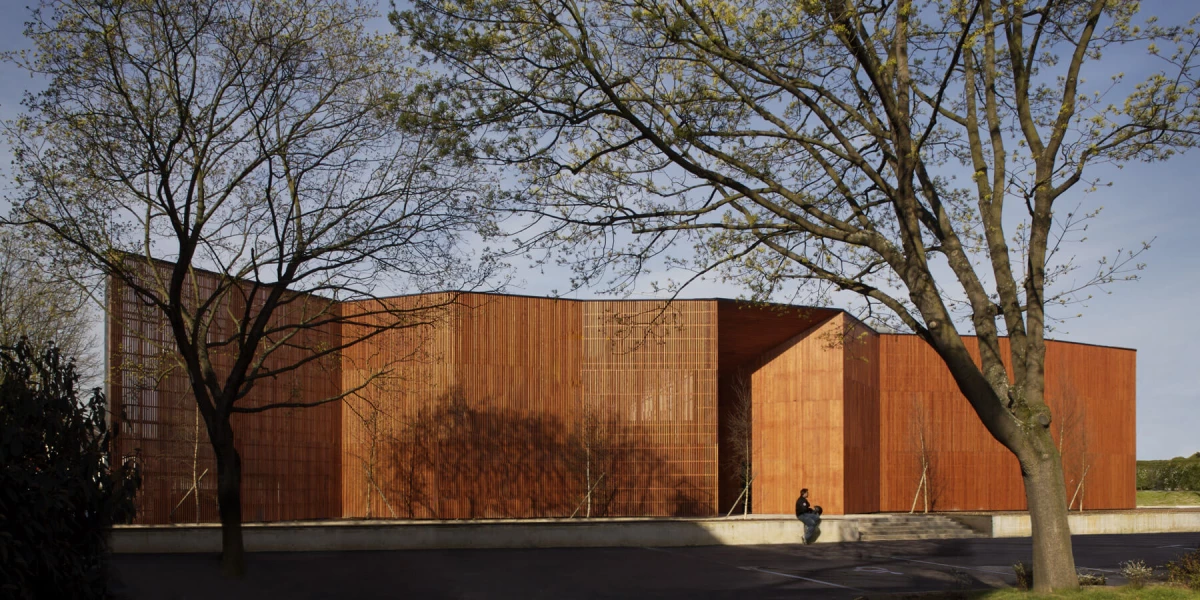
The project responds to a demanding brief, which required contrasting and innovative spaces. The performance hall, anchored on a base of raw earth-coloured concrete, organises its functions around a dense, introspective volume. Flexible acoustics allow it to host both concerts and theatre performances, while ancillary spaces—dressing rooms, studios, technical areas, and a foyer—are grouped around the stage for maximum efficiency. On the upper floor, the media library rises above the canopy, providing bright spaces where reading and contemplation are guided by natural light filtered through the trees. Walkways extend interior spaces outward, frame views of the city and the sea, and create sequences of shade and light that accompany visitors as they move through the building.
Between these two volumes, the main entrance establishes a smooth transition to the forecourt and the public realm, forming a convivial space where people can meet, have a coffee, or read, and where everyday life flows seamlessly into cultural events. The design also incorporates ambitious environmental objectives, targeting a Low-Energy Building standard (Bâtiment Basse Consommation) with a 20% reduction in regulatory energy consumption. Through its organisation and spatial choices, the project reflects a broader thinking on how a public building can open onto its surroundings, enhance existing vegetation, and respond to the cultural needs of a contemporary city.
The Bastia Cultural Centre is part of the ANRU programme for the renovation of the southern districts, mostly composed of large housing estates built in the 1960s. Designed as an open facility for all, it aims to bring residents together and foster social and cultural interactions beyond the neighbourhood. The site is treated as an accessible park: fences have been removed, existing pines and eucalyptus preserved and reinforced, and pathways and seating areas arranged so that the shade and coolness of the trees are integrated into daily use, offering resting or meeting points throughout the walkways.
The project responds to a demanding brief, which required contrasting and innovative spaces. The performance hall, anchored on a base of raw earth-coloured concrete, organises its functions around a dense, introspective volume. Flexible acoustics allow it to host both concerts and theatre performances, while ancillary spaces—dressing rooms, studios, technical areas, and a foyer—are grouped around the stage for maximum efficiency. On the upper floor, the media library rises above the canopy, providing bright spaces where reading and contemplation are guided by natural light filtered through the trees. Walkways extend interior spaces outward, frame views of the city and the sea, and create sequences of shade and light that accompany visitors as they move through the building.
Between these two volumes, the main entrance establishes a smooth transition to the forecourt and the public realm, forming a convivial space where people can meet, have a coffee, or read, and where everyday life flows seamlessly into cultural events. The design also incorporates ambitious environmental objectives, targeting a Low-Energy Building standard (Bâtiment Basse Consommation) with a 20% reduction in regulatory energy consumption. Through its organisation and spatial choices, the project reflects a broader thinking on how a public building can open onto its surroundings, enhance existing vegetation, and respond to the cultural needs of a contemporary city.
Atel’architecture, Pierre-Jean Monti, associate architect
Ducks scéno, scenographer
Studio DAP, acoustician
Choulet + SMI, fluids
ISB, structure
Blasini, roads and utilities
BMF, economist
Hervé de Chastenet, landscape architect
Batiss, fire safety
Kanju scenographie