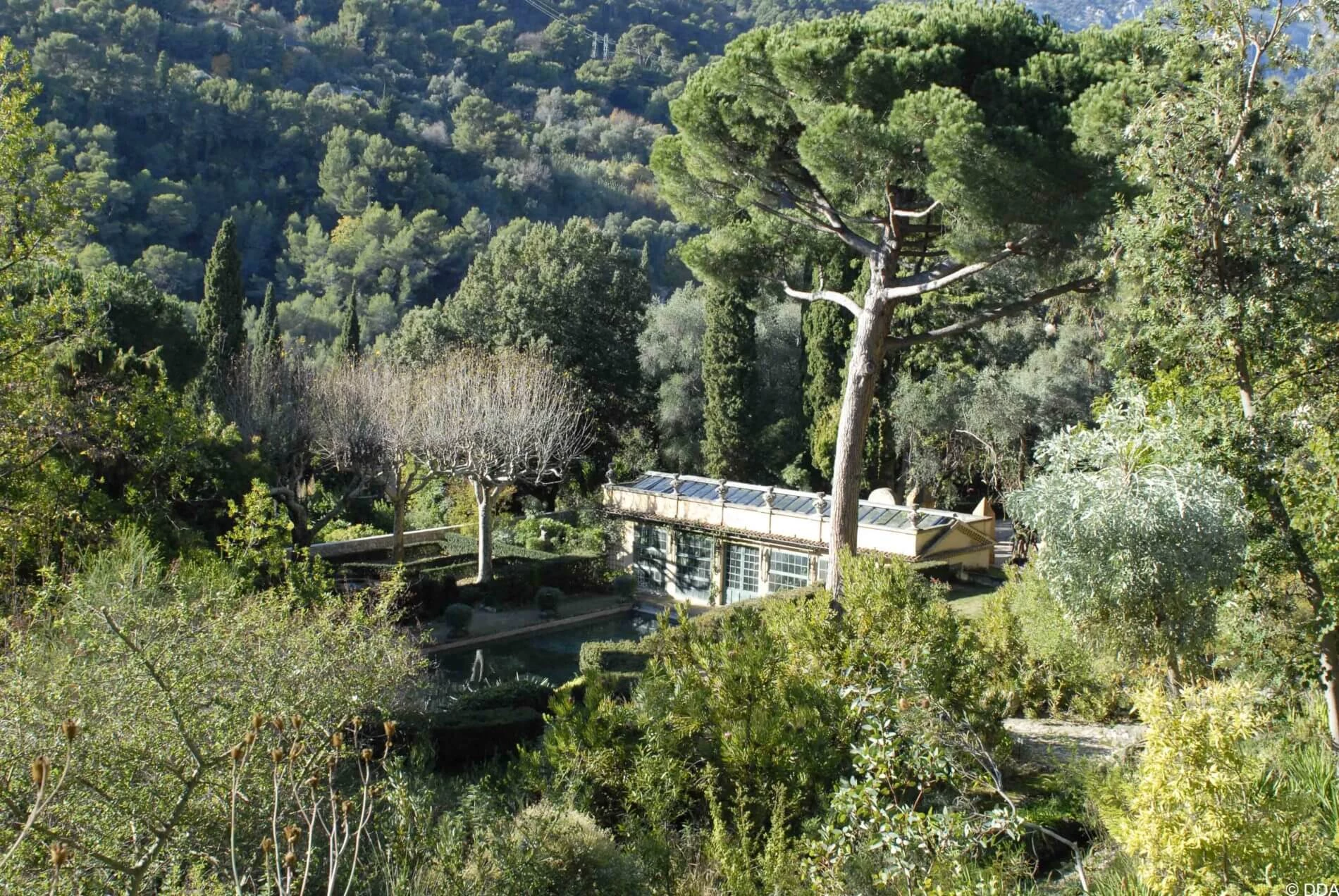
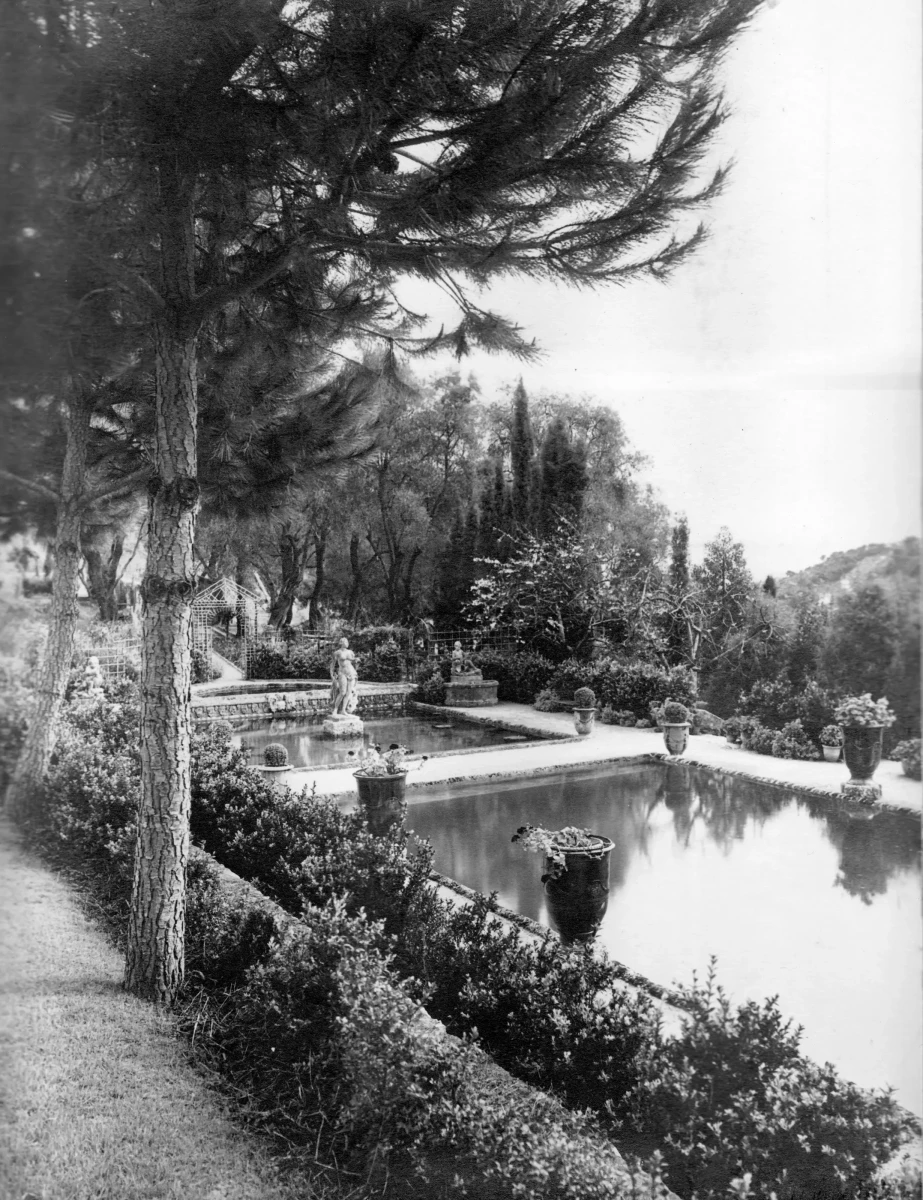
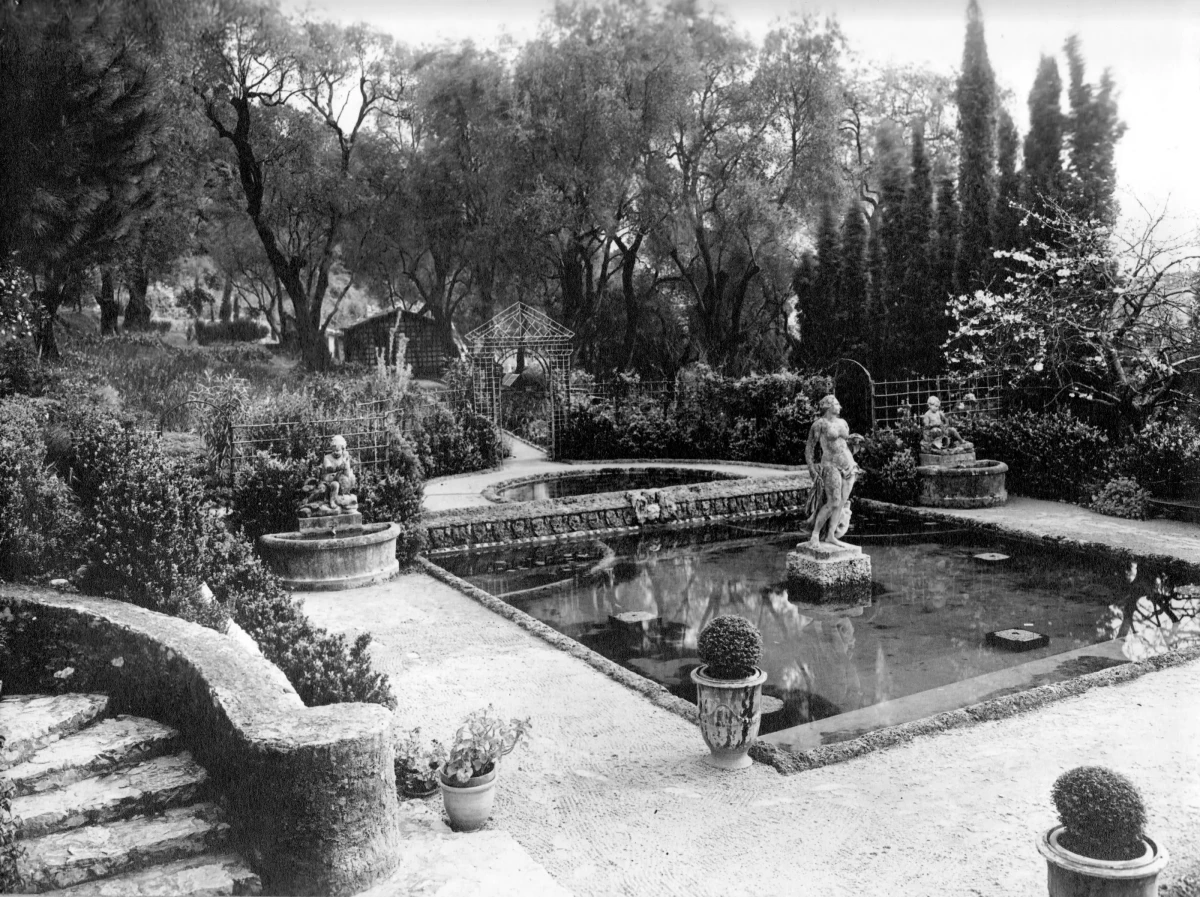
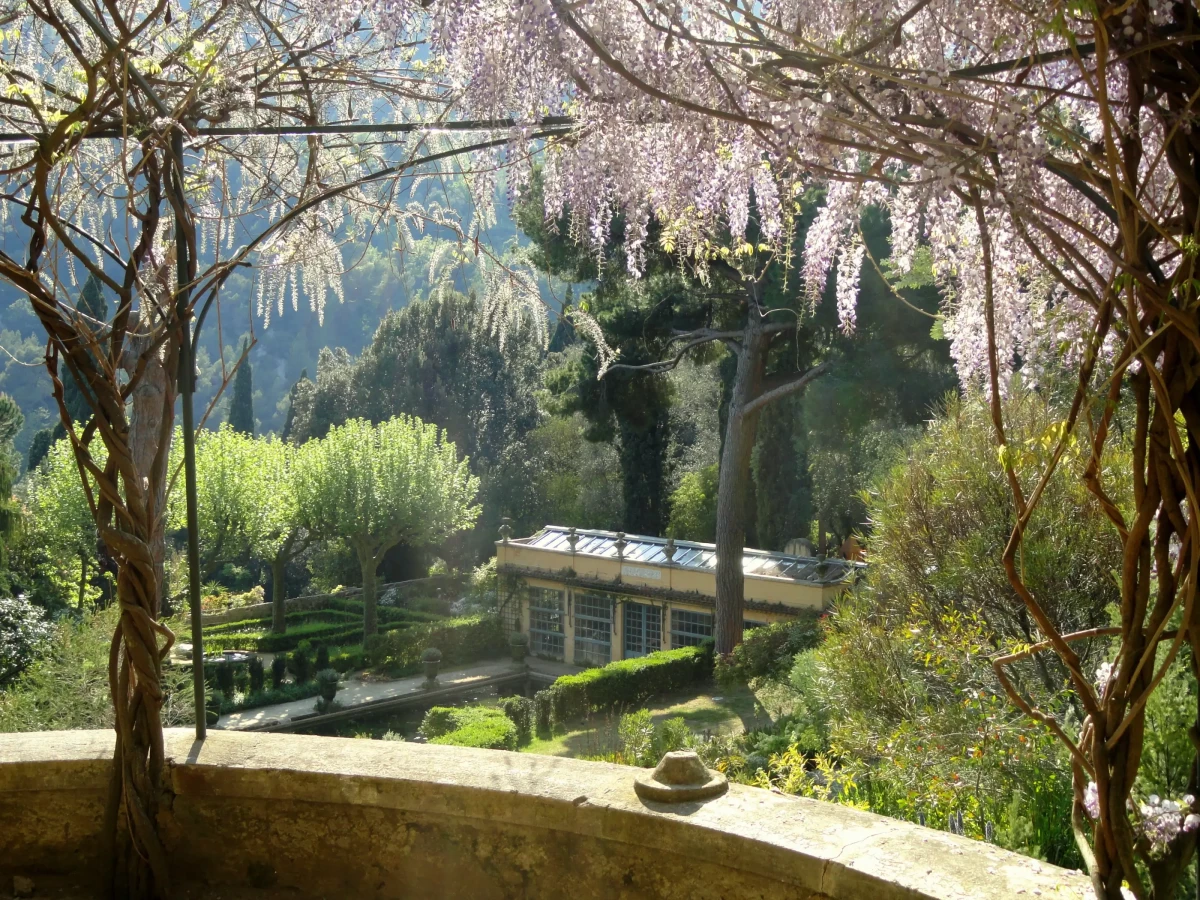
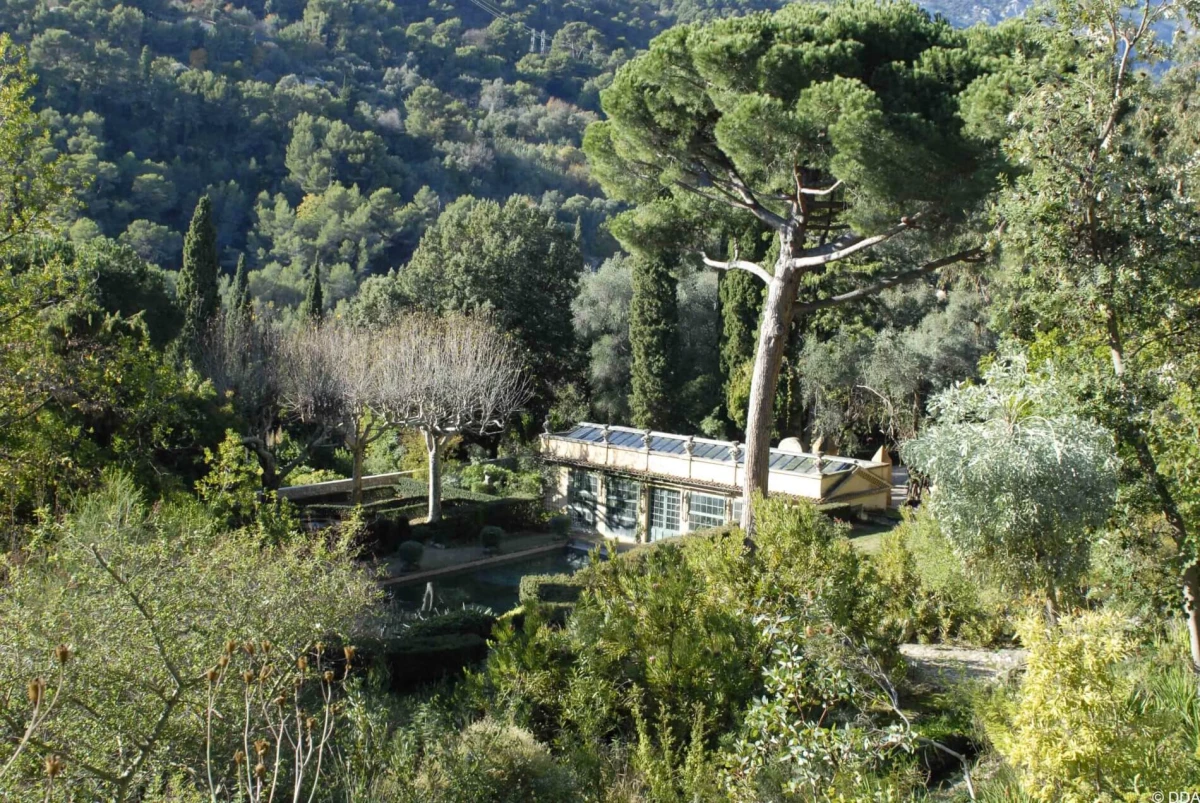
The Serre de la Madone Garden extends across a hilly 7-hectare estate. Originally a Provençal agricultural property, it once hosted olive and citrus plantations arranged on a series of restanques—terraces supported by dry-stone walls, characteristic of the region and enabling cultivation on steep slopes. Listed as a Historic Monument since 1990, the garden was designed from 1924 onwards by the self-taught landscape gardener Lawrence Johnston according to the principle of “green rooms”, forming successive thematic sequences in which each plant collection reflects a botanical family, a geographical origin, or a specific garden art. Today, the site seeks to strengthen its identity and develop a responsible management of its natural resources, with a five- to ten-year management plan supported by ASJEM.
Over time, the garden has retained its overall structure while integrating new plant collections, which has weakened certain parts of the estate. Open to the public, it offers a distinctive interplay of vegetation and architectural features, yet lacks a clear visitor and educational strategy to highlight its botanical specimens. Water management—essential both to the survival of the plants and the stability of the restanques—constitutes a major challenge: excess or shortage can threaten the integrity of the site. The defined objectives cover three areas: the landscape — plant renewal and introductions, revision of the irrigation network; the architectural — restoration of restanques, fountains, and basins, adaptation of pathways, analysis of built structures; and the visitor experience/education — activities, signage, and the redefinition of uses and spaces.
Implementation of the management plan has made it possible to identify priority interventions. The first campaign focused on securing the most sensitive areas: repair of severely deteriorated upper restanques, installation of guardrails, safety works on the Maldini reservoir, boar-proof fencing, and the restoration of the electrical network and lighting. For the upper terraces, a system of chestnut box walls sourced from local forests was chosen: lightweight, durable, and with minimal environmental impact, it allows the terraces to be reconstructed while stabilising the soils. These works, led by dd.a and the full team of specialists, form the first stage of a multidisciplinary programme aimed at restoring and enhancing the entire garden while respecting its historic identity and contemporary uses.
The Serre de la Madone Garden extends across a hilly 7-hectare estate. Originally a Provençal agricultural property, it once hosted olive and citrus plantations arranged on a series of restanques—terraces supported by dry-stone walls, characteristic of the region and enabling cultivation on steep slopes. Listed as a Historic Monument since 1990, the garden was designed from 1924 onwards by the self-taught landscape gardener Lawrence Johnston according to the principle of “green rooms”, forming successive thematic sequences in which each plant collection reflects a botanical family, a geographical origin, or a specific garden art. Today, the site seeks to strengthen its identity and develop a responsible management of its natural resources, with a five- to ten-year management plan supported by ASJEM.
Over time, the garden has retained its overall structure while integrating new plant collections, which has weakened certain parts of the estate. Open to the public, it offers a distinctive interplay of vegetation and architectural features, yet lacks a clear visitor and educational strategy to highlight its botanical specimens. Water management—essential both to the survival of the plants and the stability of the restanques—constitutes a major challenge: excess or shortage can threaten the integrity of the site. The defined objectives cover three areas: the landscape — plant renewal and introductions, revision of the irrigation network; the architectural — restoration of restanques, fountains, and basins, adaptation of pathways, analysis of built structures; and the visitor experience/education — activities, signage, and the redefinition of uses and spaces.
Implementation of the management plan has made it possible to identify priority interventions. The first campaign focused on securing the most sensitive areas: repair of severely deteriorated upper restanques, installation of guardrails, safety works on the Maldini reservoir, boar-proof fencing, and the restoration of the electrical network and lighting. For the upper terraces, a system of chestnut box walls sourced from local forests was chosen: lightweight, durable, and with minimal environmental impact, it allows the terraces to be reconstructed while stabilising the soils. These works, led by dd.a and the full team of specialists, form the first stage of a multidisciplinary programme aimed at restoring and enhancing the entire garden while respecting its historic identity and contemporary uses.
ALEP, landscaping
Francis Maire, arborist
Eau et Perspectives, hydrogeologist
AIS, structure
AEGIS, geotechnical engineer