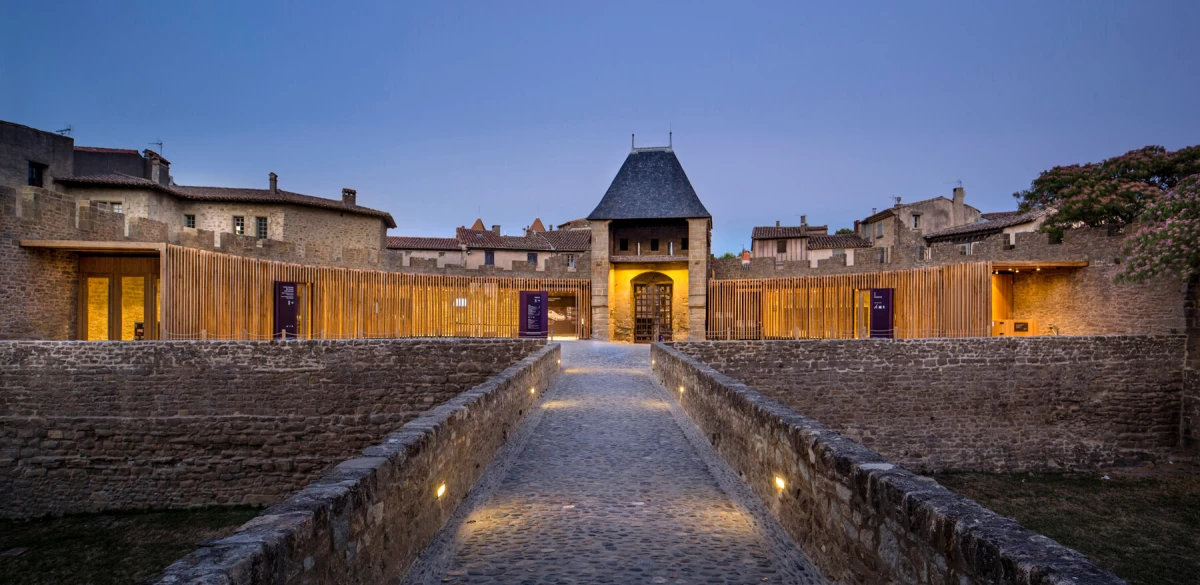
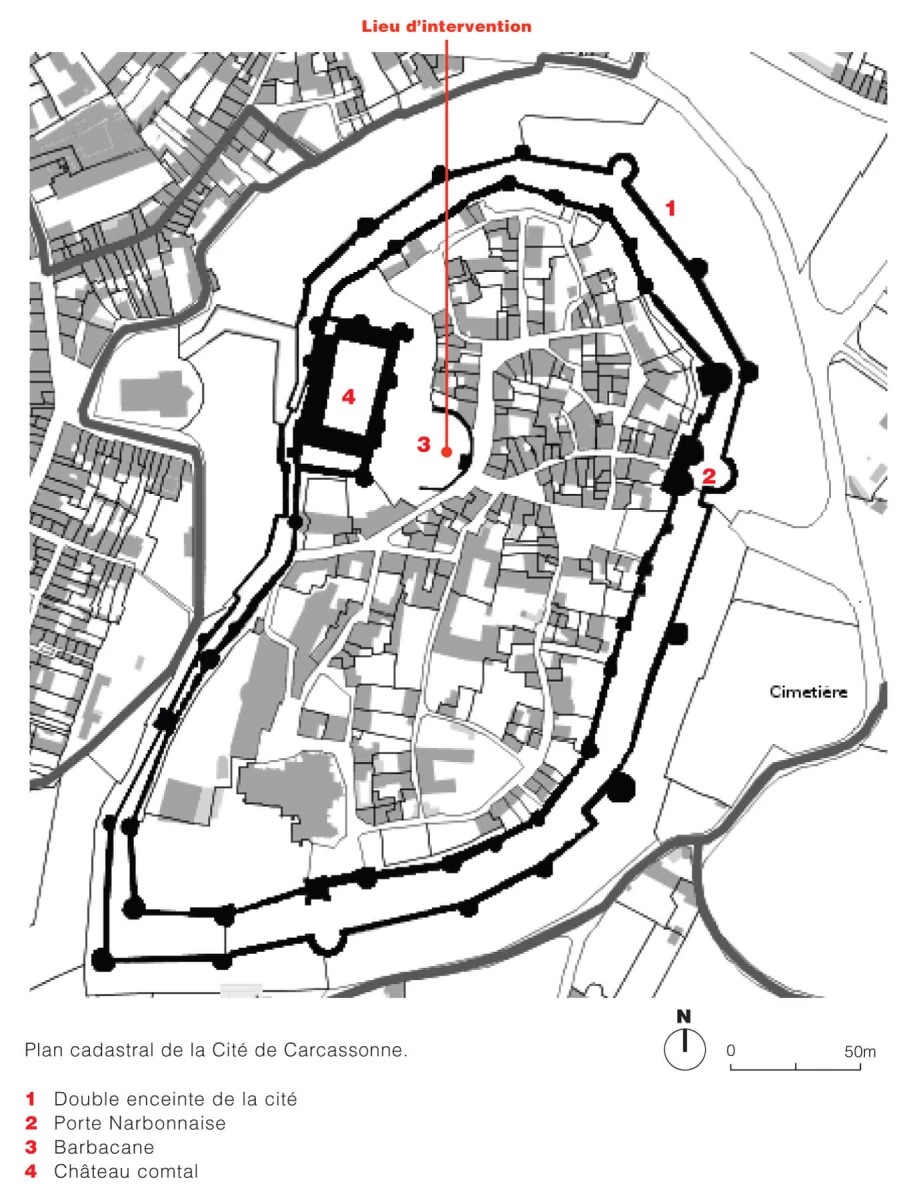
The project forms part of a broader programme by the Centre des Monuments Nationaux focused on improving public reception areas. The visitor reception space at Carcassonne Castle is located within the barbican, a defensive outwork located in front of the Count’s Castle. Integrating the project into a site marked by medieval architecture relies on two key principles: respecting the history of the place and positioning the new intervention set back from the monument. The barbican of the Castle is a semi-lunar structure, consisting of a semi-circular enclosure punctuated by a gate tower, opening onto a central square that faces the castle. By the late 19th century, only the gate tower had survived in ruins; the remainder of the enclosure and the covering of the tower were reconstructed during Viollet-le-Duc’s restoration campaign between 1890 and 1910.
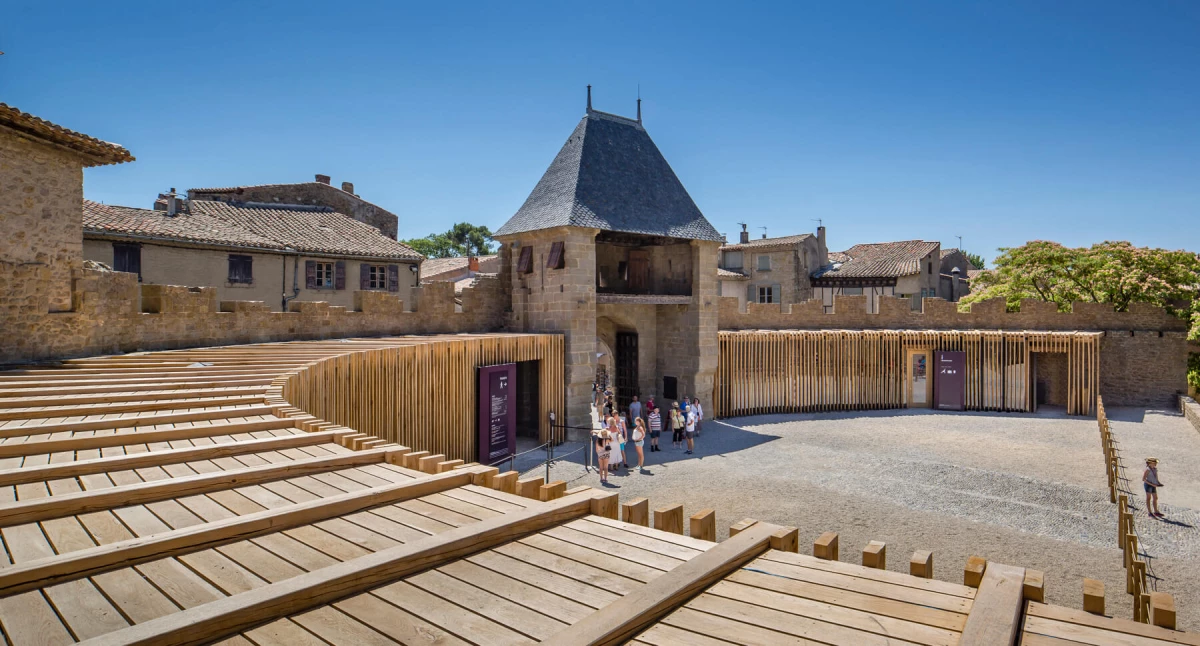
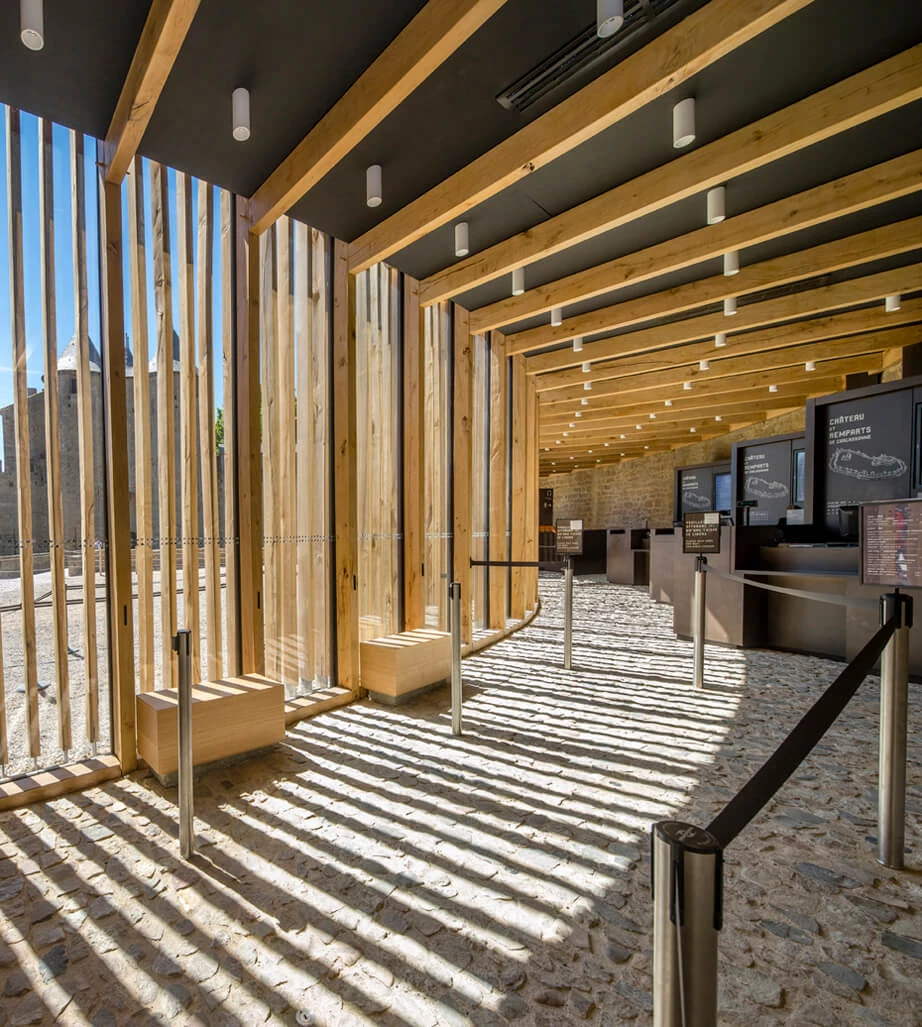
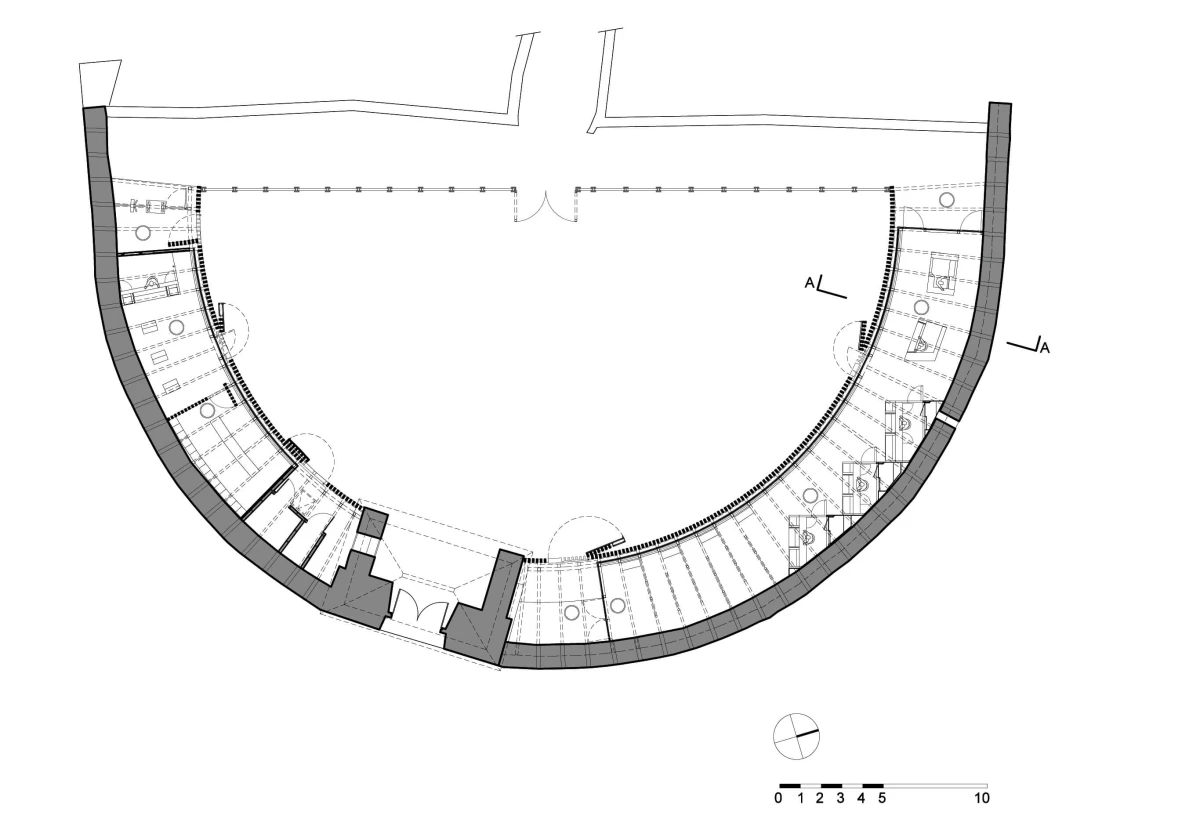
The new project integrates into this structure by placing a lightweight building inside the enclosure, preserving the central square intended for defensive purposes and referencing the wooden constructions that historically complemented the enclosure in the medieval period. The visitor reception space, extending the interior of the enclosure, is therefore only fully perceived once the visitor has entered the square, gaining a direct view of the Count’s Castle. The programme for public reception includes ticketing, control and information points, as well as a few technical facilities. By attaching to the enclosure around the gate tower, the building’s two lateral wings organise the visitor route and structure the flow of movement, while the central square remains an open space allowing unobstructed views of the castle.
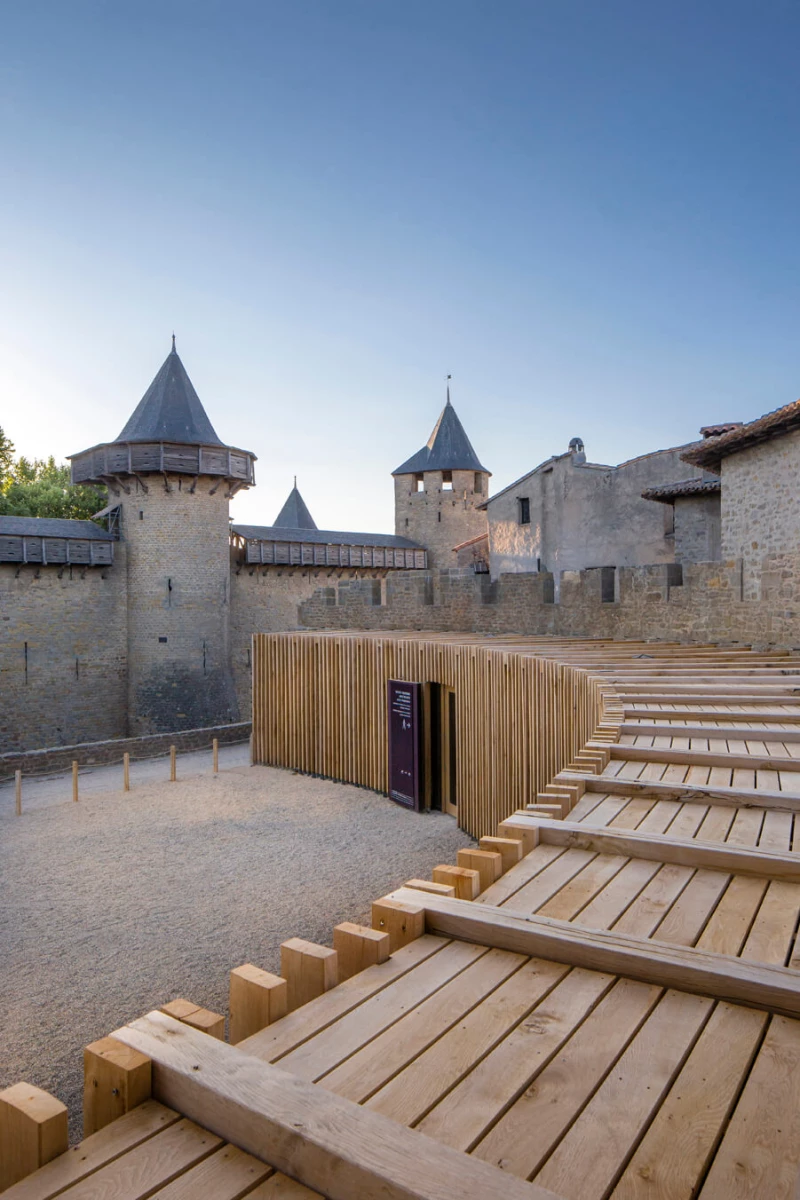
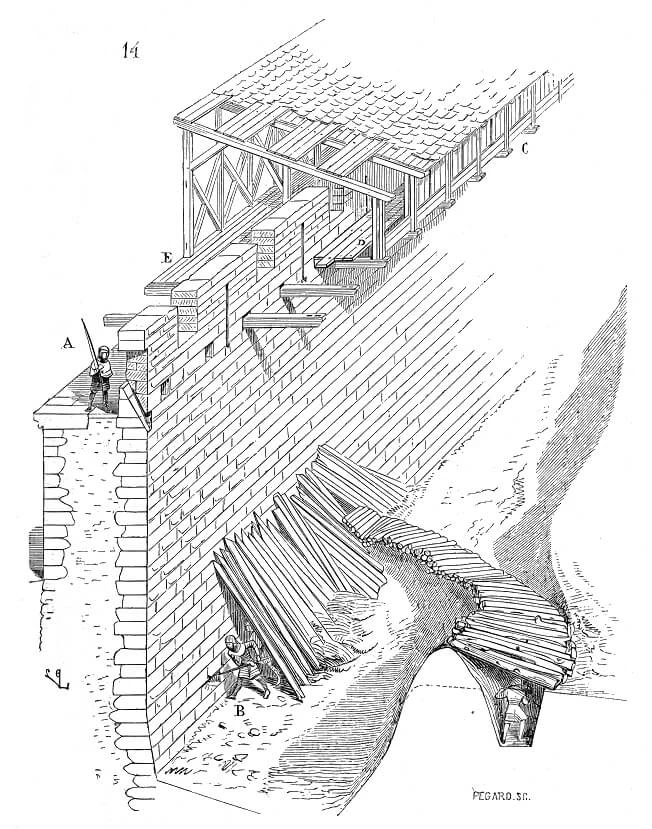
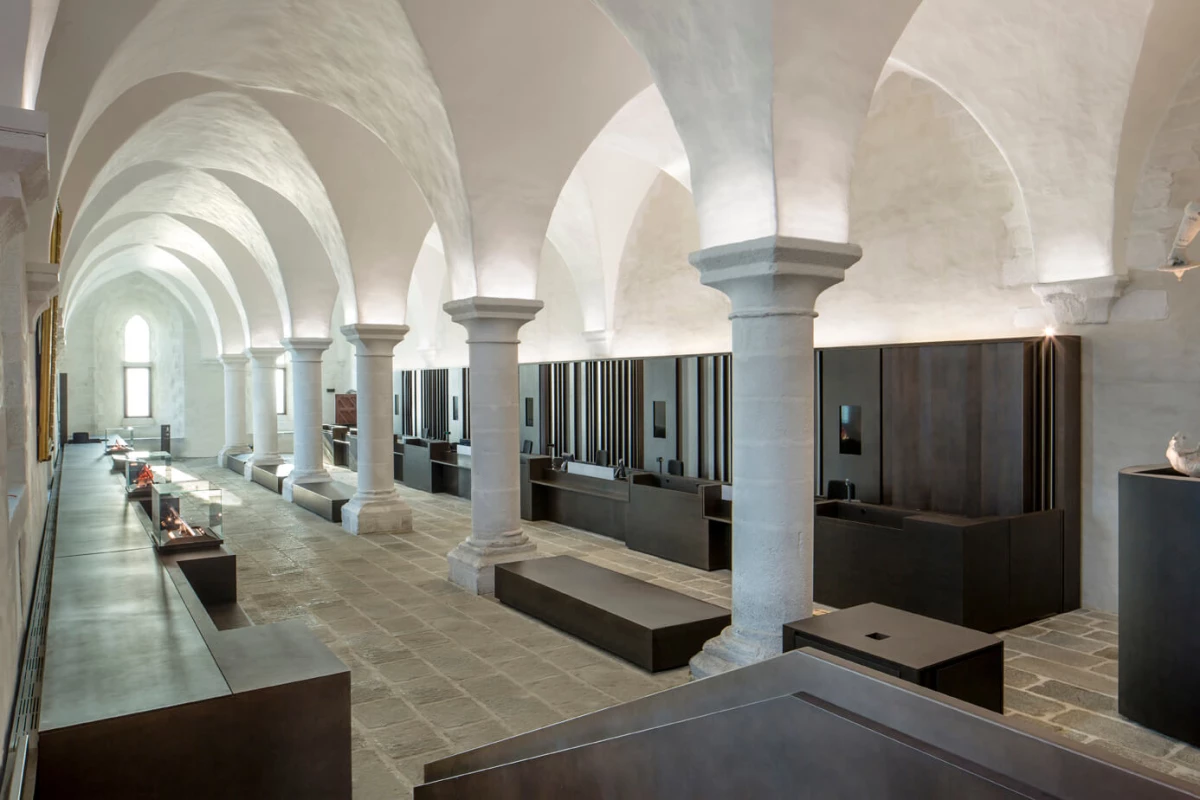
The timber structure enclosing the reception areas is designed to be simple, restrained, and uncluttered, deliberately avoiding direct references to medieval architectural forms so that no confusion arises between the original defensive work and the new tourism-focused programme. Yet the form and material of the structure are carefully chosen to remain in harmony with the site: beams are inserted into surviving putlog holes in the enclosure in the same positions as the original medieval construction. Rather than resting on the beams forming the battlement walkway, the structure is inverted, suspended from these beams, allowing the reception spaces to occupy the same level as the central square of the barbican.
The visitor’s perception of the barbican from the castle’s battlement walkway is also taken into account: from this vantage point, the major beams inserted into the putlog holes of the enclosure can be seen, supporting a timber decking reminiscent of other historic wooden structures on the site. The structure is built from raw materials: the timber is untreated oak, consistent with other works restored by Viollet-le-Duc, and the flooring is made of calade stones, matching the treatment of the central square and existing pathways on the site. By inserting a lightweight, minimally invasive structure into the enclosure, the intervention remains reversible: the monument can be returned to its post-restoration appearance as envisioned by Viollet-le-Duc.
The project forms part of a broader programme by the Centre des Monuments Nationaux focused on improving public reception areas. The visitor reception space at Carcassonne Castle is located within the barbican, a defensive outwork located in front of the Count’s Castle. Integrating the project into a site marked by medieval architecture relies on two key principles: respecting the history of the place and positioning the new intervention set back from the monument. The barbican of the Castle is a semi-lunar structure, consisting of a semi-circular enclosure punctuated by a gate tower, opening onto a central square that faces the castle. By the late 19th century, only the gate tower had survived in ruins; the remainder of the enclosure and the covering of the tower were reconstructed during Viollet-le-Duc’s restoration campaign between 1890 and 1910.
The new project integrates into this structure by placing a lightweight building inside the enclosure, preserving the central square intended for defensive purposes and referencing the wooden constructions that historically complemented the enclosure in the medieval period. The visitor reception space, extending the interior of the enclosure, is therefore only fully perceived once the visitor has entered the square, gaining a direct view of the Count’s Castle. The programme for public reception includes ticketing, control and information points, as well as a few technical facilities. By attaching to the enclosure around the gate tower, the building’s two lateral wings organise the visitor route and structure the flow of movement, while the central square remains an open space allowing unobstructed views of the castle.
The timber structure enclosing the reception areas is designed to be simple, restrained, and uncluttered, deliberately avoiding direct references to medieval architectural forms so that no confusion arises between the original defensive work and the new tourism-focused programme. Yet the form and material of the structure are carefully chosen to remain in harmony with the site: beams are inserted into surviving putlog holes in the enclosure in the same positions as the original medieval construction. Rather than resting on the beams forming the battlement walkway, the structure is inverted, suspended from these beams, allowing the reception spaces to occupy the same level as the central square of the barbican.
The visitor’s perception of the barbican from the castle’s battlement walkway is also taken into account: from this vantage point, the major beams inserted into the putlog holes of the enclosure can be seen, supporting a timber decking reminiscent of other historic wooden structures on the site. The structure is built from raw materials: the timber is untreated oak, consistent with other works restored by Viollet-le-Duc, and the flooring is made of calade stones, matching the treatment of the central square and existing pathways on the site. By inserting a lightweight, minimally invasive structure into the enclosure, the intervention remains reversible: the monument can be returned to its post-restoration appearance as envisioned by Viollet-le-Duc.
Inscribed on the UNESCO World Heritage List (1997)
Architecture Design Nomade, associates
BET Choulet, fluids
BMF, economist