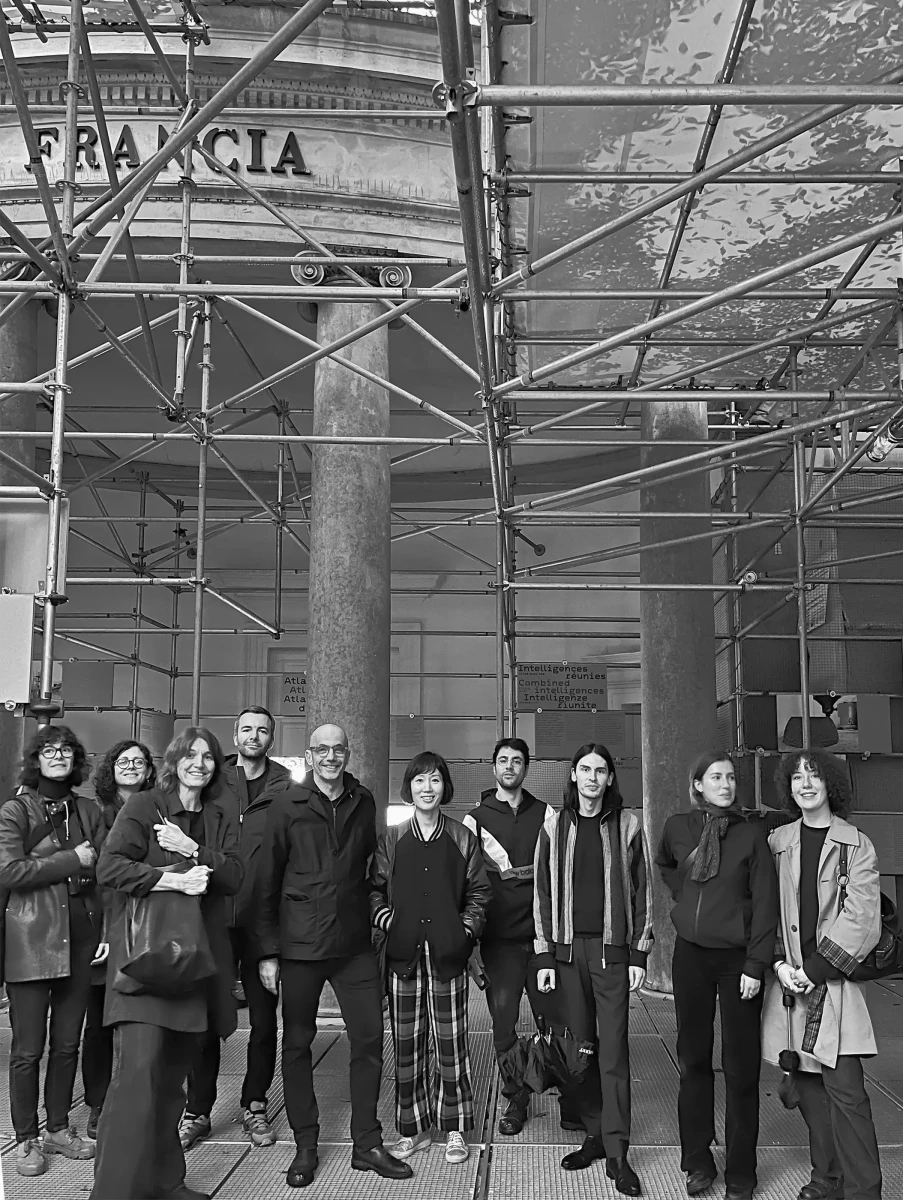
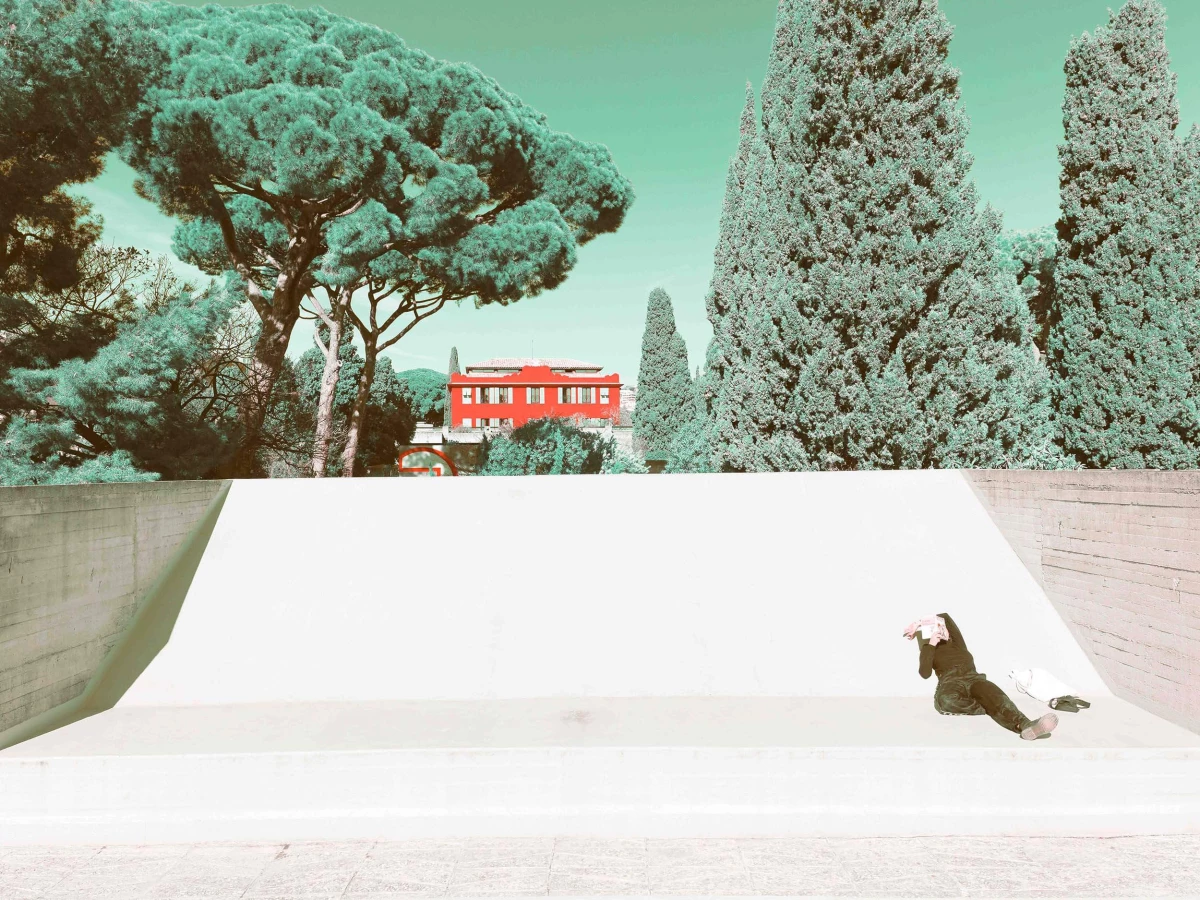
On the occasion of the agency’s annual seminar, the team traveled to the Venice Biennale in October 2025. This visit provided an opportunity for dialogue among colleagues around the themes explored by the Biennale—curated this year by architect and engineer Carlo Ratti —under the title Intelligens: natural. artificial. collective.
« Architecture has always been a response to a hostile climate. From the earliest “primitive hut,” human design has not only been led by the need for shelter and survival, but also driven by optimism. Our creations have always strived to bridge the gaps between a harsh environment, the safe, liveable spaces we require, and the lives we want to live. Today, as the climate becomes less forgiving, that dynamic is being taken to a new level. Over the past two years, climate change has accelerated in ways that defy even the best scientific models. 2024 marked a grim milestone, as Earth registered its hottest temperatures on record, pushing global averages beyond the Paris Agreement’s 1.5°C target. And in the fires of Los Angeles, in the floods of Valencia and Sherpur, in the droughts of Sicily, we have witnessed the elements attacking us with unprecedented ferocity. When the knowledge and systems that have long guided our understanding begin to fail, new forms of thinking are needed. For decades, ever since we started counting carbon, architecture’s response to the climate crisis has been centred on mitigation—on reducing our impact on the climate. That approach is no longer enough. Architecture must pivot away from mitigation, reconnect with its longer history of adaptation, and rethink how we design for an altered world. » from The International Exhibition of the Curator.
On the occasion of the agency’s annual seminar, the team traveled to the Venice Biennale in October 2025. This visit provided an opportunity for dialogue among colleagues around the themes explored by the Biennale—curated this year by architect and engineer Carlo Ratti —under the title Intelligens: natural. artificial. collective.
« Architecture has always been a response to a hostile climate. From the earliest “primitive hut,” human design has not only been led by the need for shelter and survival, but also driven by optimism. Our creations have always strived to bridge the gaps between a harsh environment, the safe, liveable spaces we require, and the lives we want to live. Today, as the climate becomes less forgiving, that dynamic is being taken to a new level. Over the past two years, climate change has accelerated in ways that defy even the best scientific models. 2024 marked a grim milestone, as Earth registered its hottest temperatures on record, pushing global averages beyond the Paris Agreement’s 1.5°C target. And in the fires of Los Angeles, in the floods of Valencia and Sherpur, in the droughts of Sicily, we have witnessed the elements attacking us with unprecedented ferocity. When the knowledge and systems that have long guided our understanding begin to fail, new forms of thinking are needed. For decades, ever since we started counting carbon, architecture’s response to the climate crisis has been centred on mitigation—on reducing our impact on the climate. That approach is no longer enough. Architecture must pivot away from mitigation, reconnect with its longer history of adaptation, and rethink how we design for an altered world. » from The International Exhibition of the Curator.