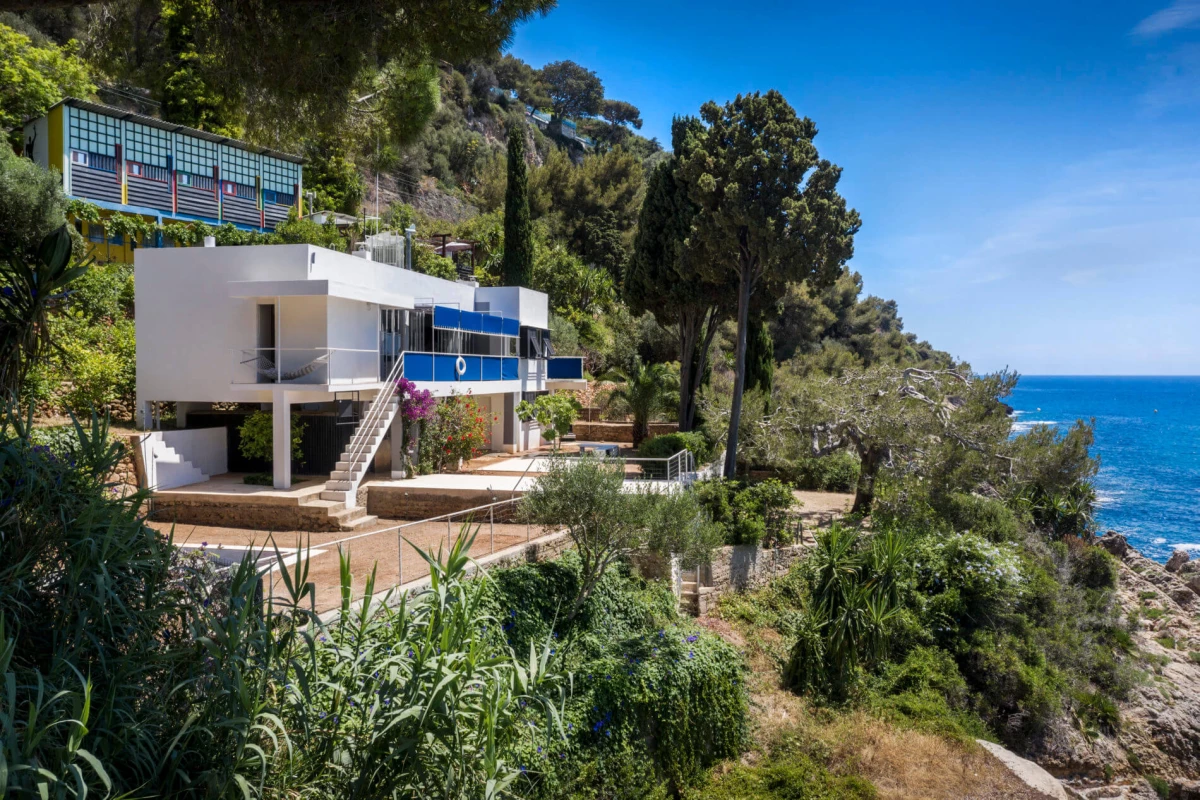
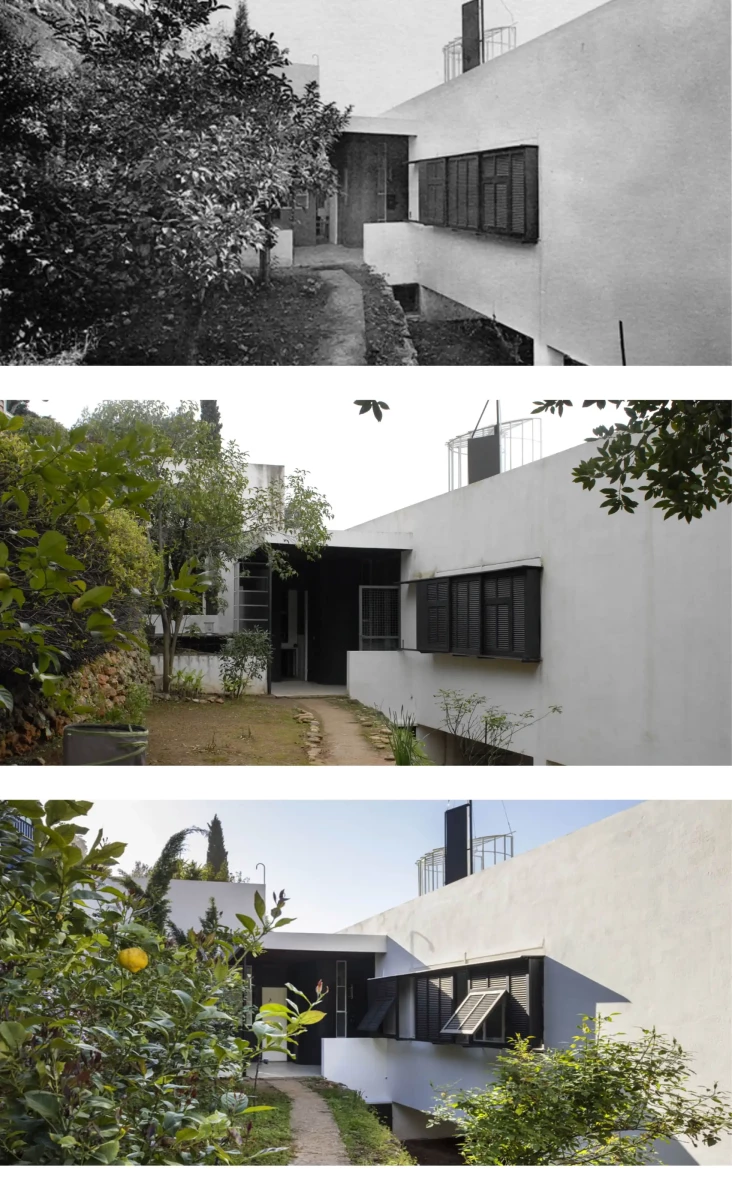
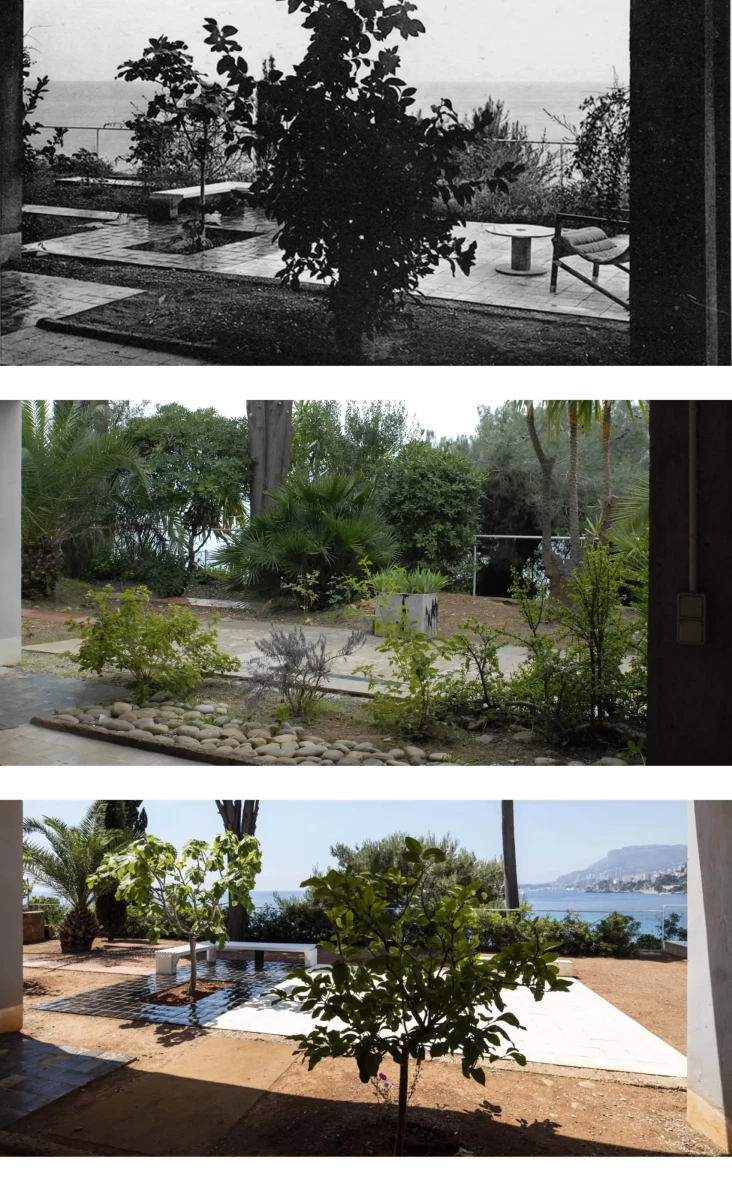
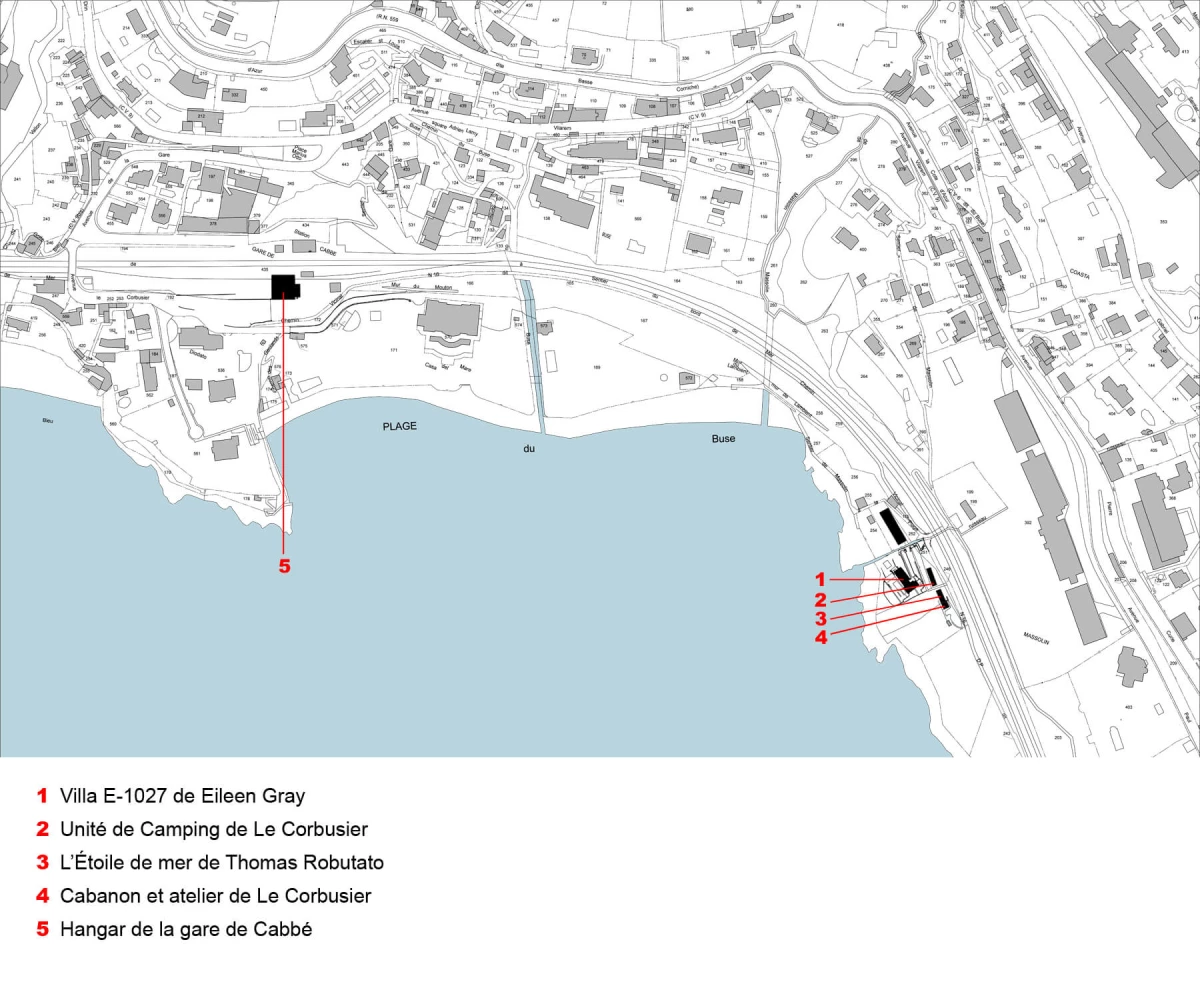
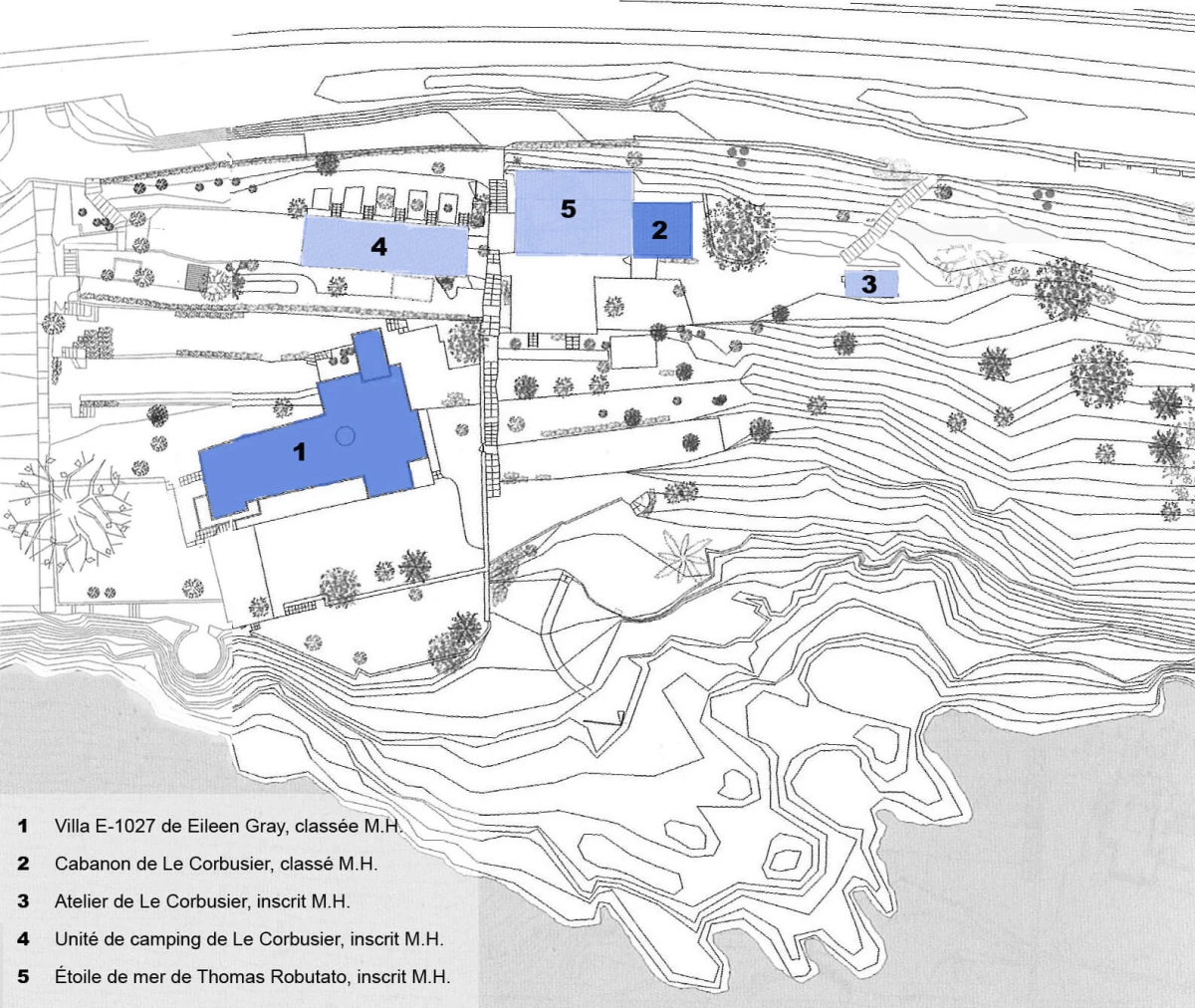
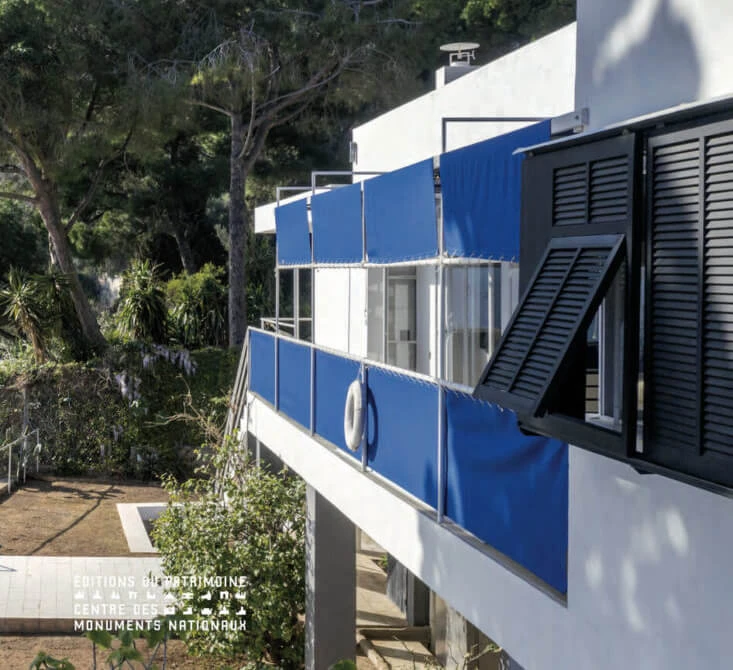
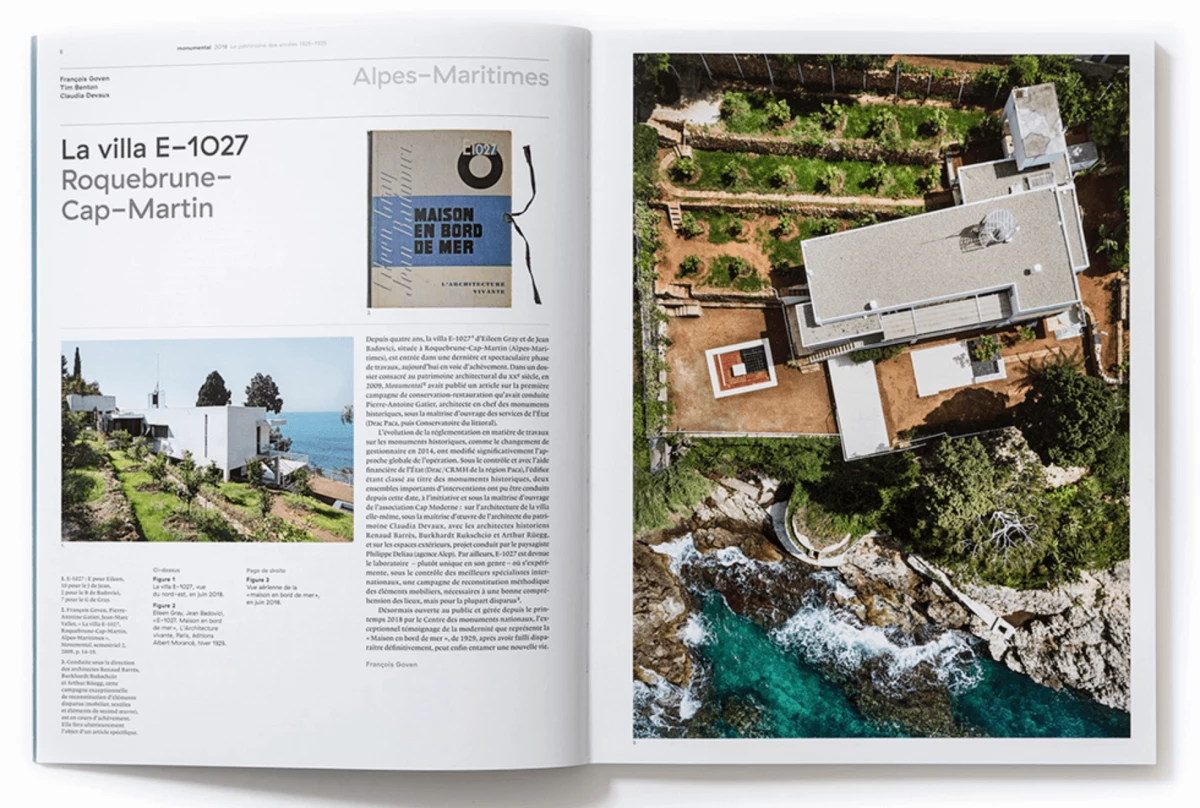
DD.A has been commissioned by the Conservatoire du Littoral and the Cap Moderne Association to manage the restoration works at Cap Moderne, an emblematic site encompassing Eileen Gray and Jean Badovici’s Villa E-1027, Le Corbusier’s buildings (the cabanon, studio, and camping units), and Thomas Rebutato’s bar-restaurant. Constructed between 1926 and 1929, Villa E-1027 stands as a major example of Modern Movement architecture. Its location on the Mediterranean coast, the originality of its design, the richness and coherence of its interiors, and the complexity of its materials and architectural details make it a monument requiring a highly rigorous, documented, and coordinated approach to ensure its preservation and enable its permanent public opening.
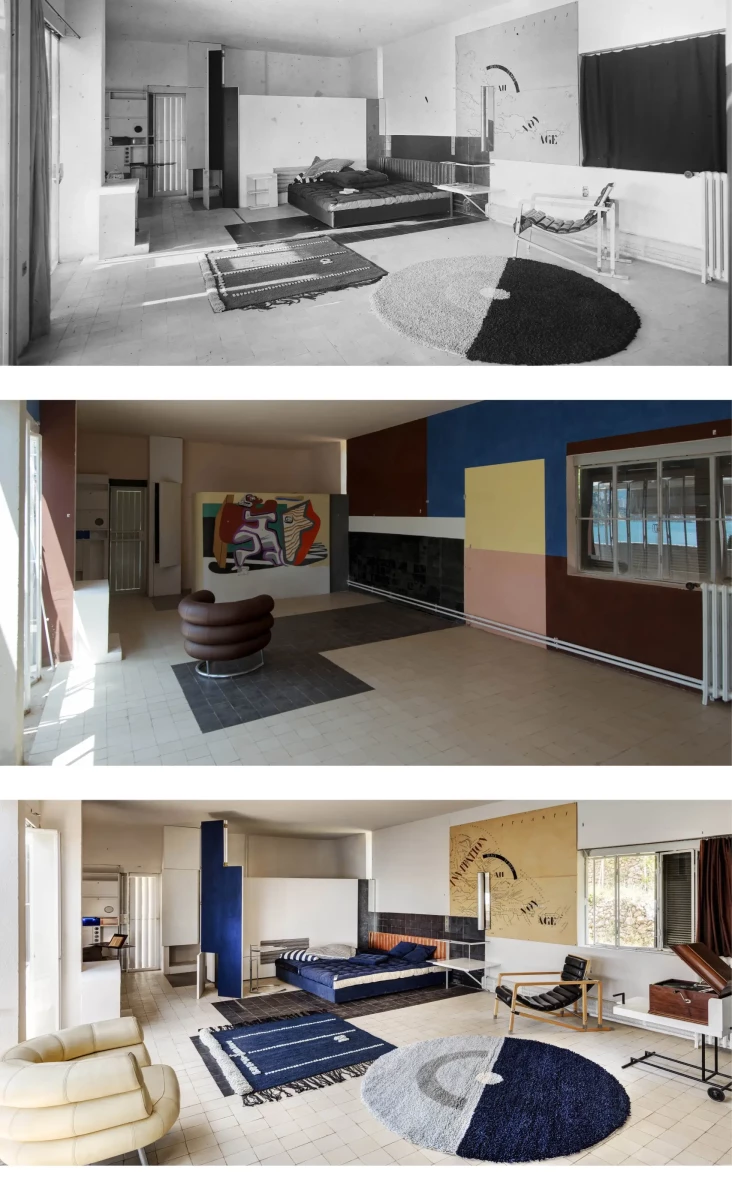
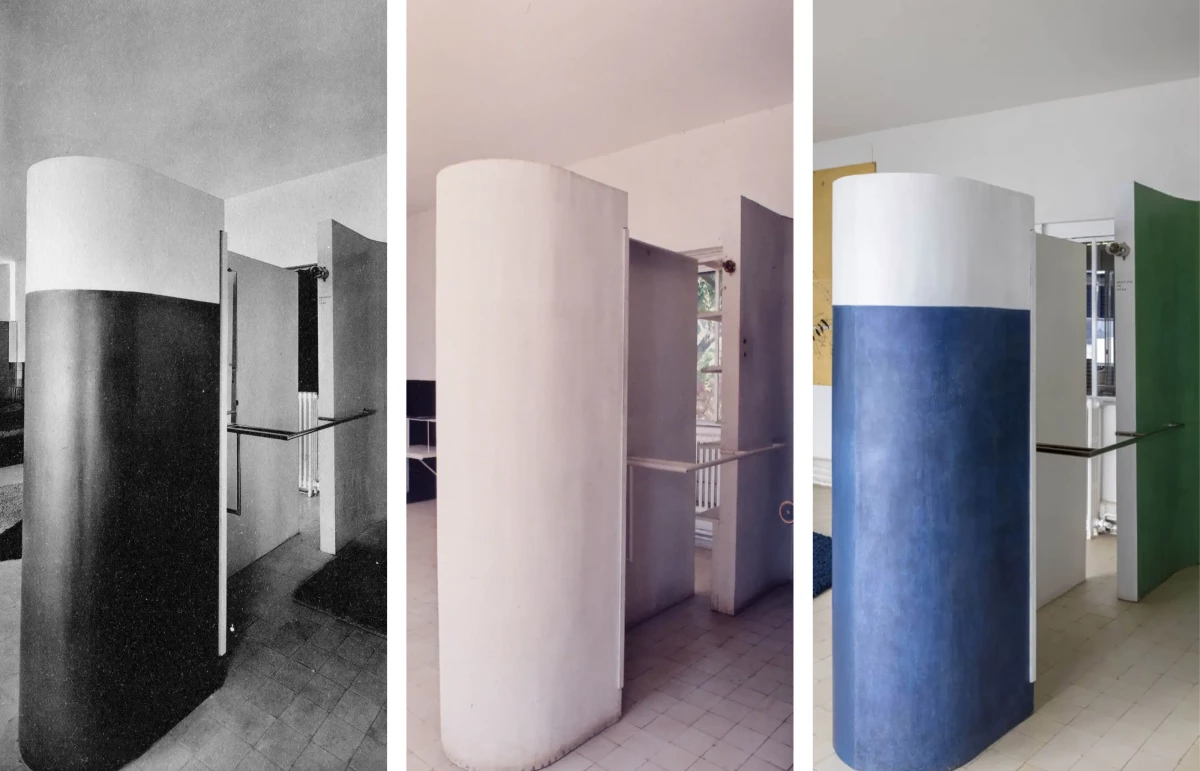
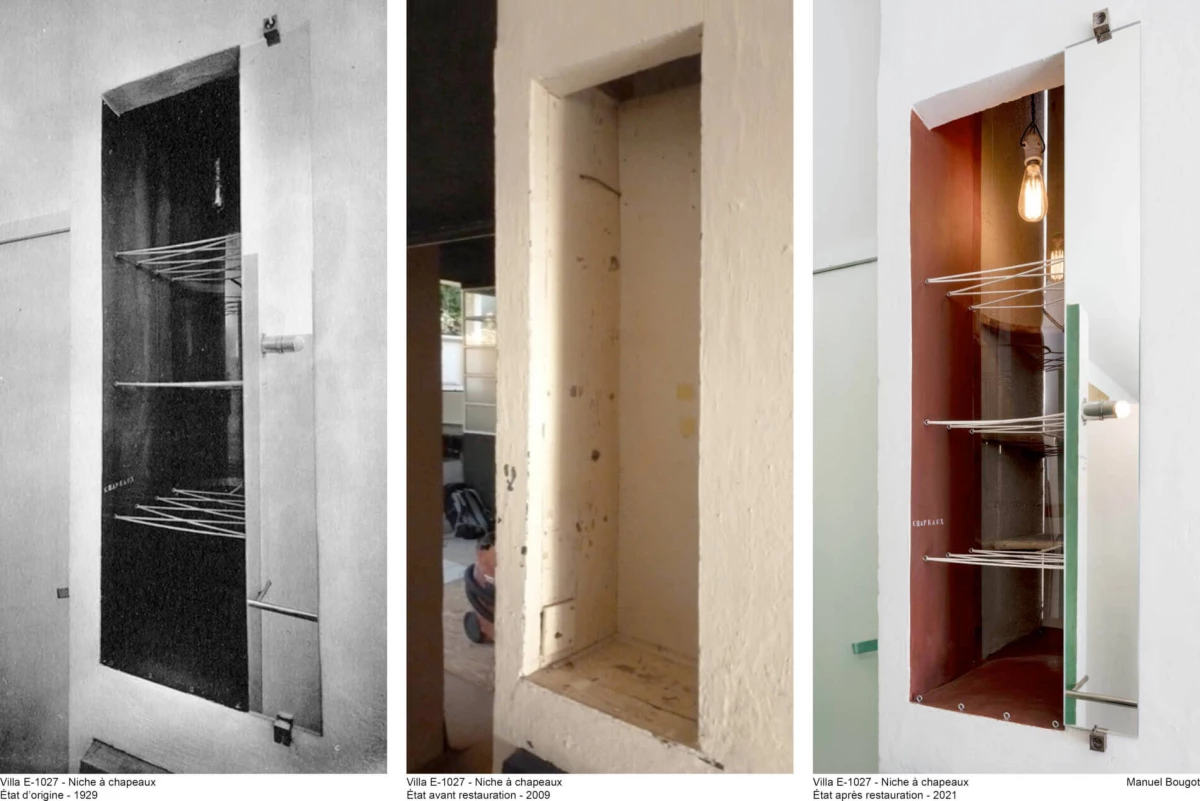
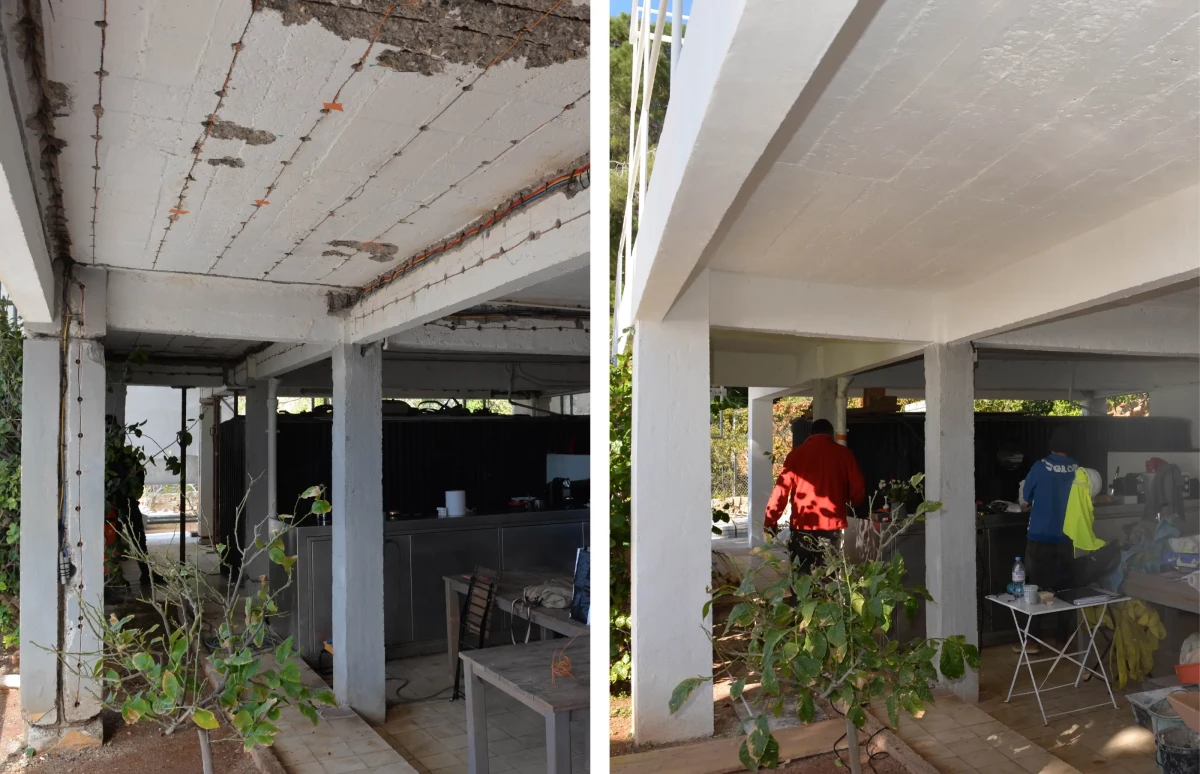
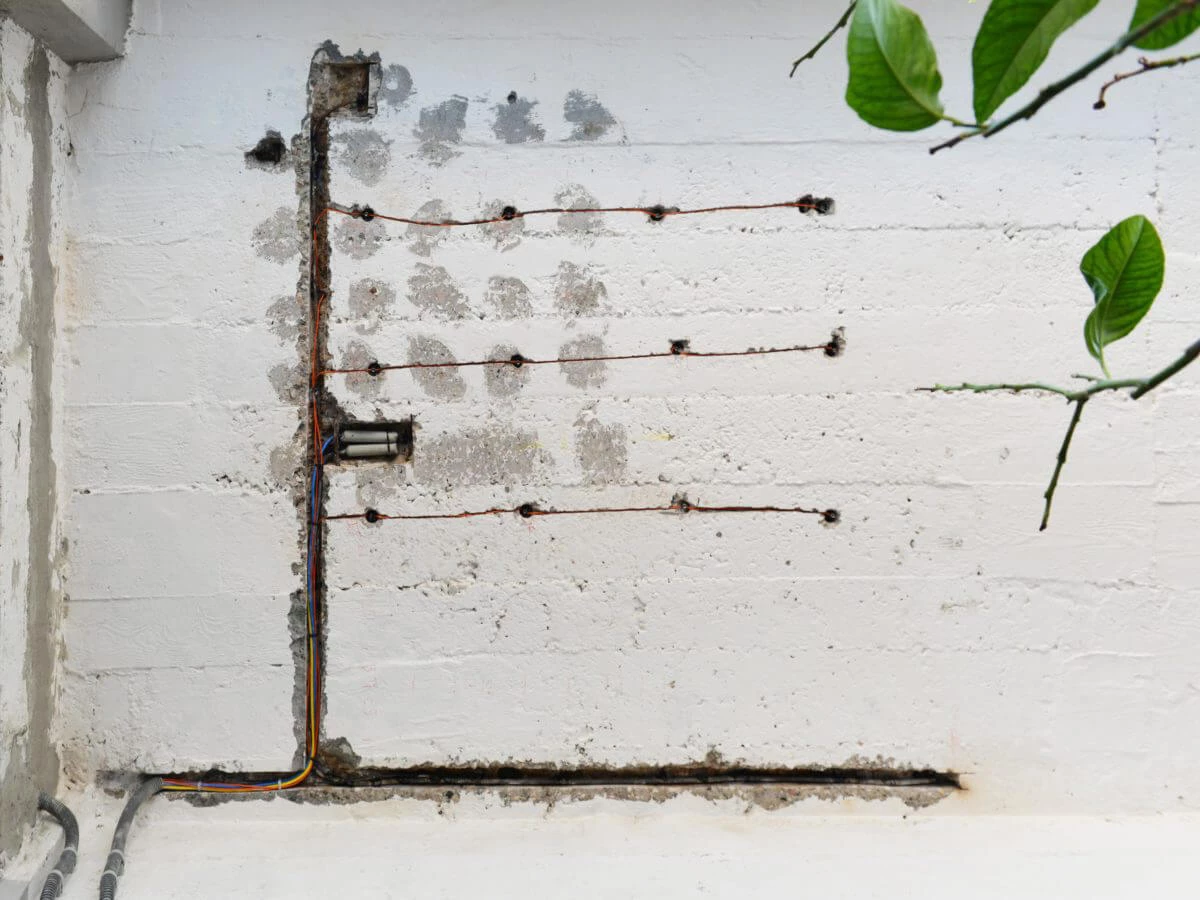
A long-term restoration plan was structured around five main areas: the analysis of reinforced concrete and structural degradation caused by the maritime environment; the study of original paintings and the impact of salt and sunlight; climate control for a non-hermetic building; technical and historical analysis of fixed and movable furniture; and the creation of a documentary database to centralize research. These investigations aim to guarantee the authenticity of existing structures, prevent further loss of original material, and faithfully restore missing or severely damaged elements, drawing on sources from Eileen Gray and Jean Badovici, notably the villa’s publication in Architecture Vivante in 1929.
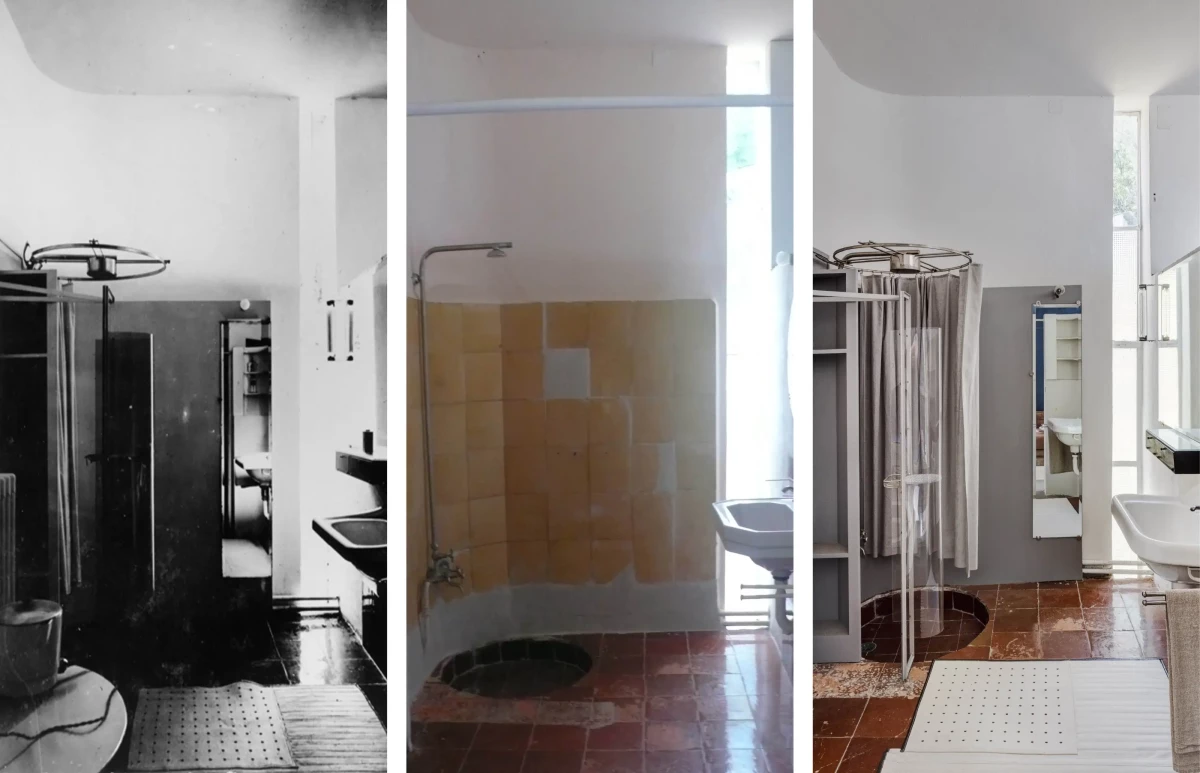
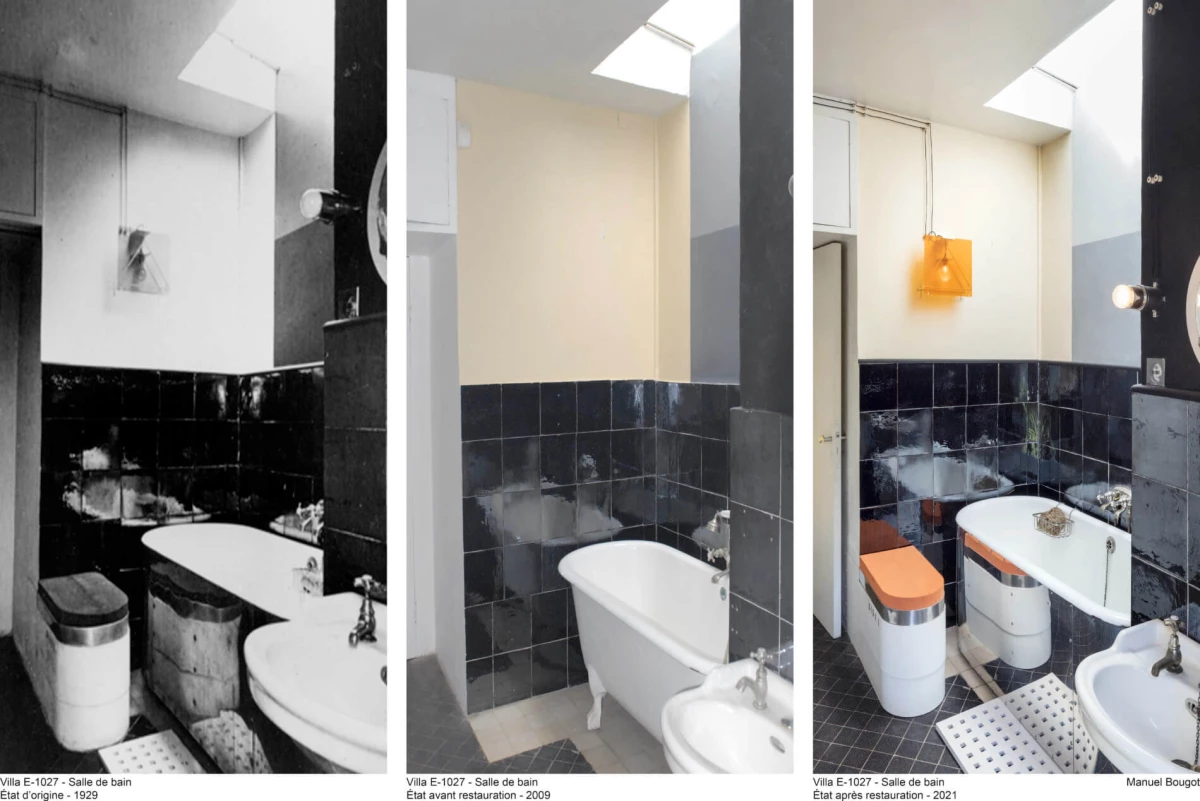
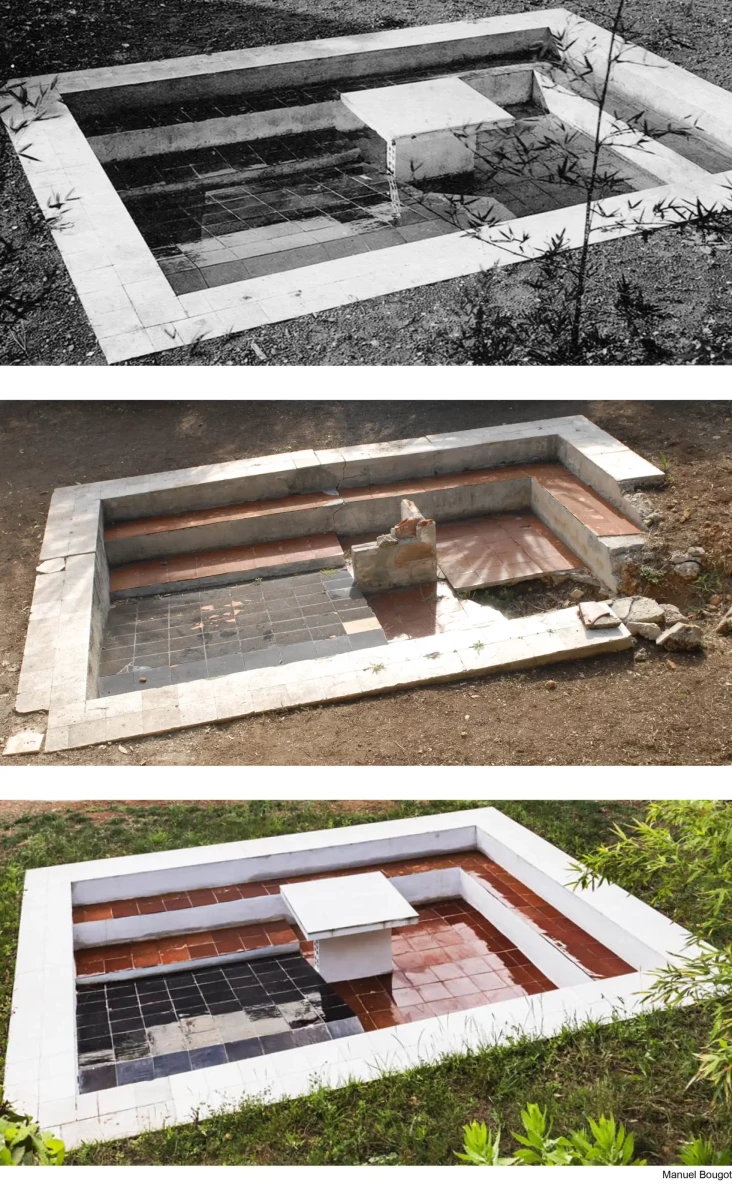
Since 2015, the works have been carried out in phases according to intervention urgency. The first campaign (winter 2014 / spring 2015) focused on restoring the solarium, then in ruins, to preserve the building’s authenticity. The second phase (winter 2015 / spring 2016) addressed overall site sanitation and experimental restoration of the bathroom, in collaboration with expert Arthur Rüegg. From 2016 onward, works continued with architects Renaud Barrès and Burkhardt Rukschcio under the supervision of the DRAC and an international scientific committee appointed by Cap Moderne, until completion in July 2021. All interventions adhered to principles of conservation and exact restitution, ensuring the durability and authenticity of this unique heritage.
DD.A has been commissioned by the Conservatoire du Littoral and the Cap Moderne Association to manage the restoration works at Cap Moderne, an emblematic site encompassing Eileen Gray and Jean Badovici’s Villa E-1027, Le Corbusier’s buildings (the cabanon, studio, and camping units), and Thomas Rebutato’s bar-restaurant. Constructed between 1926 and 1929, Villa E-1027 stands as a major example of Modern Movement architecture. Its location on the Mediterranean coast, the originality of its design, the richness and coherence of its interiors, and the complexity of its materials and architectural details make it a monument requiring a highly rigorous, documented, and coordinated approach to ensure its preservation and enable its permanent public opening.
A long-term restoration plan was structured around five main areas: the analysis of reinforced concrete and structural degradation caused by the maritime environment; the study of original paintings and the impact of salt and sunlight; climate control for a non-hermetic building; technical and historical analysis of fixed and movable furniture; and the creation of a documentary database to centralize research. These investigations aim to guarantee the authenticity of existing structures, prevent further loss of original material, and faithfully restore missing or severely damaged elements, drawing on sources from Eileen Gray and Jean Badovici, notably the villa’s publication in Architecture Vivante in 1929.
Since 2015, the works have been carried out in phases according to intervention urgency. The first campaign (winter 2014 / spring 2015) focused on restoring the solarium, then in ruins, to preserve the building’s authenticity. The second phase (winter 2015 / spring 2016) addressed overall site sanitation and experimental restoration of the bathroom, in collaboration with expert Arthur Rüegg. From 2016 onward, works continued with architects Renaud Barrès and Burkhardt Rukschcio under the supervision of the DRAC and an international scientific committee appointed by Cap Moderne, until completion in July 2021. All interventions adhered to principles of conservation and exact restitution, ensuring the durability and authenticity of this unique heritage.
Cabanon inscribed on the UNESCO World Heritage List
Renaud Barrès, architect and historian
Arthur Rüegg, architect
Burkhardt Rukschcio, architect
A Chaux et Sable, structure
SM BTP, assainissement
Marie-Odile Hubert, paintings restoration
Cap Moderne Association