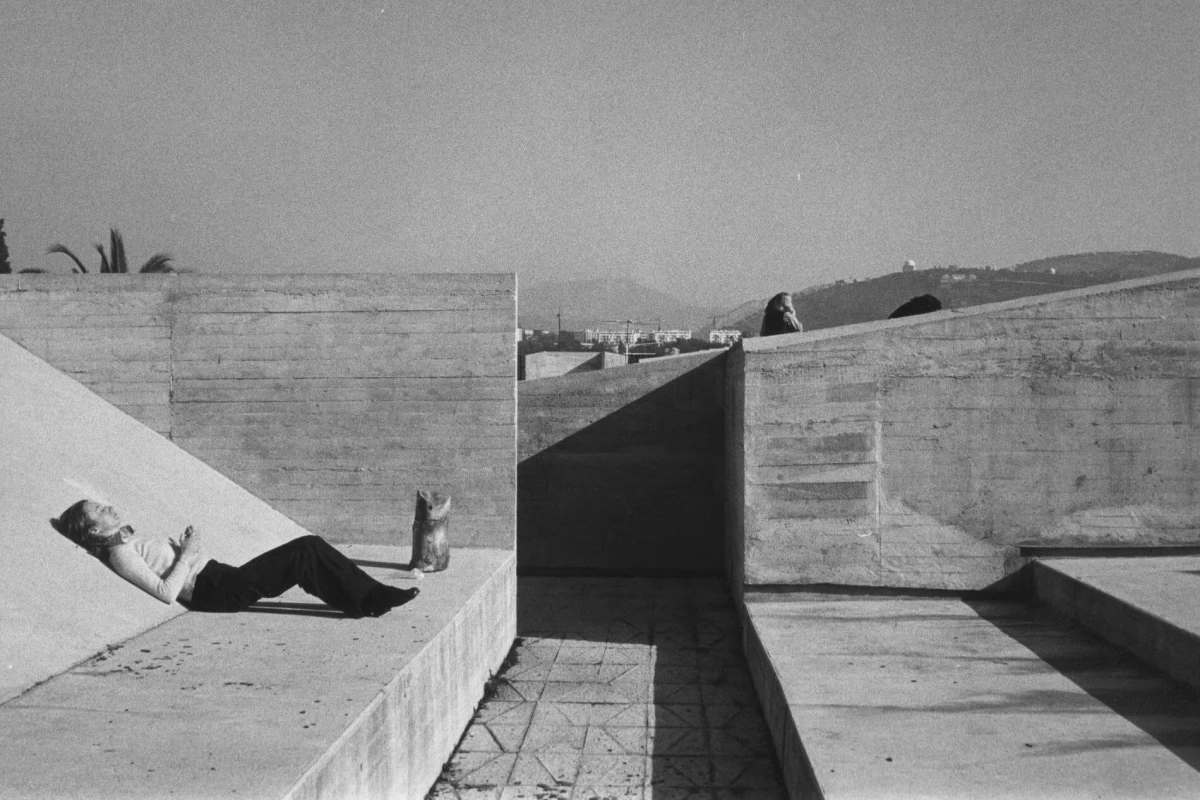
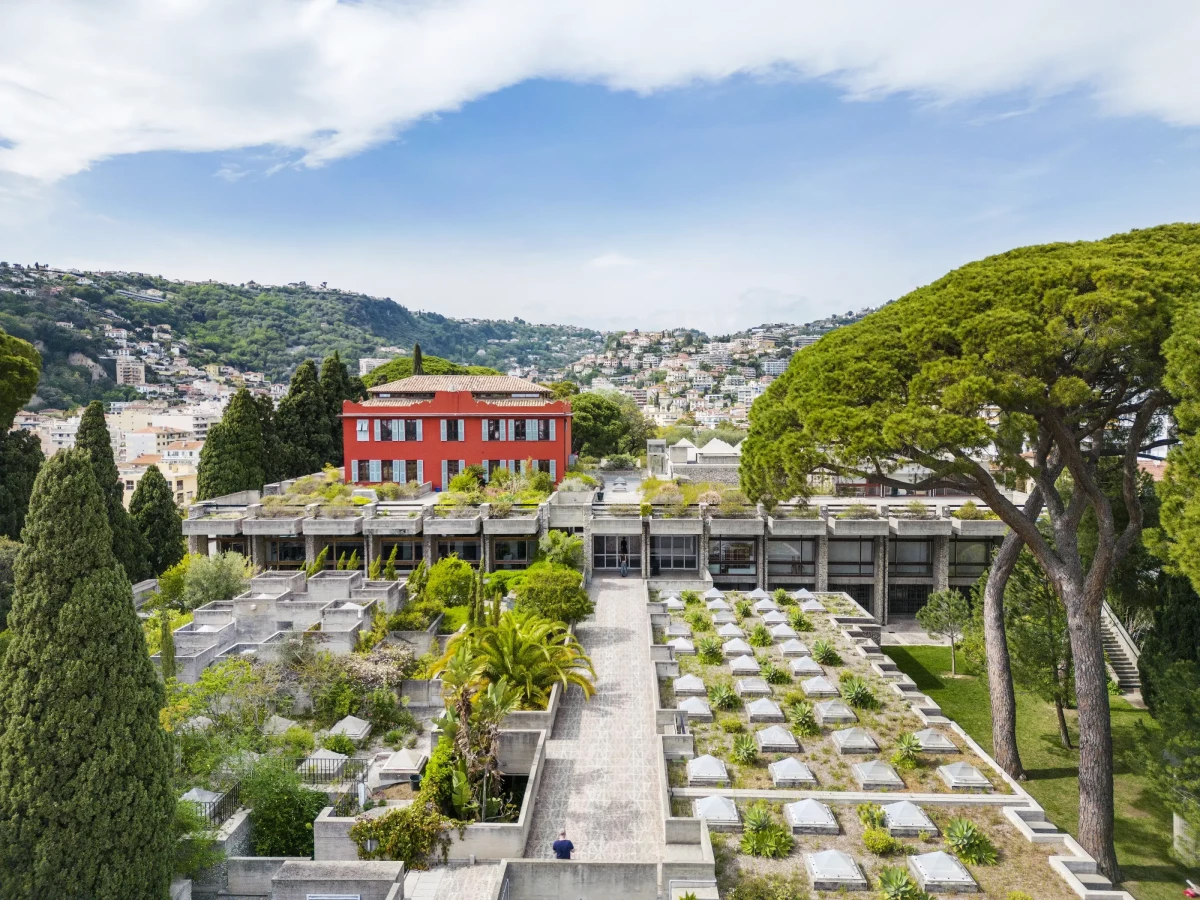
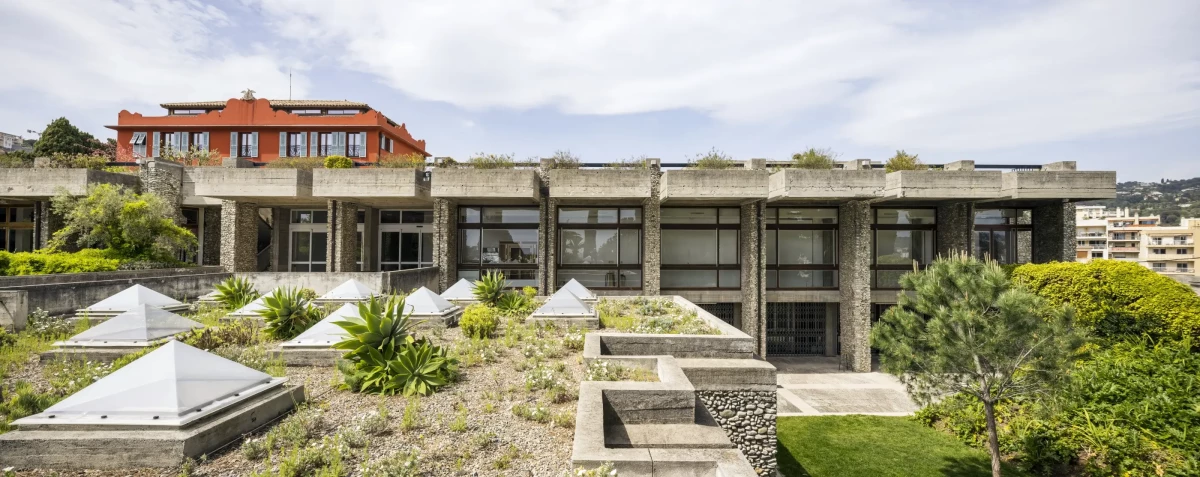
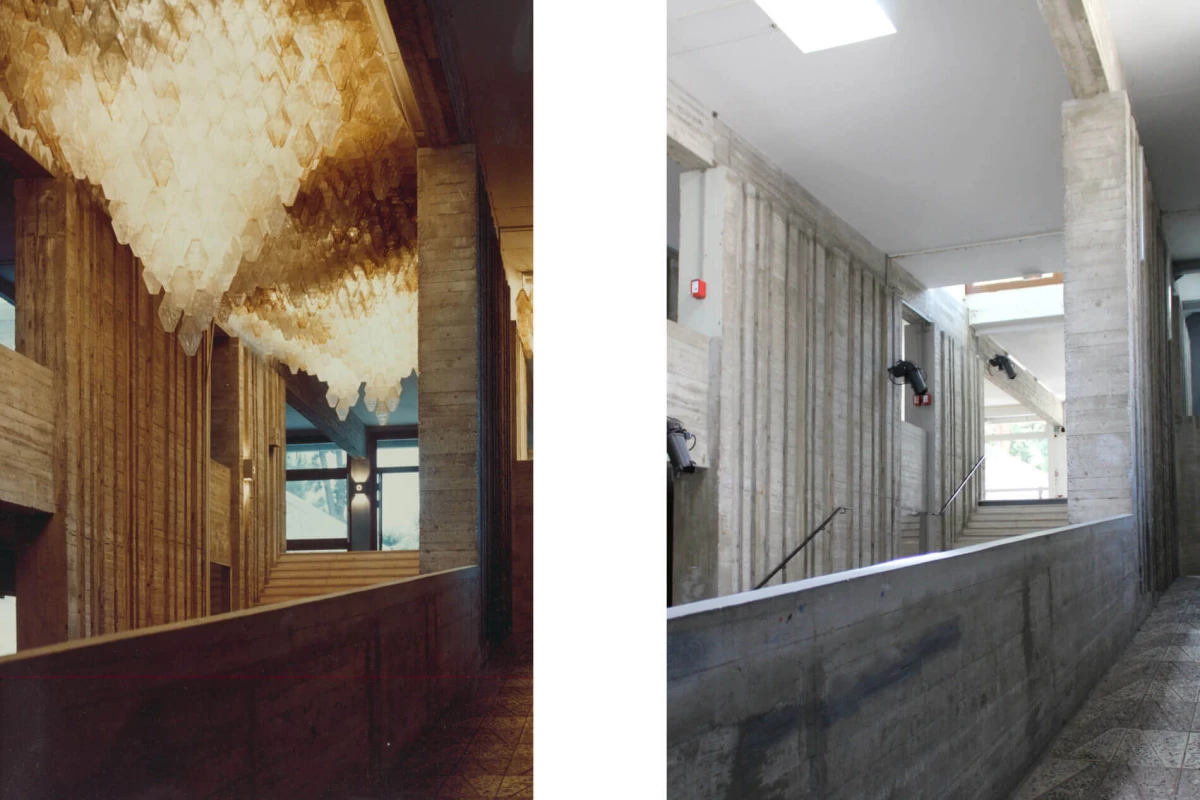
The Villa Arson in Nice, southeastern France, is a project by Michel Marot commissioned in 1964 and completed in 1972, which aimed to exemplify the ambition of decentralising art education and practice while asserting a strong architectural identity. Supported by André Malraux, it brings together an art school, an art centre, artist residences, and a specialised library. Its considerable size (nearly 15,000 m²) and the diversity of its spaces—auditorium, workshops, accommodation, exhibition halls—fully reflect this ambition. Marot’s architectural approach combines horizontal concrete with the preservation of century-old trees, while reinterpreting the garden’s terracing through roof terraces open to the city, earning the site the label “Remarkable Contemporary Architecture” in 2000.
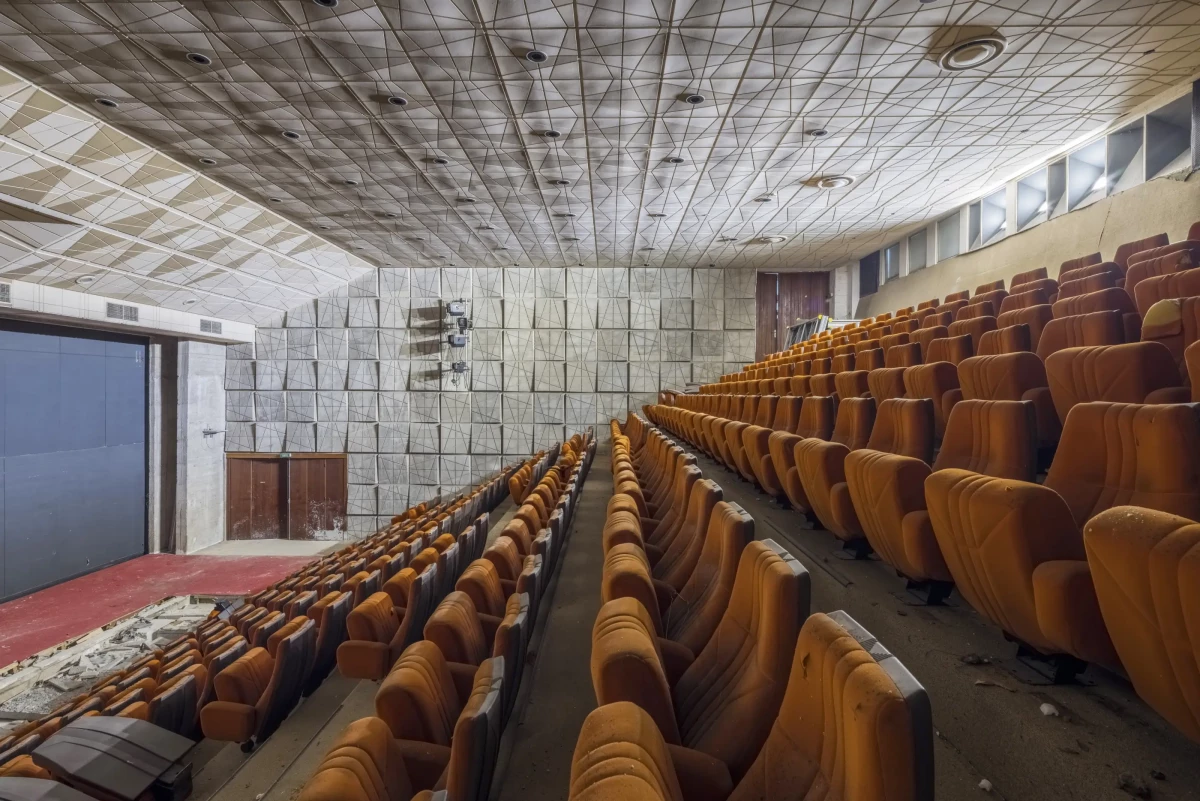
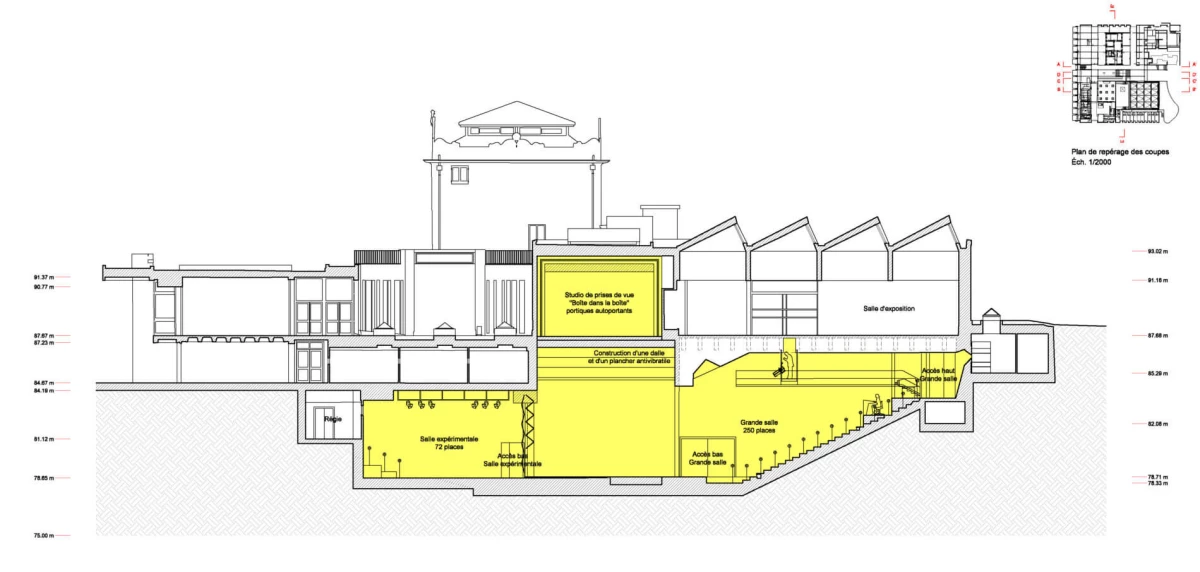
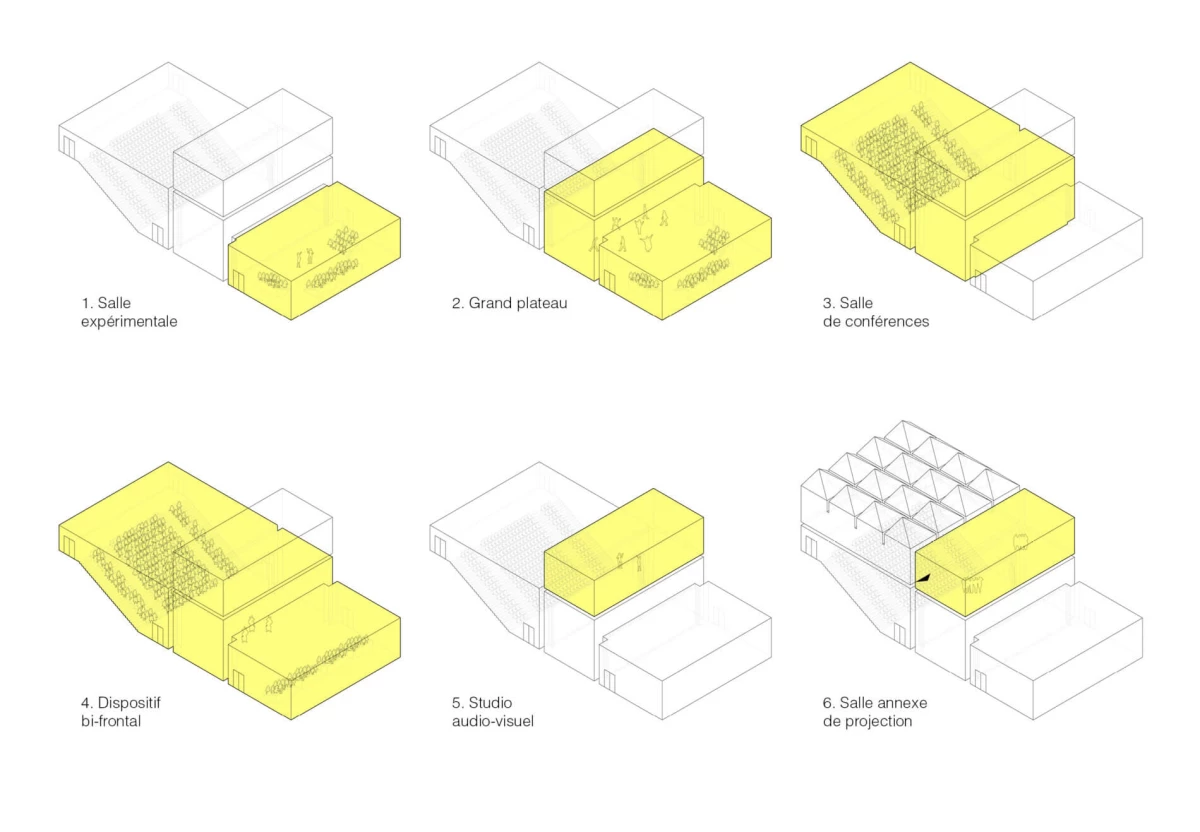
In 2021, the agency was commissioned to carry out a feasibility study to rehabilitate the conference, cinema, and theatre hall, unused since completion due to structural and water-related issues. The study proposes a refurbishment that respects the original ambition while integrating the contemporary needs of Villa Arson. The flexible hall allows six different configurations—experimental room, large stage, bi-frontal layout, audiovisual studio, and auxiliary projection room—offering versatility adapted to the art school’s activities and its engagement with the city.
In 2023, the agency conducted a heritage diagnostic study and developed a master plan for the entire site. The historical, architectural, and technical assessment covered the condition of the buildings, infrastructure, water management, lighting, and safety/accessibility. Combined with the master plan, it allows the prioritisation of works and estimation of the financial envelope for a multi-year schedule. The process also includes a participatory component with users—students, faculty, administration, and artists—to propose targeted transformations in specific spaces, improving their functionality and potential in line with current practices.
The Villa Arson in Nice, southeastern France, is a project by Michel Marot commissioned in 1964 and completed in 1972, which aimed to exemplify the ambition of decentralising art education and practice while asserting a strong architectural identity. Supported by André Malraux, it brings together an art school, an art centre, artist residences, and a specialised library. Its considerable size (nearly 15,000 m²) and the diversity of its spaces—auditorium, workshops, accommodation, exhibition halls—fully reflect this ambition. Marot’s architectural approach combines horizontal concrete with the preservation of century-old trees, while reinterpreting the garden’s terracing through roof terraces open to the city, earning the site the label “Remarkable Contemporary Architecture” in 2000.
In 2021, the agency was commissioned to carry out a feasibility study to rehabilitate the conference, cinema, and theatre hall, unused since completion due to structural and water-related issues. The study proposes a refurbishment that respects the original ambition while integrating the contemporary needs of Villa Arson. The flexible hall allows six different configurations—experimental room, large stage, bi-frontal layout, audiovisual studio, and auxiliary projection room—offering versatility adapted to the art school’s activities and its engagement with the city.
In 2023, the agency conducted a heritage diagnostic study and developed a master plan for the entire site. The historical, architectural, and technical assessment covered the condition of the buildings, infrastructure, water management, lighting, and safety/accessibility. Combined with the master plan, it allows the prioritisation of works and estimation of the financial envelope for a multi-year schedule. The process also includes a participatory component with users—students, faculty, administration, and artists—to propose targeted transformations in specific spaces, improving their functionality and potential in line with current practices.
Label Remarkable Contemporary Architecture in 2000
KANJU, scenographer
Studio DAP, acoustician
BMF, economist
B52, fluid
BATISS, accessibility and fire safety
Heritage assessment
Preparation of a master plan for the entire site