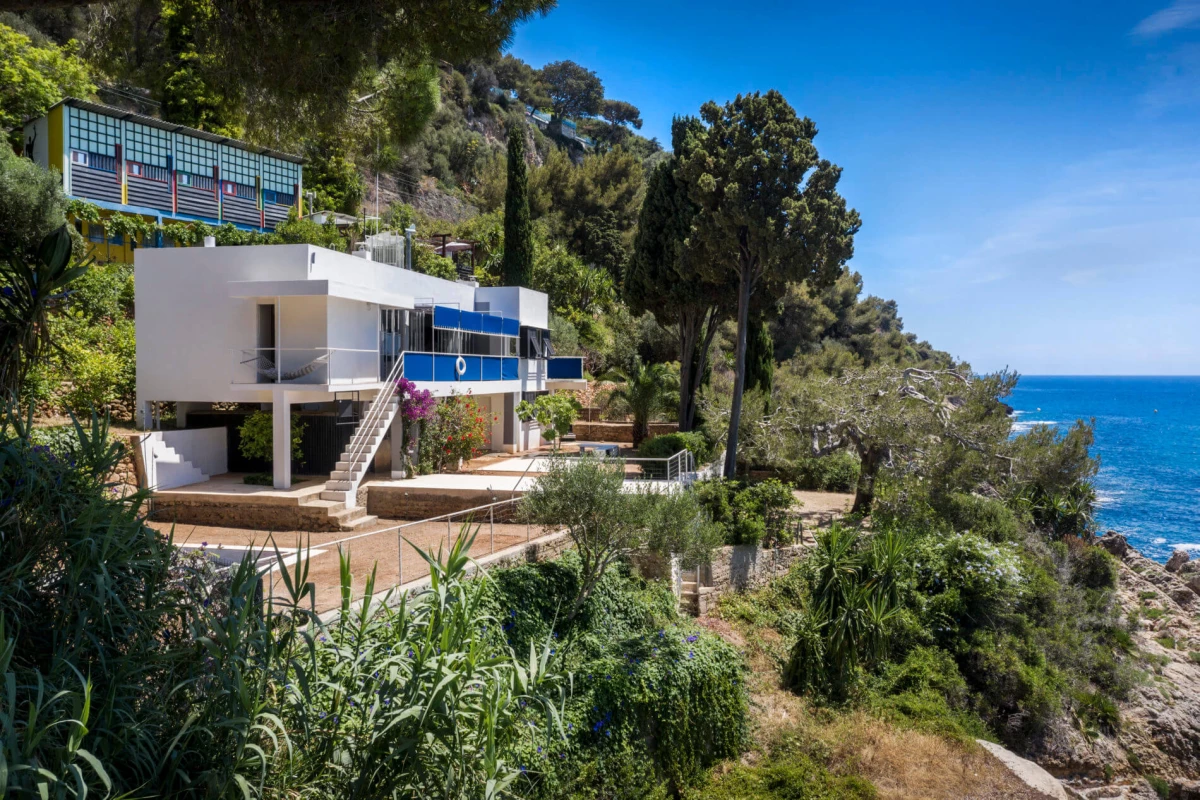
dd.a is providing full project management services on behalf of the Conservatoire du Littoral and the association Cap Moderne for the restoration works enabling the permanent public opening of the “Eileen Gray – Étoile de Mer – Le Corbusier” site, where the camping units are located.
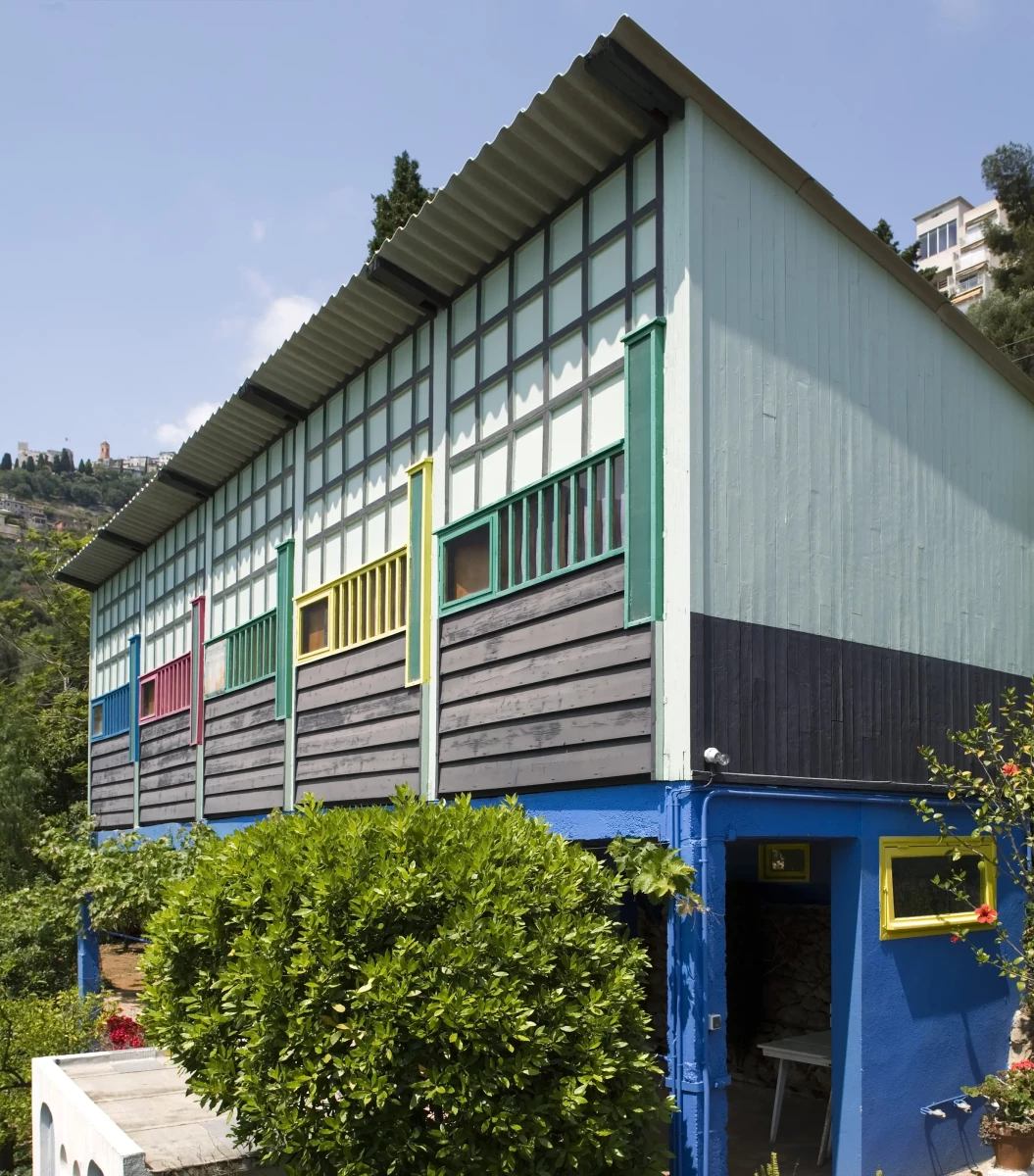
The camping units, built between 1955 and 1957 by Le Corbusier, form a longitudinal seafront structure housing five self-contained “units” or double rooms, each equipped with a central washbasin. The units constitute the work Le Corbusier built in 1951 in exchange with the Robutato family for the plot of land where his Cabanon was erected just a few metres away. The building consists of a timber framework accommodating the five units, set on reinforced-concrete stilts straddling the restanques—the dry-stone retaining walls characteristic of the region.
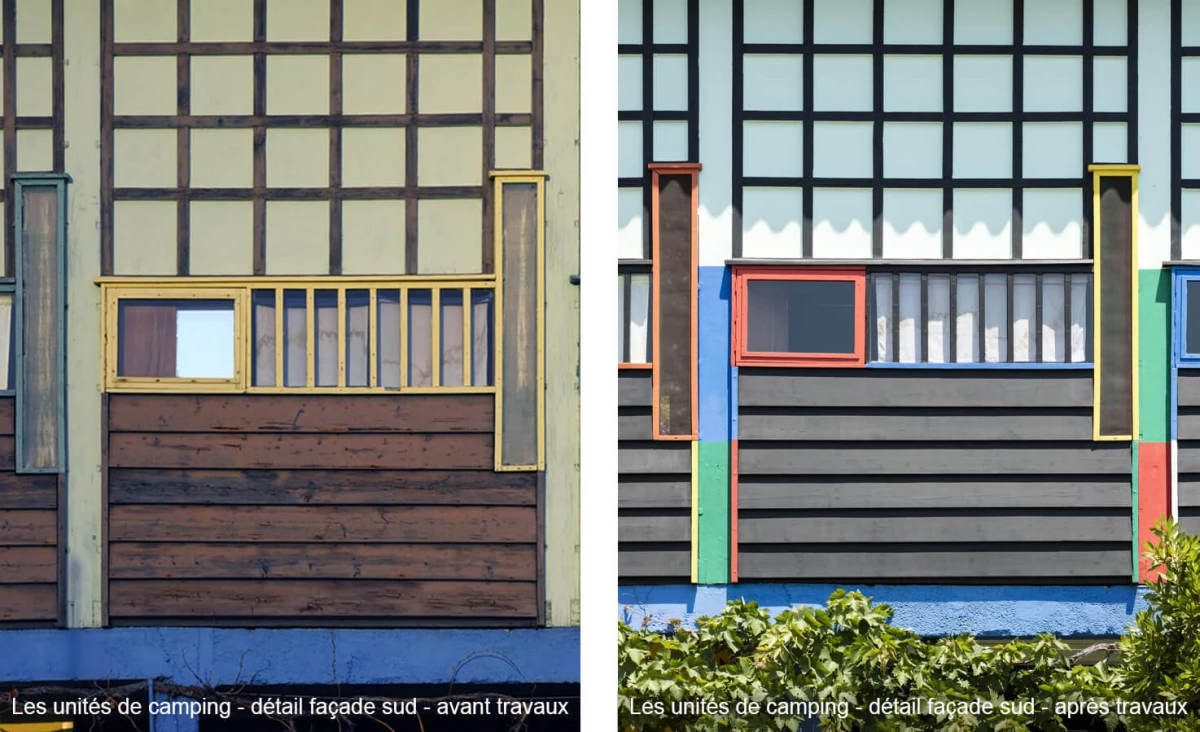
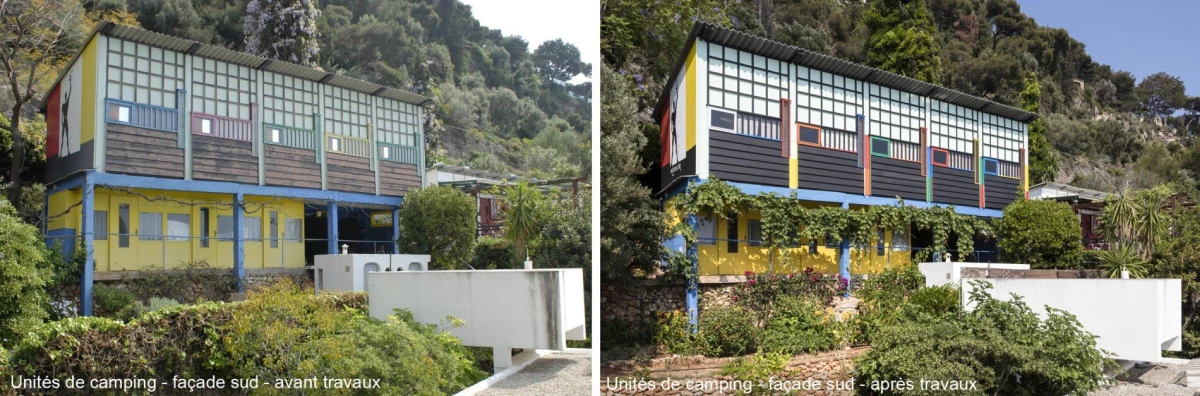
Throughout their history, the camping units underwent several interventions that altered the original fabric. The timber structure and interior layouts, however, have largely retained their initial configuration. The original colour scheme carefully applied by Le Corbusier to the façades, though, had disappeared by the 1960s.
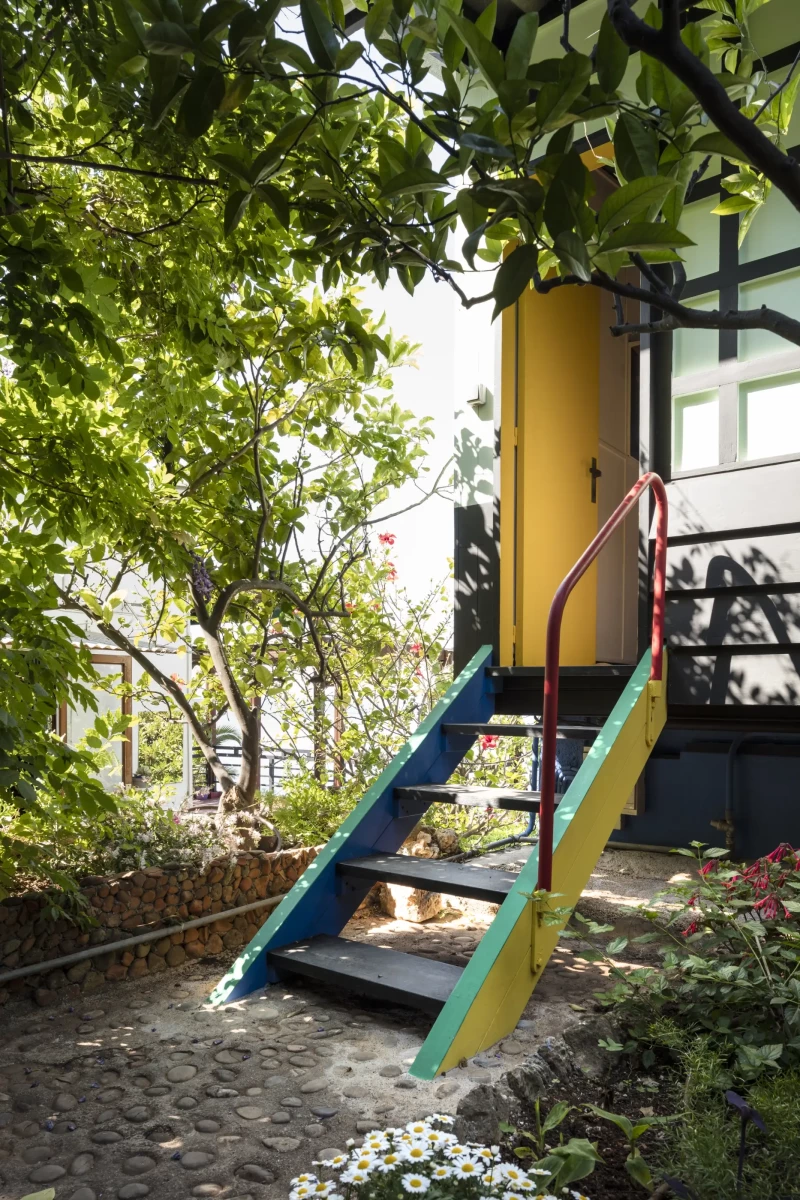
The restoration project was initiated primarily due to façade deterioration caused by sun exposure and water infiltration. The study phase included a detailed survey with constructional documentation, a historical analysis with an authenticity assessment, and a technical diagnostic evaluating the building’s condition. The restoration works therefore involved waterproofing the roofs, repairing decayed timber elements, and upgrading the insulation of both the roof and the south façade. Historical research also enabled the reinstatement of the original exterior polychromy.
dd.a is providing full project management services on behalf of the Conservatoire du Littoral and the association Cap Moderne for the restoration works enabling the permanent public opening of the “Eileen Gray – Étoile de Mer – Le Corbusier” site, where the camping units are located.
The camping units, built between 1955 and 1957 by Le Corbusier, form a longitudinal seafront structure housing five self-contained “units” or double rooms, each equipped with a central washbasin. The units constitute the work Le Corbusier built in 1951 in exchange with the Robutato family for the plot of land where his Cabanon was erected just a few metres away. The building consists of a timber framework accommodating the five units, set on reinforced-concrete stilts straddling the restanques—the dry-stone retaining walls characteristic of the region.
Throughout their history, the camping units underwent several interventions that altered the original fabric. The timber structure and interior layouts, however, have largely retained their initial configuration. The original colour scheme carefully applied by Le Corbusier to the façades, though, had disappeared by the 1960s.
The restoration project was initiated primarily due to façade deterioration caused by sun exposure and water infiltration. The study phase included a detailed survey with constructional documentation, a historical analysis with an authenticity assessment, and a technical diagnostic evaluating the building’s condition. The restoration works therefore involved waterproofing the roofs, repairing decayed timber elements, and upgrading the insulation of both the roof and the south façade. Historical research also enabled the reinstatement of the original exterior polychromy.
Cap Moderne Association