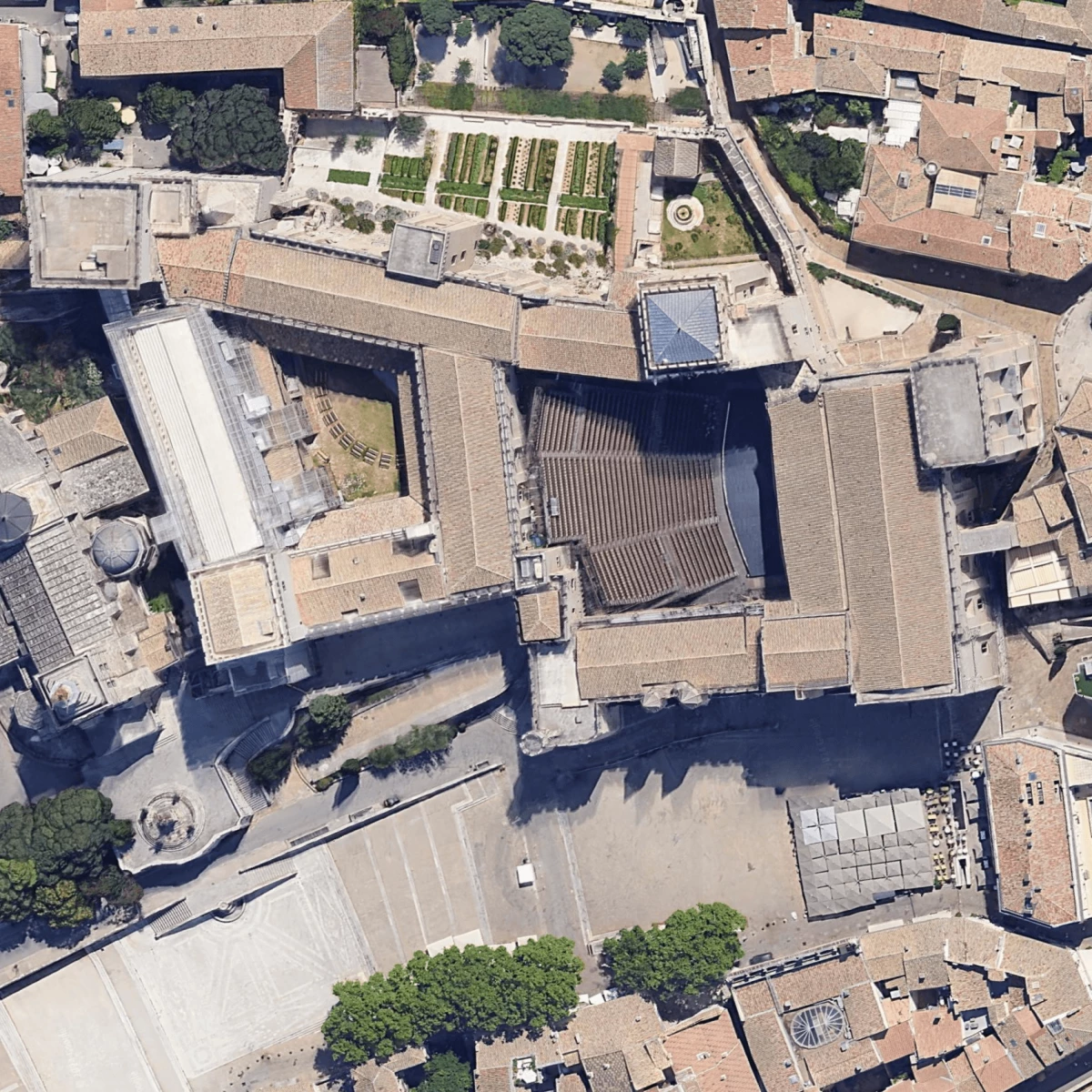
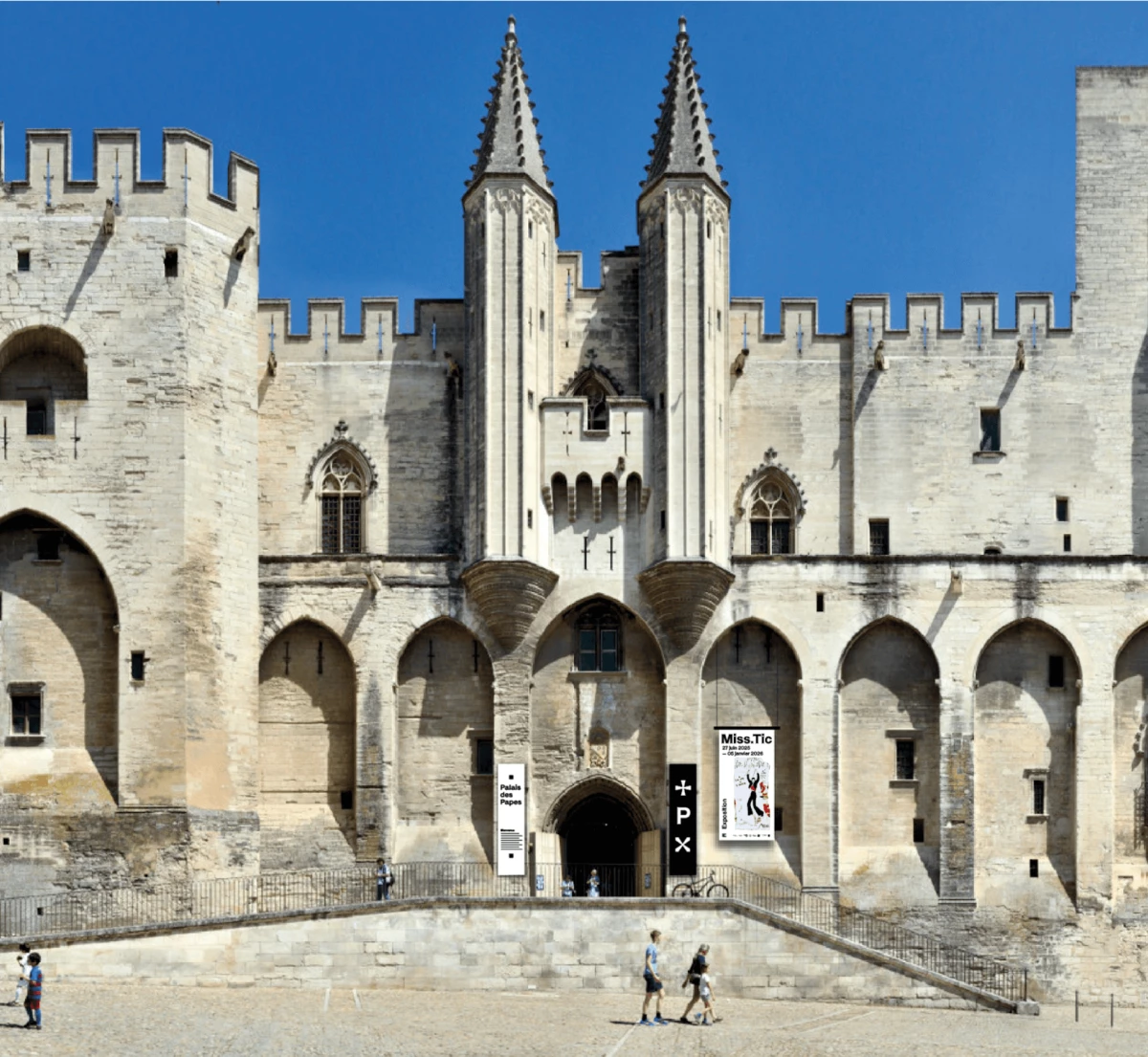
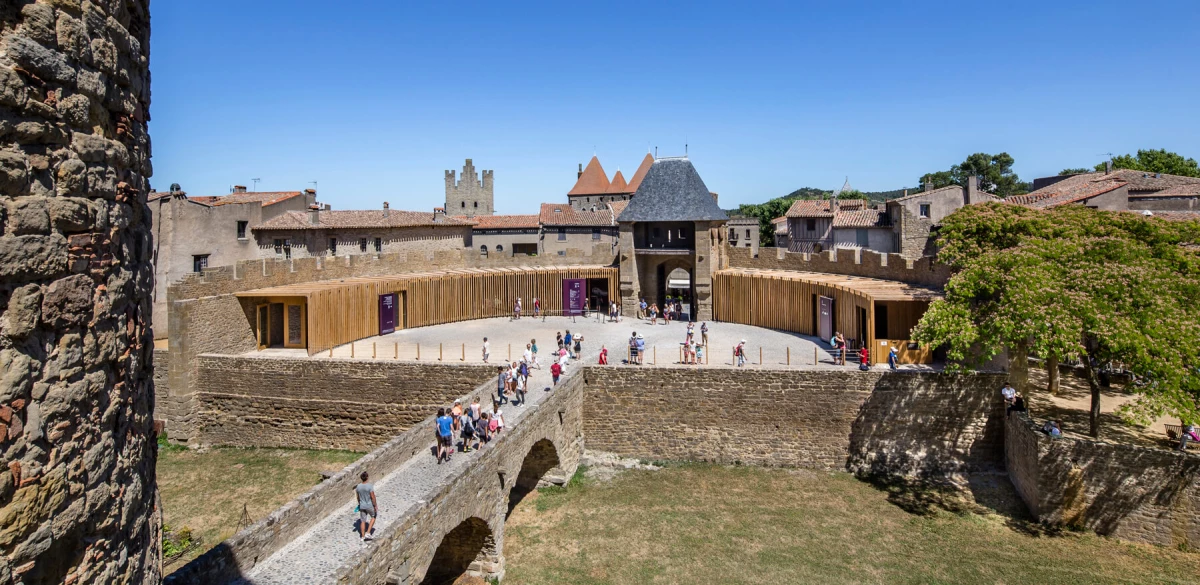
In 2024, the Société Publique Locale Avignon Tourisme launched a procurement process for a project management contract concerning the design, implementation, and delivery of a new visitor route through the Palais des Papes. The mission aimed to rethink access to the monument, integrate the redesigned papal gardens, and restructure the current route—in terms of duration, distance, themes, and typology—in order to offer visitors several ways of discovering the site. The competitive dialogue in which the team took part was ultimately not awarded to us.
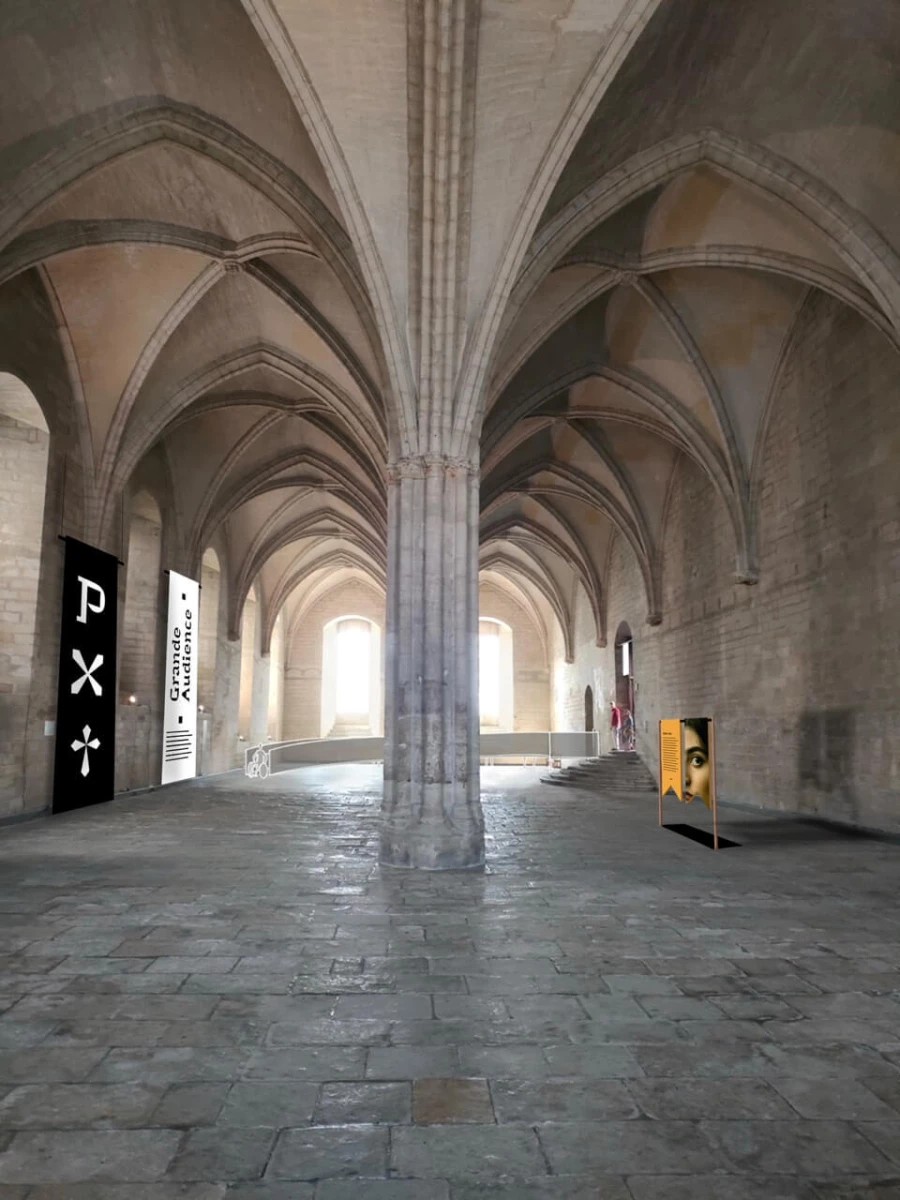
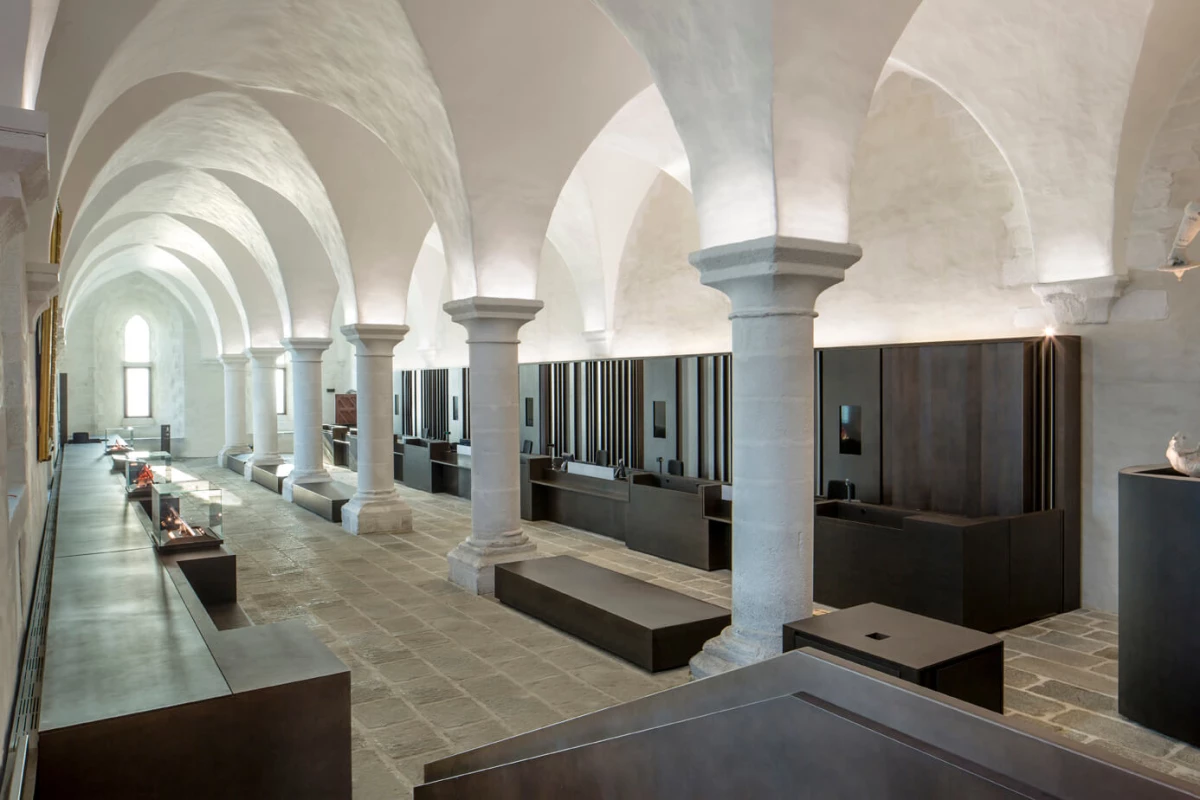
The brief set out several objectives: to create a system for highlighting the painted decorations in one of the rooms of the future route; to define a new means of access to the painted chambers and chapels; to design a renewed didactic approach for all visited spaces—interpretive panels, museographic displays, multimedia elements, and mediation tools; and to propose an innovative digital mediation device accessible to all. Together, these elements were intended to modernise the visitor experience while reinforcing its heritage coherence.
The proposal sought to simplify the existing route in order to improve its legibility, enhance both spatial and intellectual comfort, and structure the visitor’s progression through a sensitive mediation strategy that is at once precise and immersive. It was based on ensuring coherence between space and narrative so as to provide a more fluid, readable, and engaging experience. This approach aimed to heighten the experience of the Palais by clearly articulating container and content, without compromising the monument’s historical and architectural richness.
In 2024, the Société Publique Locale Avignon Tourisme launched a procurement process for a project management contract concerning the design, implementation, and delivery of a new visitor route through the Palais des Papes. The mission aimed to rethink access to the monument, integrate the redesigned papal gardens, and restructure the current route—in terms of duration, distance, themes, and typology—in order to offer visitors several ways of discovering the site. The competitive dialogue in which the team took part was ultimately not awarded to us.
The brief set out several objectives: to create a system for highlighting the painted decorations in one of the rooms of the future route; to define a new means of access to the painted chambers and chapels; to design a renewed didactic approach for all visited spaces—interpretive panels, museographic displays, multimedia elements, and mediation tools; and to propose an innovative digital mediation device accessible to all. Together, these elements were intended to modernise the visitor experience while reinforcing its heritage coherence.
The proposal sought to simplify the existing route in order to improve its legibility, enhance both spatial and intellectual comfort, and structure the visitor’s progression through a sensitive mediation strategy that is at once precise and immersive. It was based on ensuring coherence between space and narrative so as to provide a more fluid, readable, and engaging experience. This approach aimed to heighten the experience of the Palais by clearly articulating container and content, without compromising the monument’s historical and architectural richness.
Ducks Scéno, scenography
Le Troisième Pôle, museography and cultural engineering
Femme Fatale, audiovisual creation studio
Version Bronze, designer and developer
TRAFIK, graphism
Atelier Audibert, lighting design
Life Design Sonore, sound design