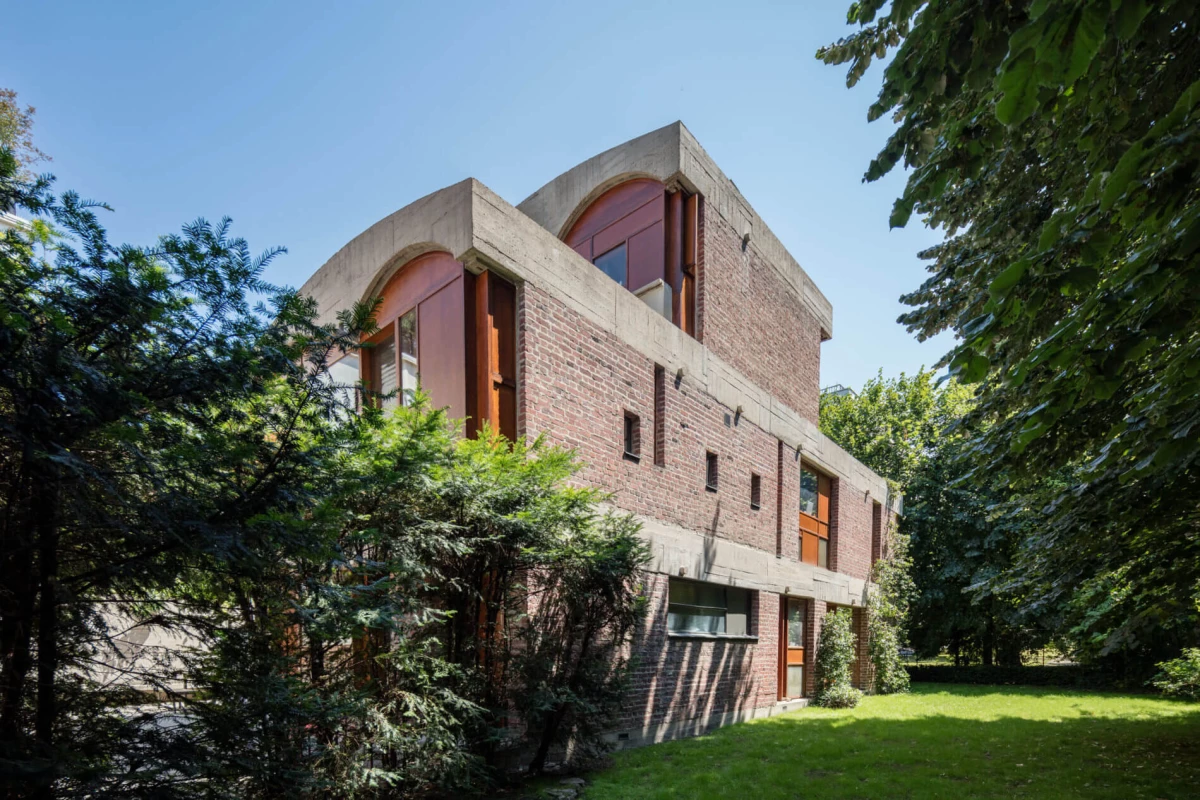
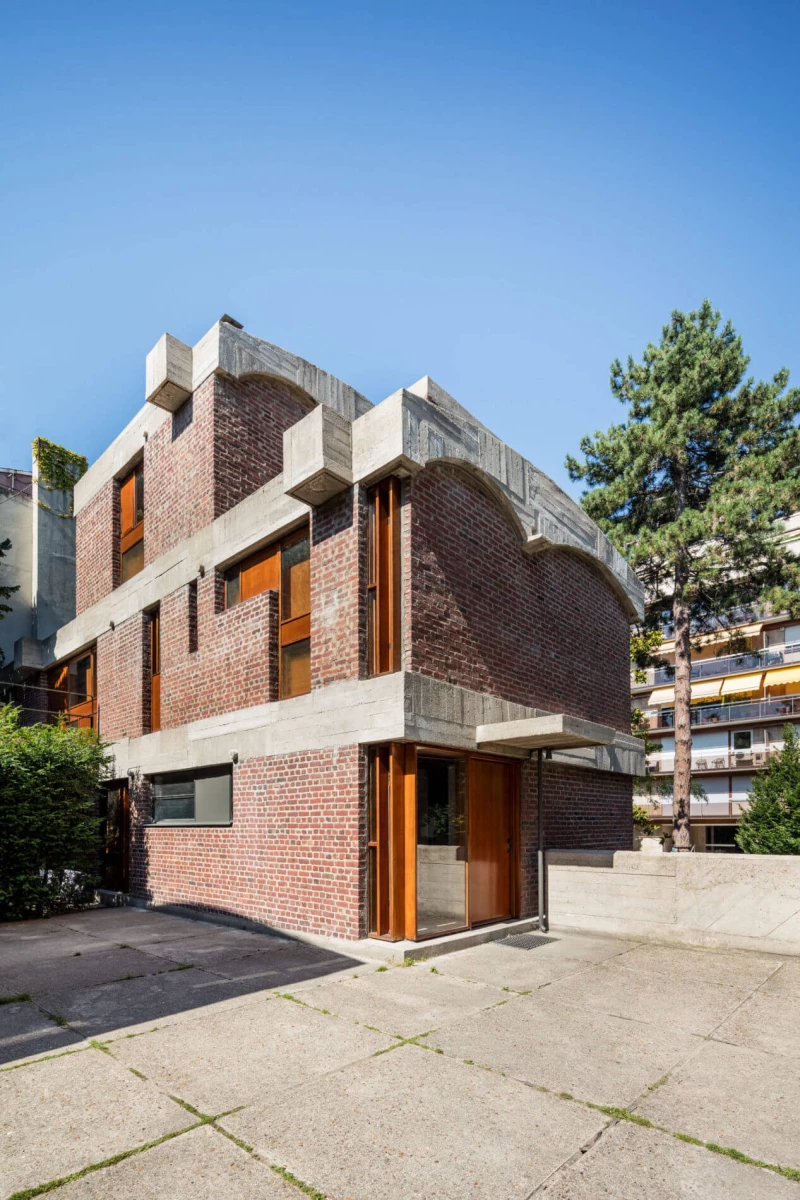
The Jaoul Houses, built between 1953 and 1955 in Neuilly-sur-Seine, are among Le Corbusier’s most emblematic post-war works. Commissioned by André Jaoul and intended for two families, they take the form of two distinct volumes—House A facing the street and House B set further back—both located on the same plot. Occupied until 1987 and later transferred to new owners, they underwent a restoration in 1991 led by Jacques Michel, a former collaborator of the architect. Now classified as Historic Monuments, they remain remarkably close to their original state.
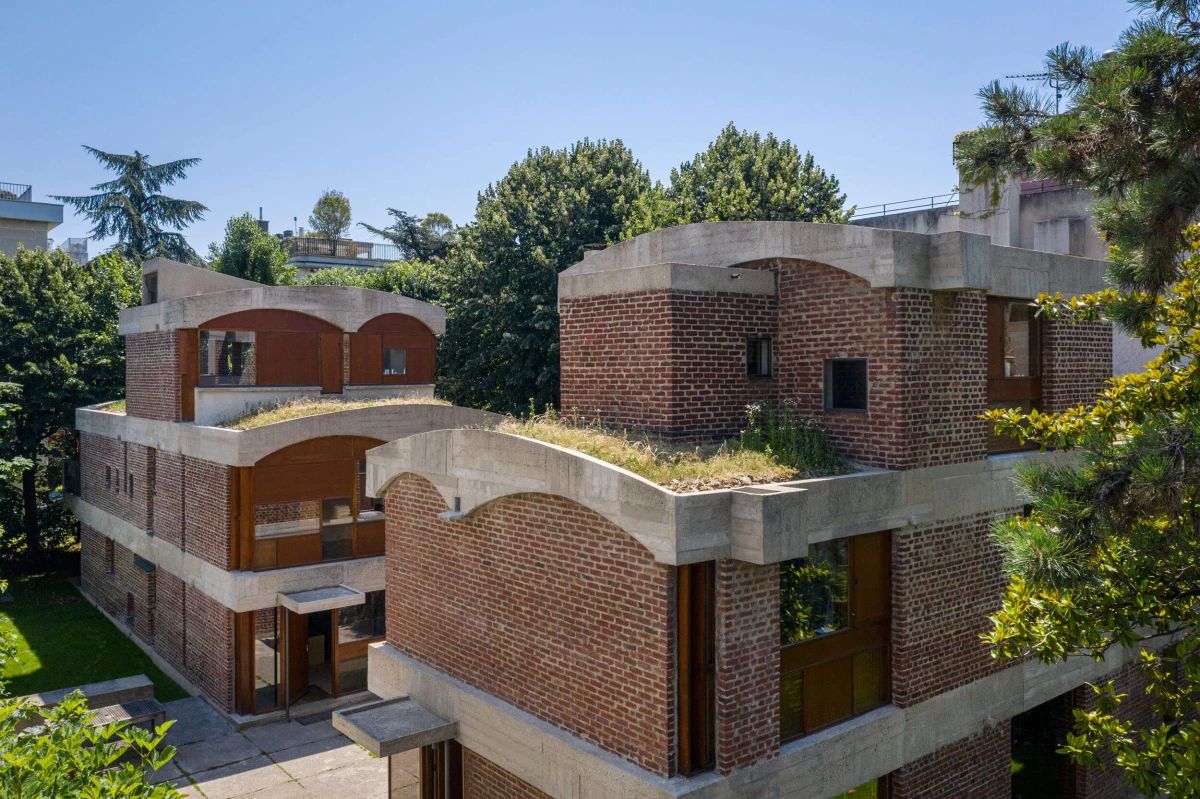
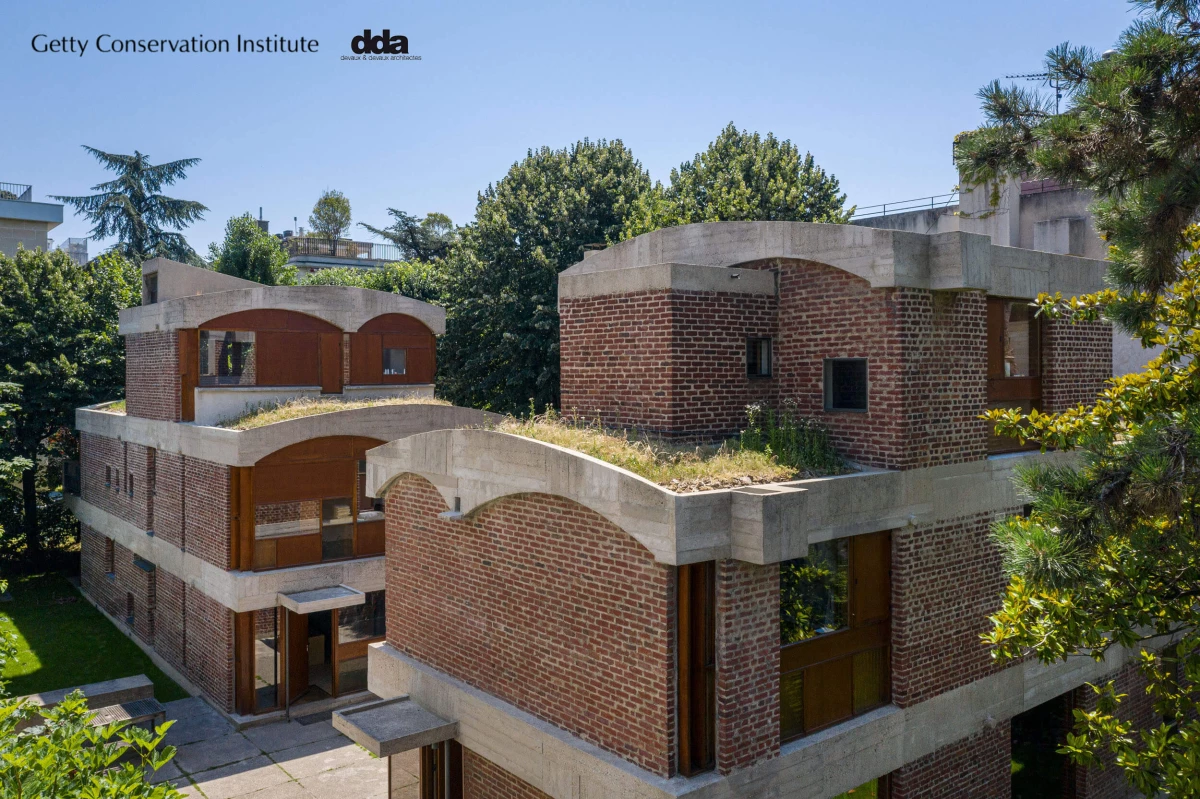
The Jaoul Houses are characterised by the association of raw concrete and brick, a structural approach unprecedented in Le Corbusier’s work at the time. The interiors, organised across three levels, rely on a Modulor-based grid, with 2.66 m and 3.66 m bays structuring the whole. The two houses are linked by a shared basement housing the garage and technical spaces. The roofs employ “Catalan” vaults in flat tiles, complemented by vegetated coverings, giving the ensemble a singular geometry and strong material presence.
A new restoration campaign has been launched to address deterioration that has appeared over time: concrete decay, localised damage to the glass panels exposed to the elements, and ageing waterproofing leading to infiltration. A preliminary study clarified the original condition, identified pathologies, and defined appropriate interventions. The project seeks to maximise the conservation of existing materials, ensure faithful restitution where required, and adopt an approach that respects the constructive and aesthetic choices defined by the architect, in order to guarantee the durability and legibility of these two major works of modern heritage.
The Jaoul Houses, built between 1953 and 1955 in Neuilly-sur-Seine, are among Le Corbusier’s most emblematic post-war works. Commissioned by André Jaoul and intended for two families, they take the form of two distinct volumes—House A facing the street and House B set further back—both located on the same plot. Occupied until 1987 and later transferred to new owners, they underwent a restoration in 1991 led by Jacques Michel, a former collaborator of the architect. Now classified as Historic Monuments, they remain remarkably close to their original state.
The Jaoul Houses are characterised by the association of raw concrete and brick, a structural approach unprecedented in Le Corbusier’s work at the time. The interiors, organised across three levels, rely on a Modulor-based grid, with 2.66 m and 3.66 m bays structuring the whole. The two houses are linked by a shared basement housing the garage and technical spaces. The roofs employ “Catalan” vaults in flat tiles, complemented by vegetated coverings, giving the ensemble a singular geometry and strong material presence.
A new restoration campaign has been launched to address deterioration that has appeared over time: concrete decay, localised damage to the glass panels exposed to the elements, and ageing waterproofing leading to infiltration. A preliminary study clarified the original condition, identified pathologies, and defined appropriate interventions. The project seeks to maximise the conservation of existing materials, ensure faithful restitution where required, and adopt an approach that respects the constructive and aesthetic choices defined by the architect, in order to guarantee the durability and legibility of these two major works of modern heritage.