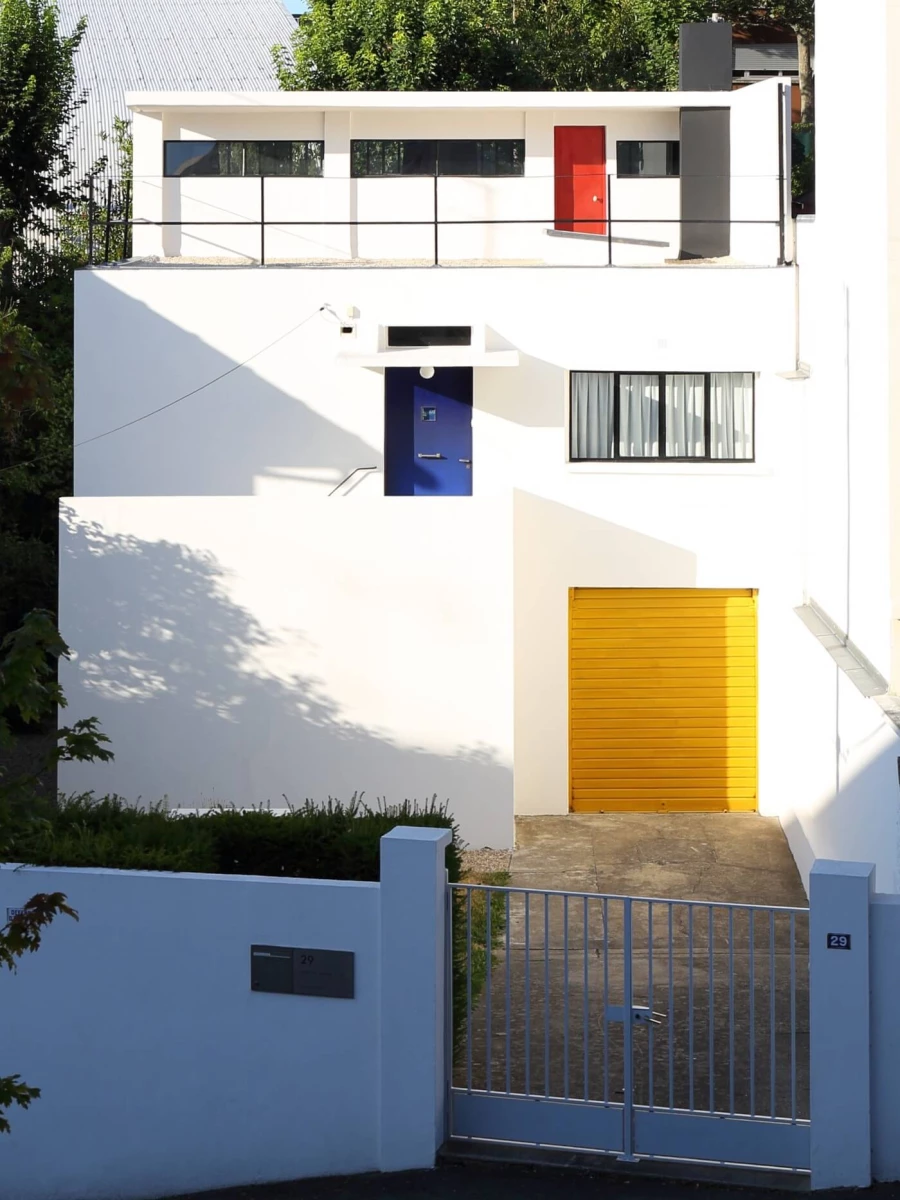
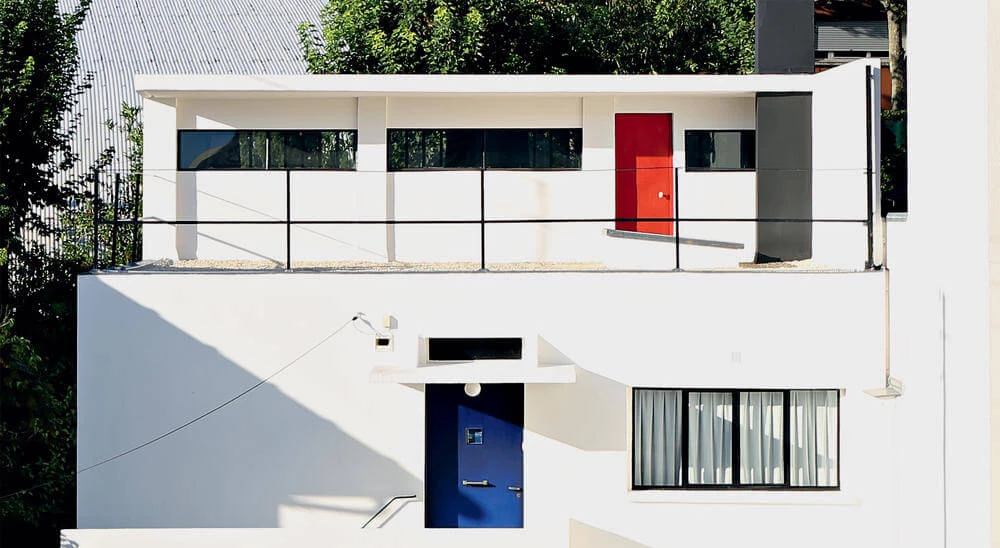
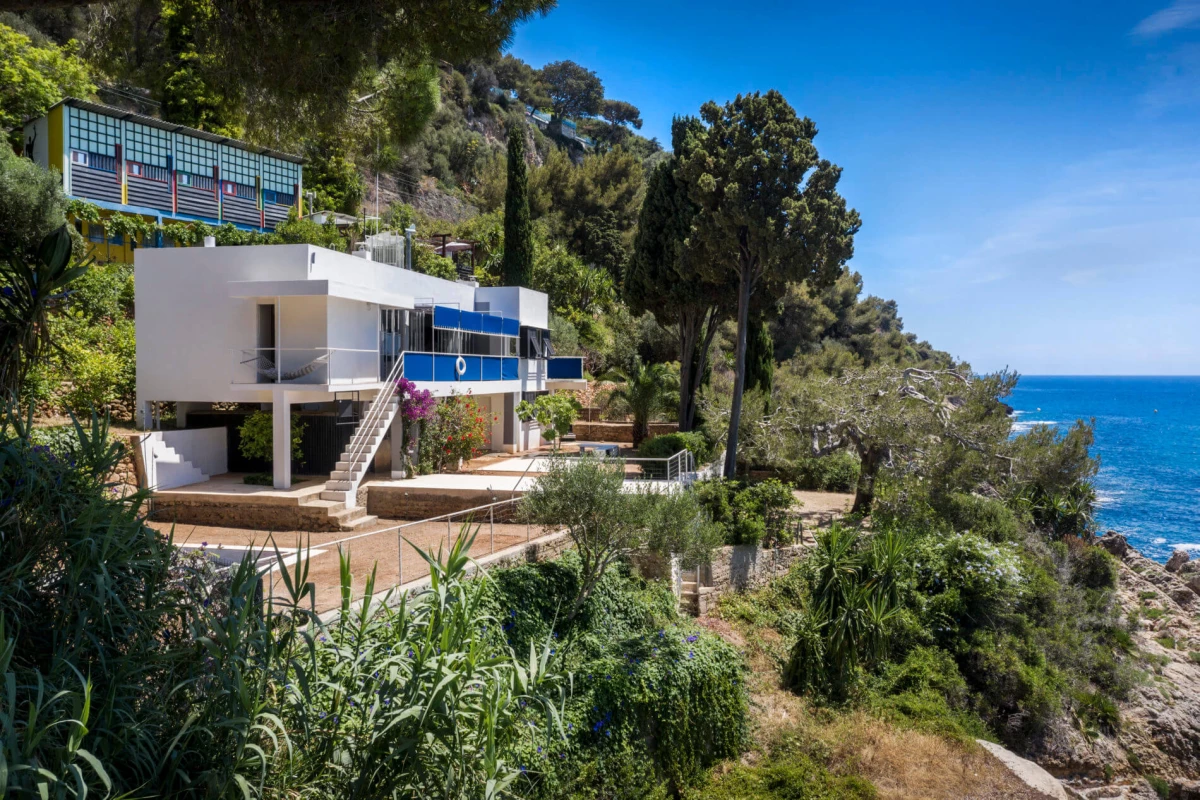
The Theo van Doesburg House–Studio, built in 1929 by the artist who initiated the De Stijl movement for himself and his wife Nelly van Doesburg, is located in the Meudon Val Fleury suburb, to the east of the municipality of Meudon near Paris. Initially, a twin-house project with the Arp couple in Clamart had been considered, but it was abandoned due to disagreements between van Doesburg and his engineer, as well as concerns from the Arps about rising costs. The van Doesburgs then acquired a narrow plot in Meudon to build their house–studio.
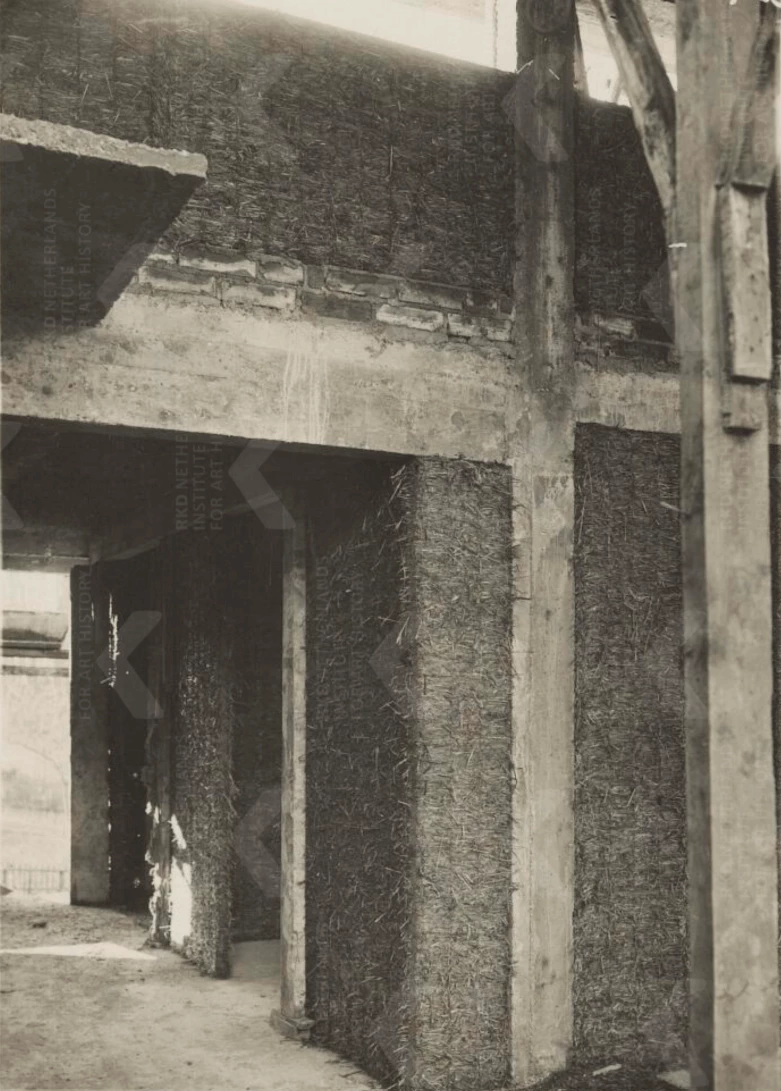
In this house–studio, Theo van Doesburg designed every detail—from doors and staircases to windows, floor coverings, and certain pieces of furniture—seeking to unite architecture and artistic theory within a single space. “He was obsessed with designing a house in which all his architecture and his artistic theory would come together,” recalled his friend, the architect Abraham Elzas, who drew the plans for the house–studio. The construction itself is distinctive: a concrete skeleton is complemented by Solomite, a material made of compressed straw with metal reinforcement, which was an innovation at the time.
Today, the house–studio, still located at 29 rue Charles Infroit, hosts artist residencies and continues to inspire contemporary generations. A preliminary study has been carried out, including a structural and historical analysis and detailed surveys, to prepare its restoration and ensure an understanding of the site in its past, present, and future dimensions, while preserving its integrity and heritage value.
The Theo van Doesburg House–Studio, built in 1929 by the artist who initiated the De Stijl movement for himself and his wife Nelly van Doesburg, is located in the Meudon Val Fleury suburb, to the east of the municipality of Meudon near Paris. Initially, a twin-house project with the Arp couple in Clamart had been considered, but it was abandoned due to disagreements between van Doesburg and his engineer, as well as concerns from the Arps about rising costs. The van Doesburgs then acquired a narrow plot in Meudon to build their house–studio.
In this house–studio, Theo van Doesburg designed every detail—from doors and staircases to windows, floor coverings, and certain pieces of furniture—seeking to unite architecture and artistic theory within a single space. “He was obsessed with designing a house in which all his architecture and his artistic theory would come together,” recalled his friend, the architect Abraham Elzas, who drew the plans for the house–studio. The construction itself is distinctive: a concrete skeleton is complemented by Solomite, a material made of compressed straw with metal reinforcement, which was an innovation at the time.
Today, the house–studio, still located at 29 rue Charles Infroit, hosts artist residencies and continues to inspire contemporary generations. A preliminary study has been carried out, including a structural and historical analysis and detailed surveys, to prepare its restoration and ensure an understanding of the site in its past, present, and future dimensions, while preserving its integrity and heritage value.
AIS, structure