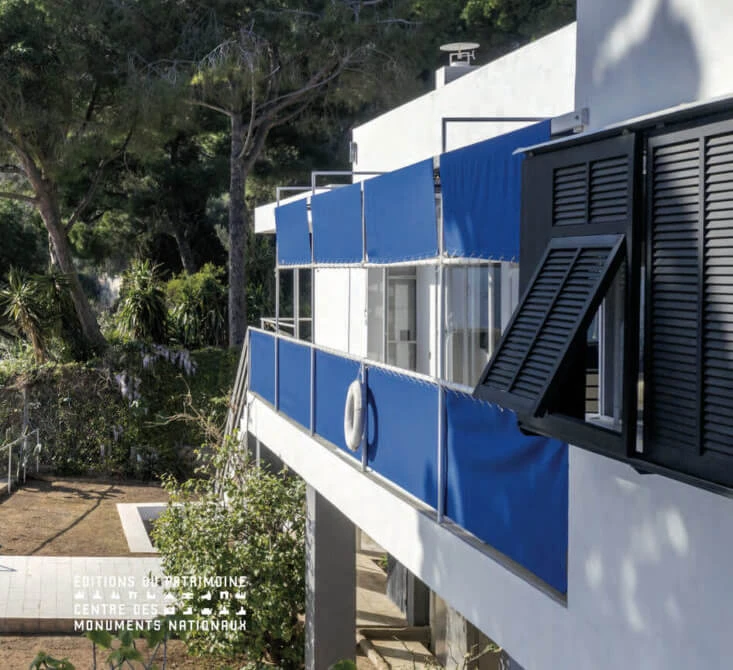
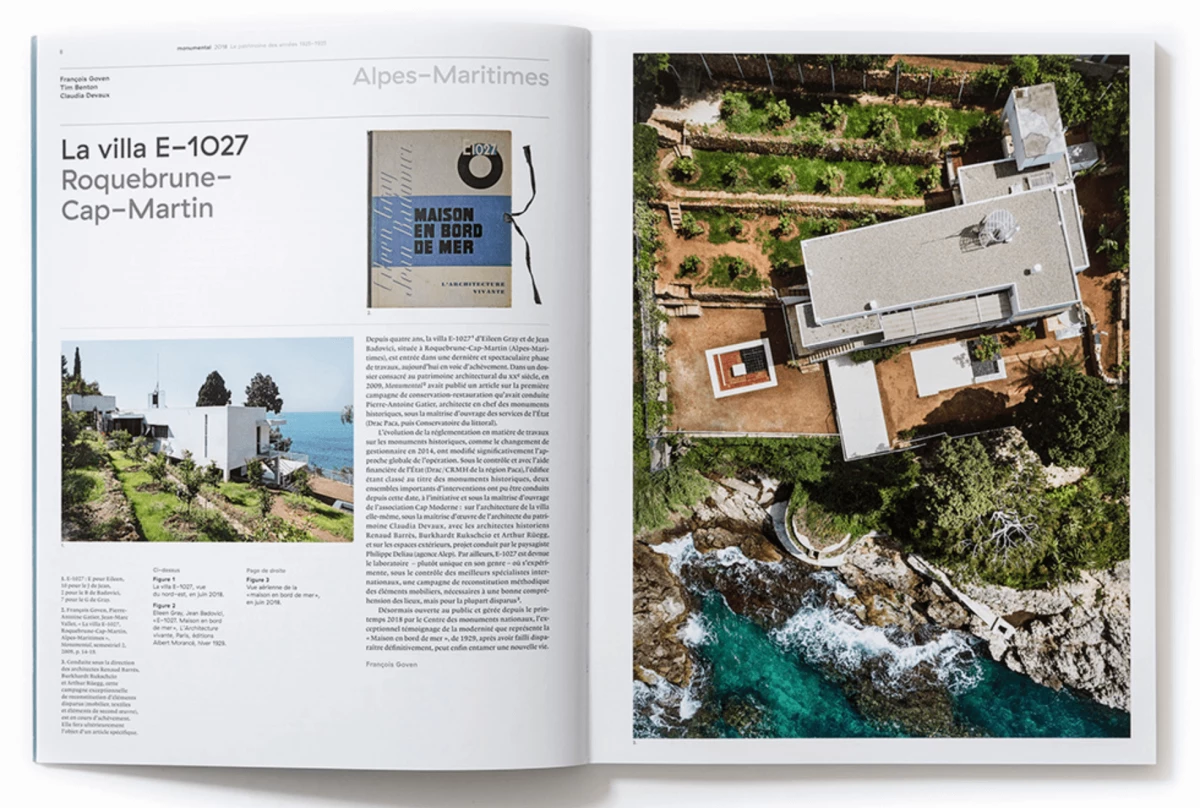
Villa E-1027 by Eileen Gray and Jean Badovici, built between 1926 and 1929, is part of an exceptional site overlooking the Mediterranean, comprising Villa E-1027, the Cabanon with Le Corbusier’s workshop cabin, and his camping units. Villa E-1027, one of the icons of Modern Movement architecture, has undergone multiple alterations. Its seaside exposure has affected both its exterior envelope and interior. The loss of its original fixed and movable furniture, a defining feature of Eileen Gray’s work, is among the most visible degradations.
Since 2015, restoration work has aimed to reinstate the villa’s exterior and interior layouts. The process relies on sources from Eileen Gray and Jean Badovici, particularly the publication of the villa in the magazine L’Architecture vivante in 1929, alongside an almost archaeological investigation of the site. A multidisciplinary team of specialised architects, historians, and experts has been actively involved in this collaborative effort.
The lecture will present, through the various phases of work, the methodologies, challenges, and questions involved in meeting this restoration challenge.
Villa E-1027 by Eileen Gray and Jean Badovici, built between 1926 and 1929, is part of an exceptional site overlooking the Mediterranean, comprising Villa E-1027, the Cabanon with Le Corbusier’s workshop cabin, and his camping units. Villa E-1027, one of the icons of Modern Movement architecture, has undergone multiple alterations. Its seaside exposure has affected both its exterior envelope and interior. The loss of its original fixed and movable furniture, a defining feature of Eileen Gray’s work, is among the most visible degradations.
Since 2015, restoration work has aimed to reinstate the villa’s exterior and interior layouts. The process relies on sources from Eileen Gray and Jean Badovici, particularly the publication of the villa in the magazine L’Architecture vivante in 1929, alongside an almost archaeological investigation of the site. A multidisciplinary team of specialised architects, historians, and experts has been actively involved in this collaborative effort.
The lecture will present, through the various phases of work, the methodologies, challenges, and questions involved in meeting this restoration challenge.